How Big of a Solar Generator Do I Need for Home Backup, Camping, and RV Use?
If you are asking how big of a solar generator do I need, the real answer depends on three things: what you want to power, how long you want to power it, and whether you need portability or serious backup capacity. A 1000Wh solar generator can be great for camping, laptops, lights, cameras, phones, and short emergency use. A 3000Wh to 4000Wh solar generator makes more sense for refrigerators, home office backup, RV power, and longer outages. Larger expandable systems are better when you want to support multiple appliances or prepare for multi-day power interruptions.
As an Amazon Associate, we may earn from qualifying purchases.
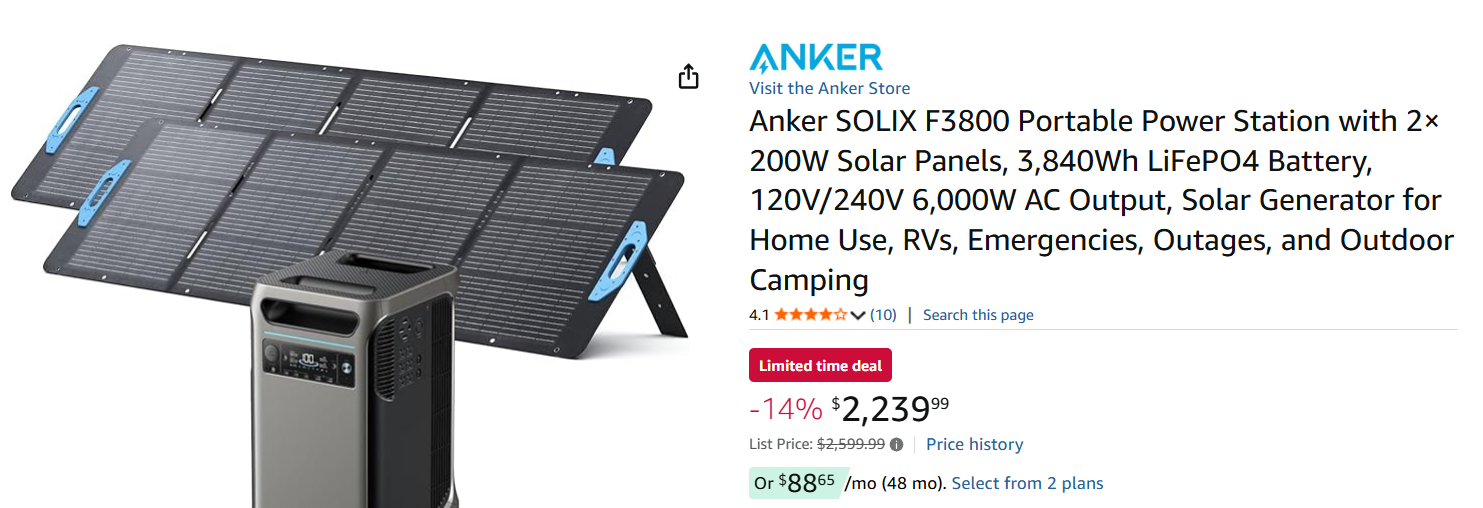
This guide uses four solar generators we reviewed earlier as practical examples: Jackery Solar Generator 1000 v2, Anker SOLIX C1000, Jackery HomePower 3600 Plus, and Anker SOLIX F3800. Instead of choosing by brand alone, this article helps you match capacity, output, solar panel size, and portability to your actual use case.
Quick Verdict
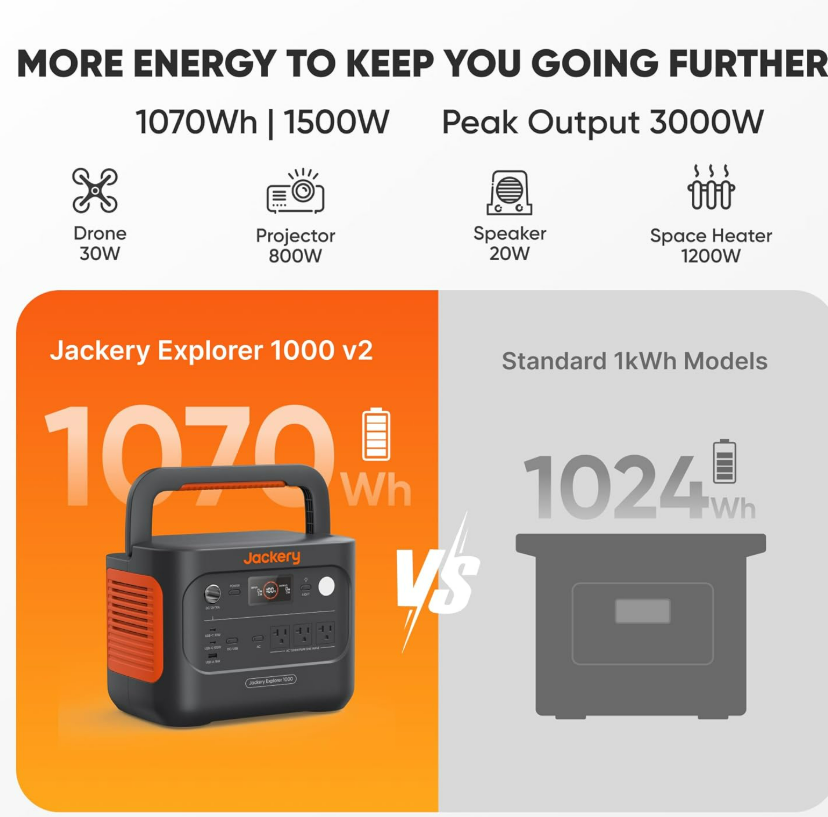
For simple camping, phones, cameras, drones, laptops, lights, and a small fan, a 1000Wh-class solar generator is usually the most practical starting point. The Jackery Solar Generator 1000 v2 is a good example because it offers 1,070Wh capacity, 1,500W AC output, and a portable 23.8 lb design based on the provided product information.
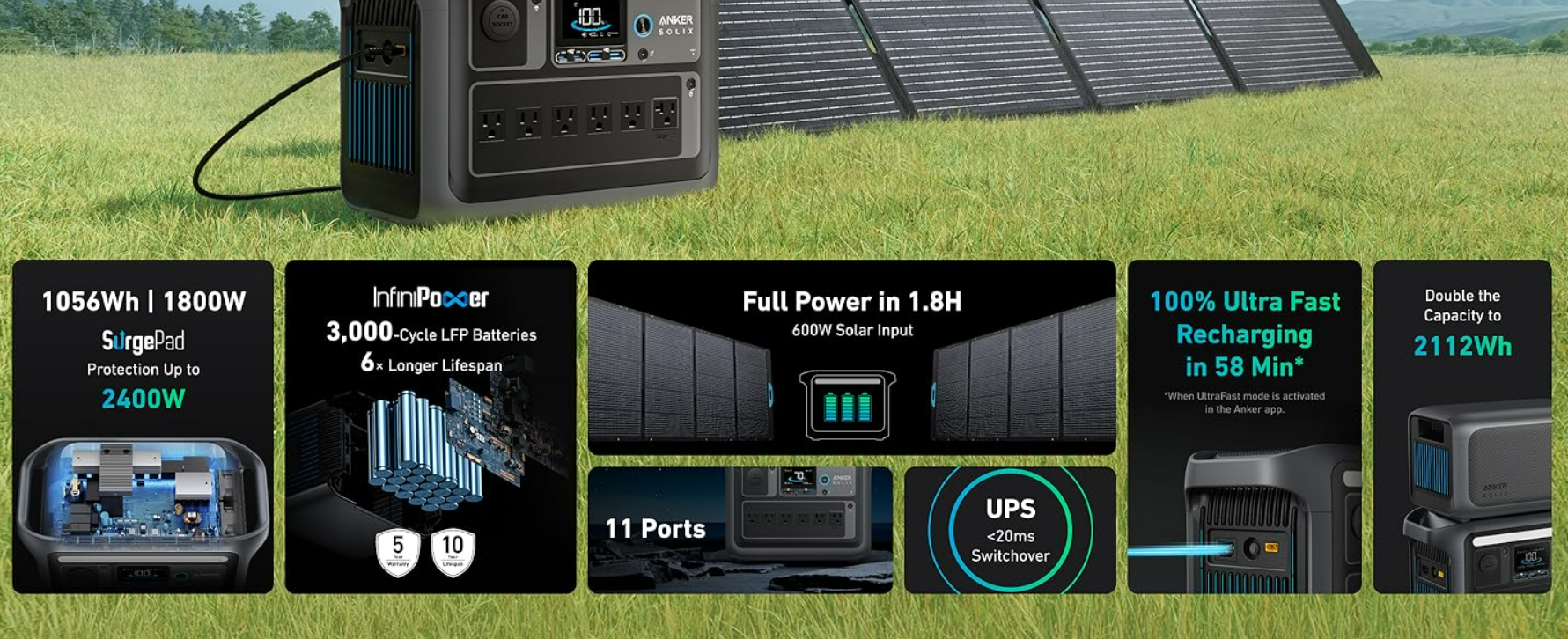
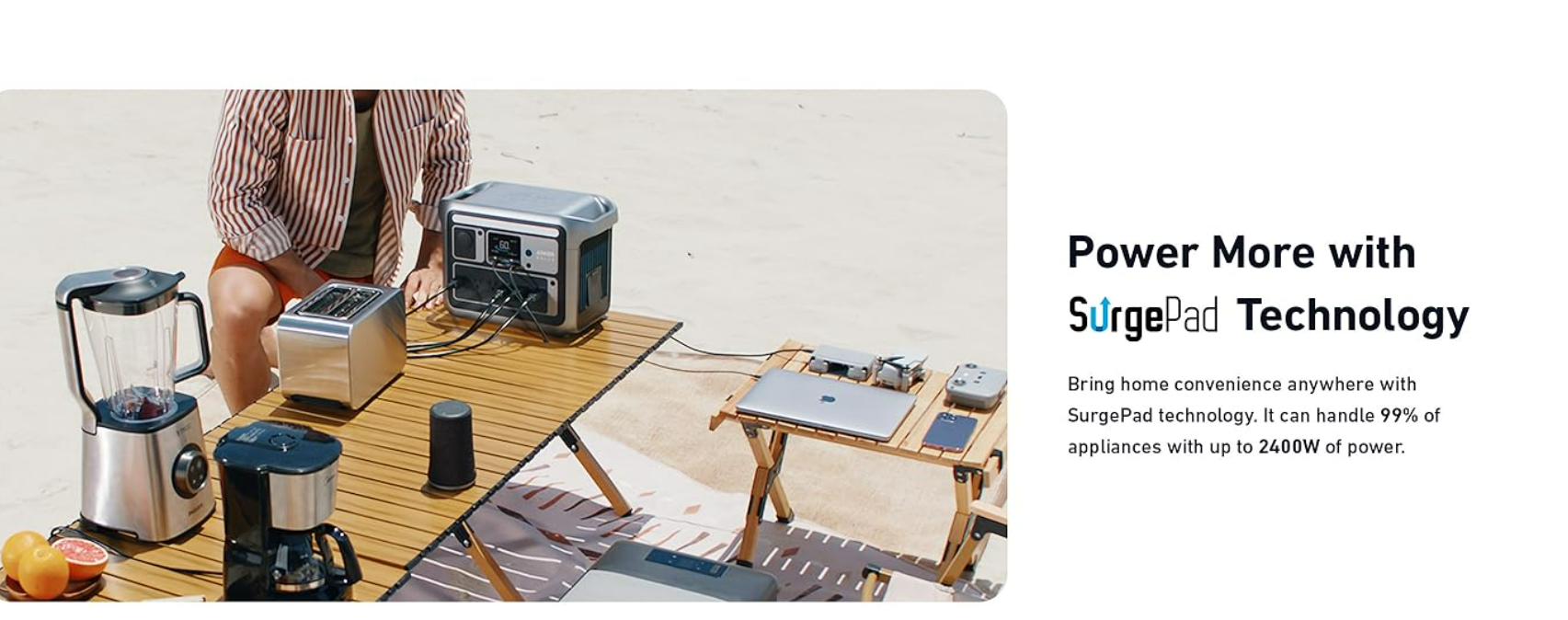
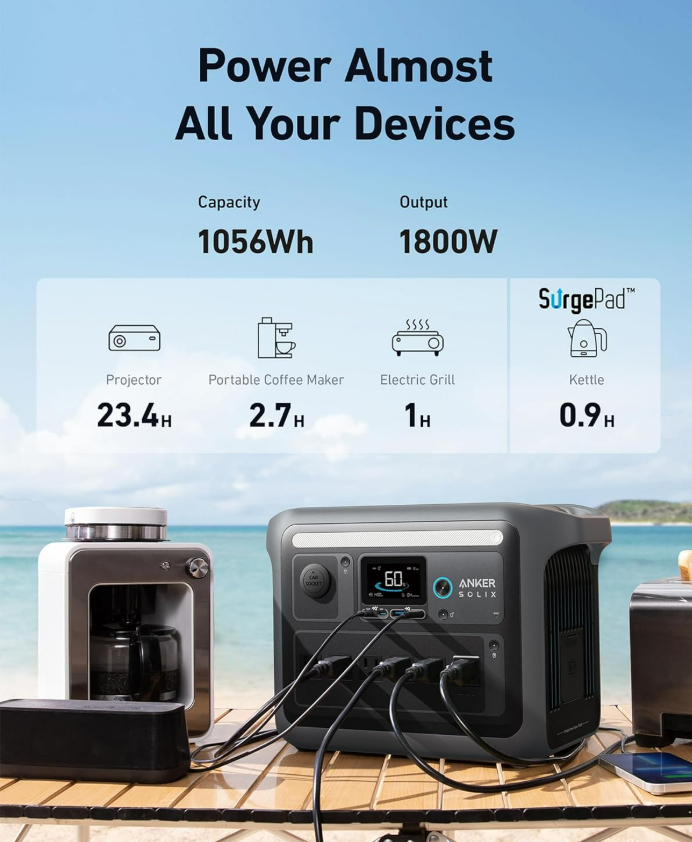
For camping plus short home backup, a stronger 1000Wh-class unit with more output and a larger solar panel can make sense. The Anker SOLIX C1000 fits this middle role with 1056Wh capacity, 1800W output, SurgePad support up to 2400W, a 400W solar panel bundle, UPS support, and a built-in LED.
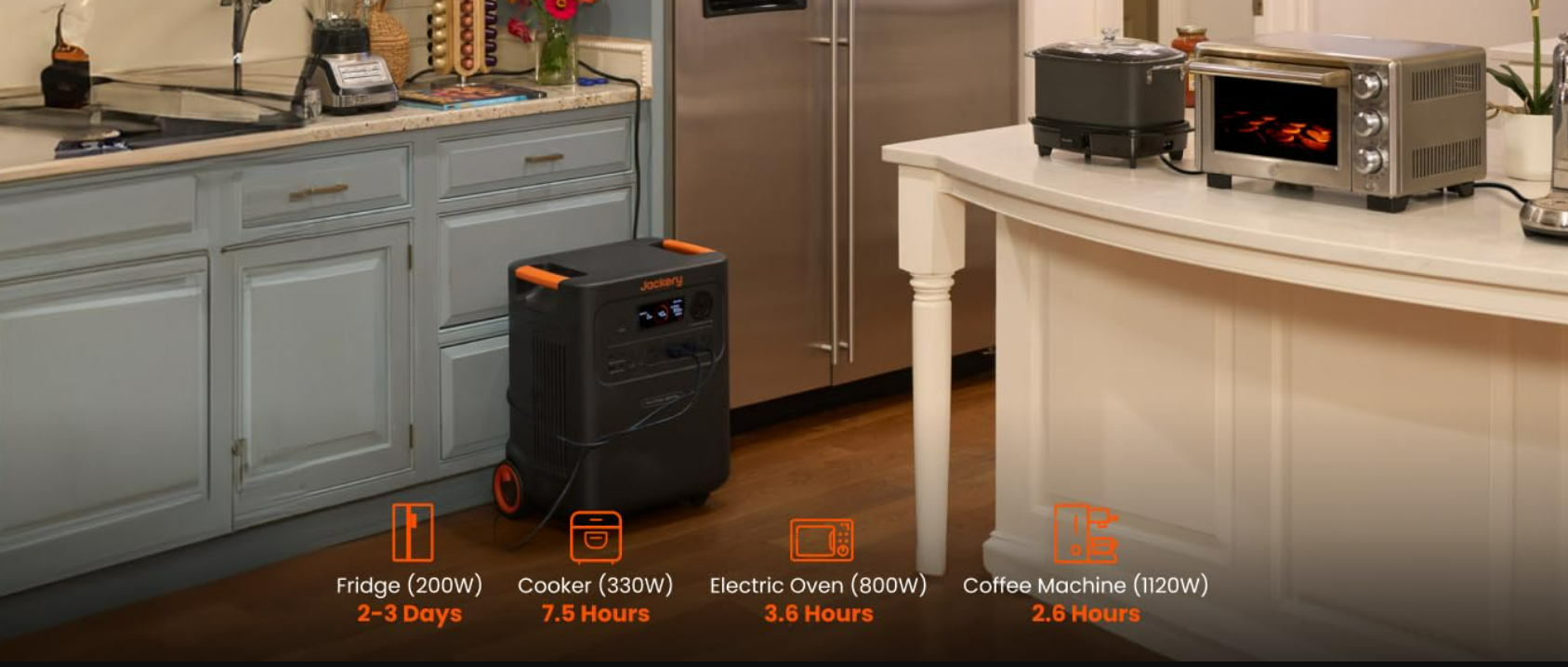
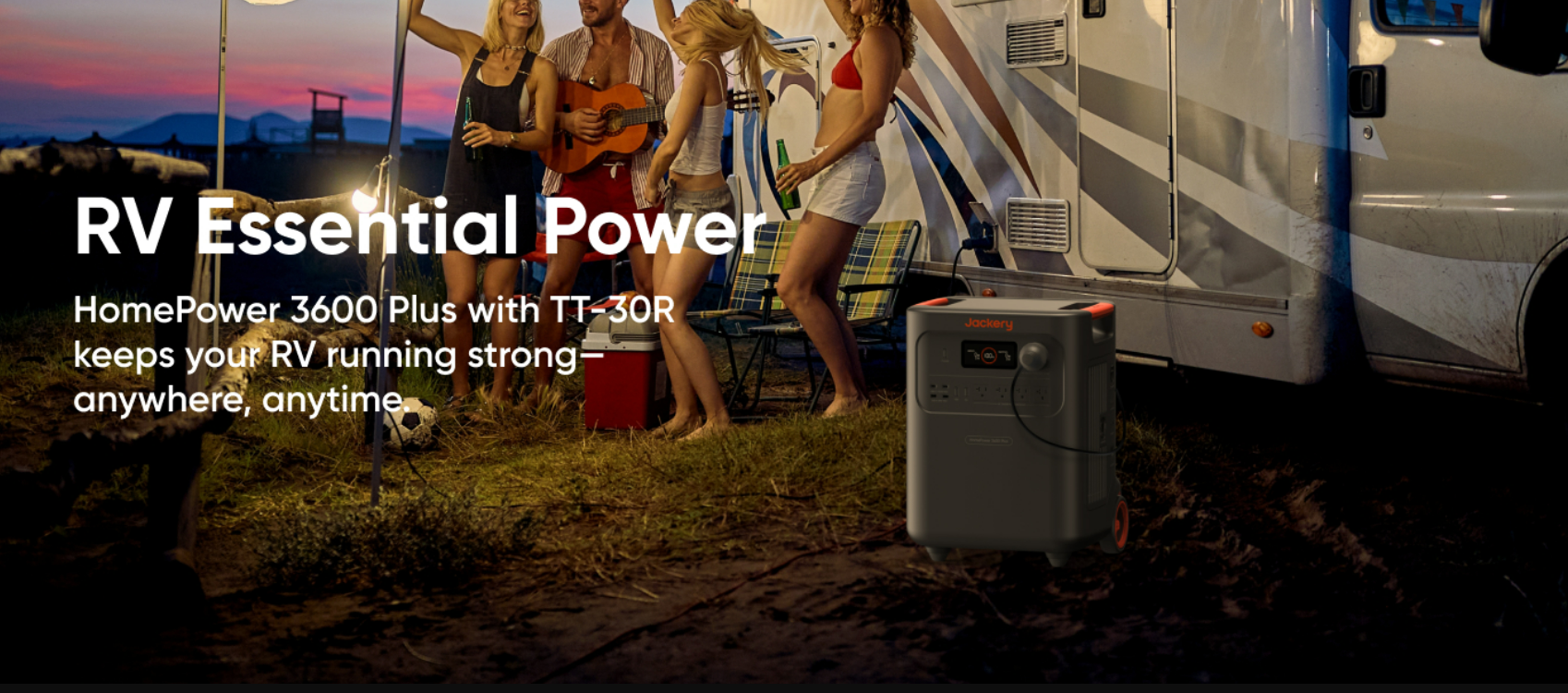
For refrigerator backup, home office backup, RV use, and essential appliances during outages, move into the 3000Wh to 4000Wh range. The Jackery HomePower 3600 Plus is a strong example with 3584Wh capacity, 3600W output, TT-30 RV support, wheels, UPS switching, and expansion options.
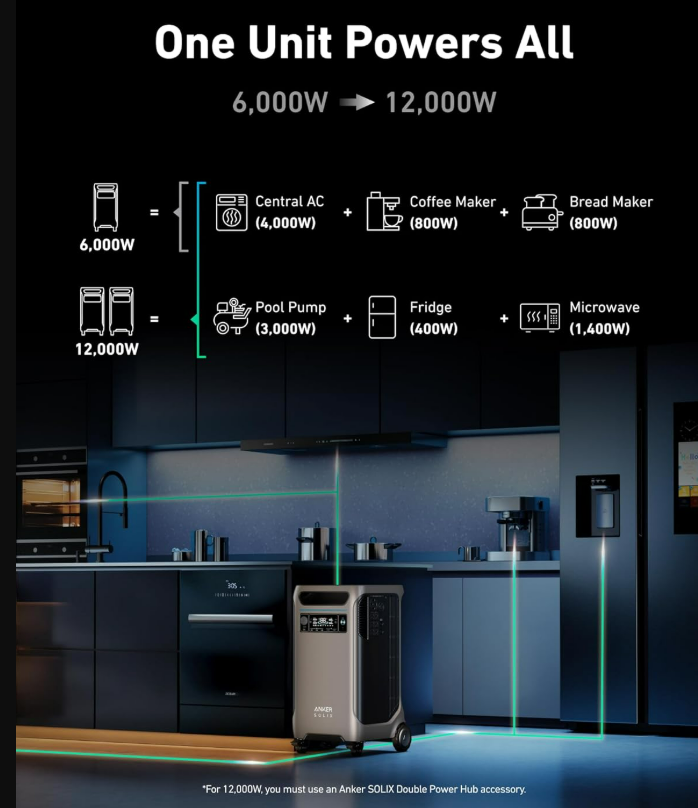
For serious home backup, heavy appliance support, dual-voltage needs, and future expansion, a larger system like the Anker SOLIX F3800 makes more sense. It has a 3.84kWh battery, listed 6,000W AC output, 120V/240V support, and a large expansion path according to the provided product information.
| Use Case | Recommended Size | Example Product |
|---|---|---|
| Phones, lights, laptop, camera gear | 300Wh–1000Wh | Jackery 1000 v2 may be more than enough |
| Weekend camping with cooler and small appliances | 1000Wh–1500Wh | Jackery Solar Generator 1000 v2 |
| Camping plus home office backup | 1000Wh–2000Wh | Anker SOLIX C1000 |
| Refrigerator backup and short outages | 3000Wh–4000Wh | Jackery HomePower 3600 Plus |
| RV power and heavier appliances | 3000Wh–4000Wh+ | Jackery HomePower 3600 Plus or Anker F3800 |
| Serious home backup and expansion | 3000Wh–5000Wh+ | Anker SOLIX F3800 |
Key Specifications
The most useful solar generator specs are not always the ones that appear biggest in product titles. You need to understand battery capacity, AC output, surge output, solar input, charging speed, weight, ports, and expansion.
| Spec | What It Means | Why It Matters |
|---|---|---|
| Wh / kWh capacity | How much energy the battery stores | Determines runtime |
| AC output watts | How much power it can deliver continuously | Determines appliance compatibility |
| Surge output | Short burst power for startup loads | Important for motors and compressors |
| Solar input | How much solar charging the unit can accept | Determines solar recovery speed |
| Battery type | LFP / LiFePO4 is common in modern models | Affects cycle life and long-term use |
| Weight | How easy it is to move | Critical for camping and RV use |
| UPS feature | Fast switchover during grid outages | Useful for routers, computers, and office gear |
| Expansion | Whether extra batteries can be added | Important for long outages |
Here is how the four reviewed models compare as sizing examples:
| Product | Capacity | Output | Best Fit |
|---|---|---|---|
| Jackery Solar Generator 1000 v2 | 1,070Wh | 1,500W | Camping, road trips, portable backup |
| Anker SOLIX C1000 | 1056Wh | 1800W | Portable all-rounder, camping, home office backup |
| Jackery HomePower 3600 Plus | 3584Wh | 3600W | Refrigerator backup, RV use, essential home backup |
| Anker SOLIX F3800 | 3.84kWh | Listed 6,000W | Heavy-duty home backup, RV power, expansion |
The biggest mistake is choosing only by wattage. A 1800W power station with a 1056Wh battery can run a high-wattage device, but not for a long time. Capacity decides how long. Output decides what it can start and run.
First Impressions
Solar generator sizing becomes much easier when you stop thinking in abstract numbers and start thinking in real devices. A phone charger is tiny compared with a coffee maker. A Wi-Fi router is small compared with a refrigerator. A refrigerator is modest compared with a heater, portable AC, dryer, or oven.
A 1000Wh unit feels large if you are charging phones and laptops. The same 1000Wh unit feels small if you are trying to run a heater or cooking appliance. That is why “how big” always depends on your power list.
A simple sizing formula
Use this basic formula:
Device watts × hours of use = watt-hours needed
For example, if a device uses 100W and you want to run it for 5 hours, you need about 500Wh before accounting for efficiency losses and reserve capacity.
For real planning, add a safety margin. Inverters are not perfectly efficient, appliances cycle on and off, and you may not want to drain the battery completely. A practical estimate is to add 20% to 30% headroom.
Output matters too
Capacity is not enough. You also need enough output. If a coffee maker draws 1100W, a 500W power station will not run it even if the battery has enough stored energy. If a refrigerator has a startup surge, the power station must handle that short burst.
That is why a good solar generator choice balances both numbers: Wh for runtime and W for appliance compatibility.
Setup and Daily Use
The best solar generator size is the one you will actually keep charged, store properly, and use when needed. A huge battery that sits empty in a garage is less useful than a smaller unit that is ready before a storm.
For camping, setup should be simple. Charge the unit at home, pack it in the vehicle, set up the solar panel in direct sun, and use it for essential devices first. For home backup, setup should include testing your refrigerator, router, lights, computer, and any critical equipment before an outage.
Start with your essential list
For home backup, divide devices into three groups:
Must-have loads include refrigerator, freezer, medical or comfort devices, router, phone charging, lights, and possibly a fan.
Nice-to-have loads include TV, coffee maker, microwave, projector, extra lighting, and small kitchen appliances.
Heavy loads include heaters, air conditioners, dryers, ovens, pumps, and large power tools.
A 1000Wh unit can handle many must-have electronics, but not always a refrigerator for long. A 3000Wh to 4000Wh unit is more realistic for fridge backup and appliances. A larger expandable system is better for heavy or multi-day use.
Solar panel sizing
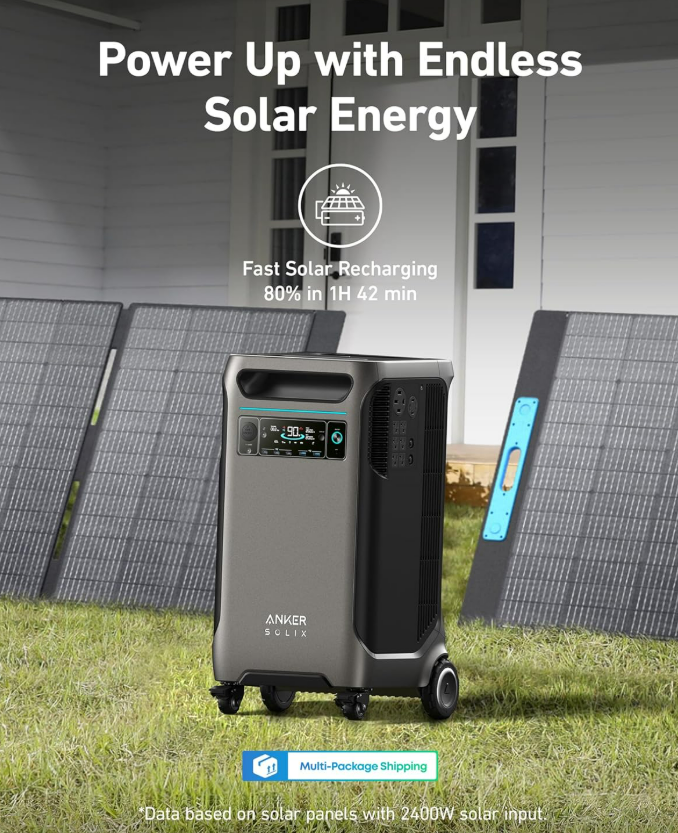
Solar panels do not refill batteries instantly. A 200W panel may be enough to extend a camping trip, while a 400W panel can make a bigger difference for daily recovery. Larger systems may need much more solar input to recharge quickly.
For example, the Jackery 1000 v2 bundle we reviewed included a 200W solar panel. The Anker C1000 bundle included a 400W solar panel. The Anker F3800 and Jackery HomePower 3600 Plus reviewed bundles showed 2 × 200W panels. Real solar output depends on sunlight, weather, angle, shade, and temperature.
Cleaning Performance
For solar generators, “cleaning performance” means clean battery power, stable output, and how well the unit supports appliances without fuel fumes, noise, or exhaust during discharge. Battery solar generators are often easier to use indoors than gas generators, as long as you follow the manual, keep ventilation clear, and stay within rated limits.
What size for phones, laptops, and lights?
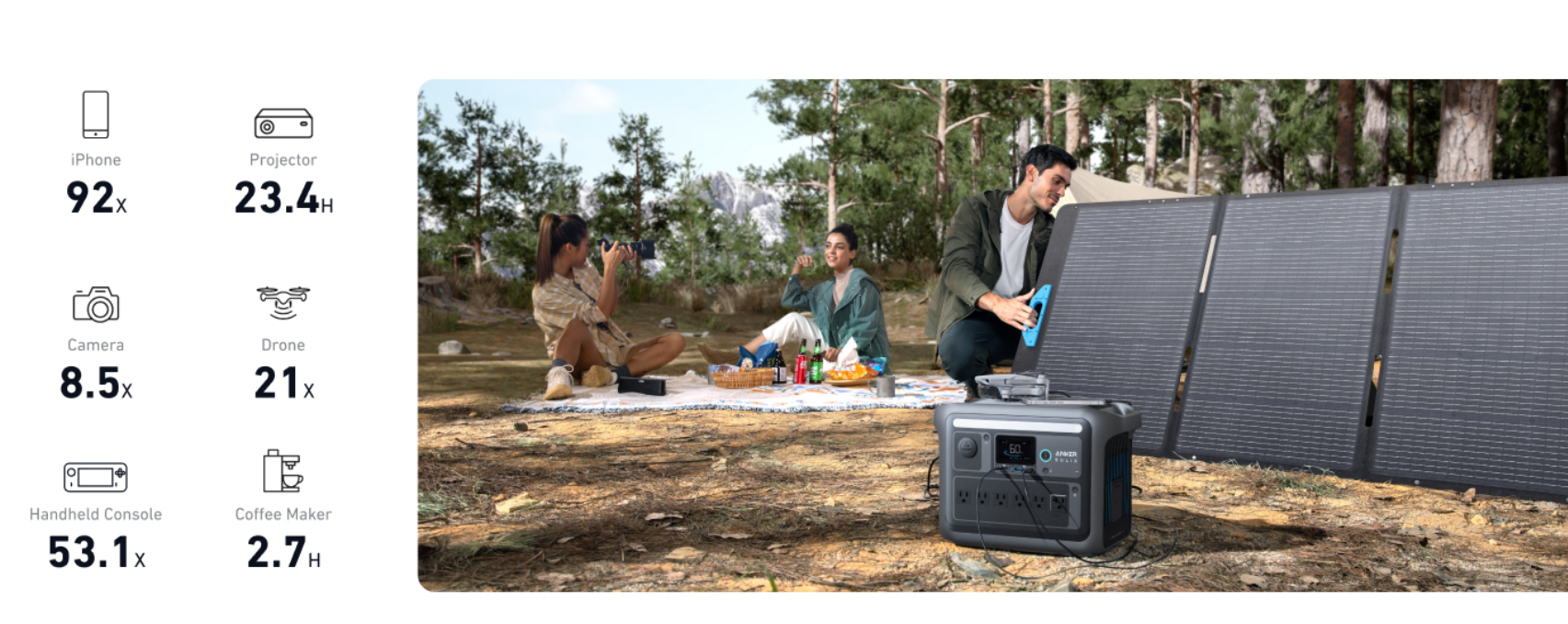
For phones, laptops, tablets, LED lights, cameras, drones, and speakers, a 300Wh to 1000Wh power station can be enough. If you only need these small electronics, a 3000Wh unit may be unnecessary.
The Jackery Solar Generator 1000 v2 and Anker SOLIX C1000 are both more than capable for this category. The choice comes down to portability, output, solar panel size, and whether you want UPS-style features.
What size for camping appliances?
Camping appliances vary widely. A fan may use low wattage. A coffee maker, electric grill, kettle, or heater can draw much more. For most car camping, a 1000Wh to 1500Wh unit is the practical starting point.
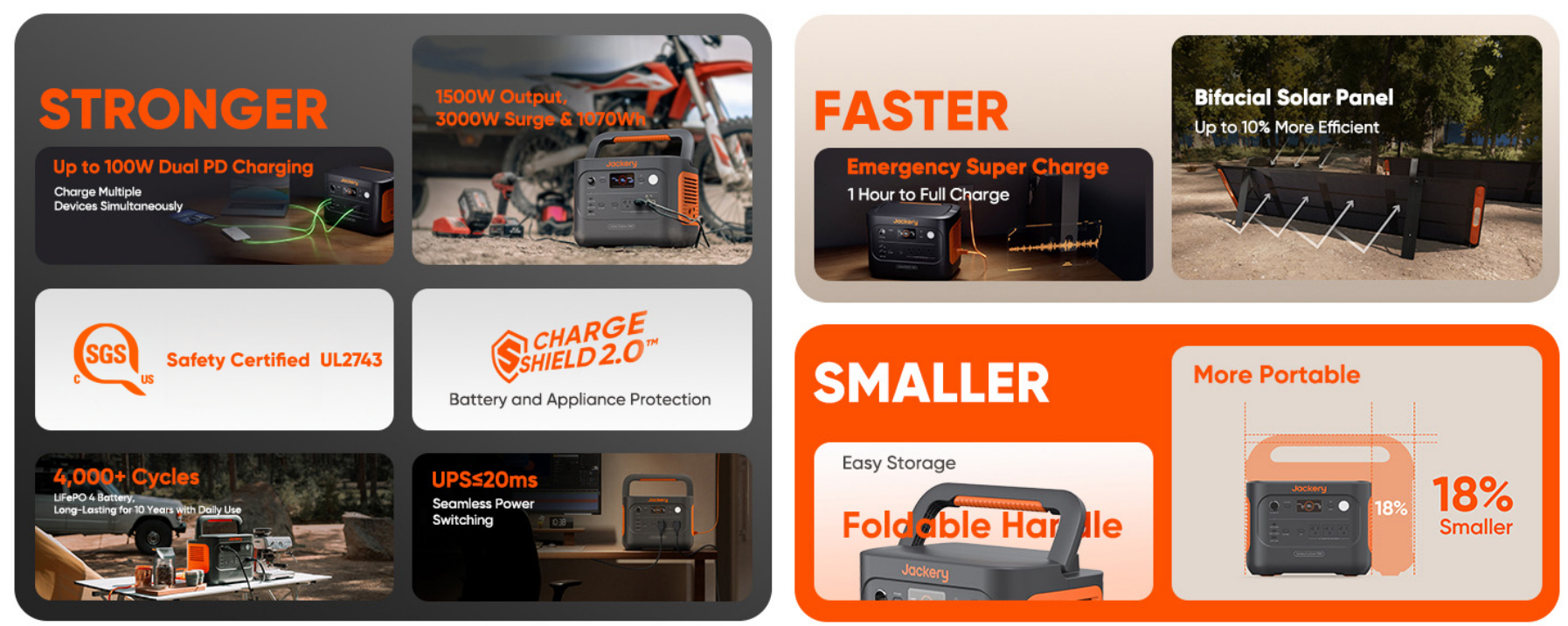
The Jackery 1000 v2 is easier to carry and works well for camping basics. The Anker C1000 is stronger if you want more output and a larger solar panel.
What size for a refrigerator?
For refrigerator backup, I would usually start around 3000Wh if the goal is more than a short emergency top-up. A 1000Wh unit may run many refrigerators for a period of time, but runtime depends heavily on compressor cycling, startup surge, fridge efficiency, room temperature, and door openings.
The Jackery HomePower 3600 Plus is a better fit for refrigerator backup because it offers 3584Wh capacity and 3600W output. The Anker SOLIX F3800 is also a strong fit with its 3.84kWh battery and much higher listed AC output.
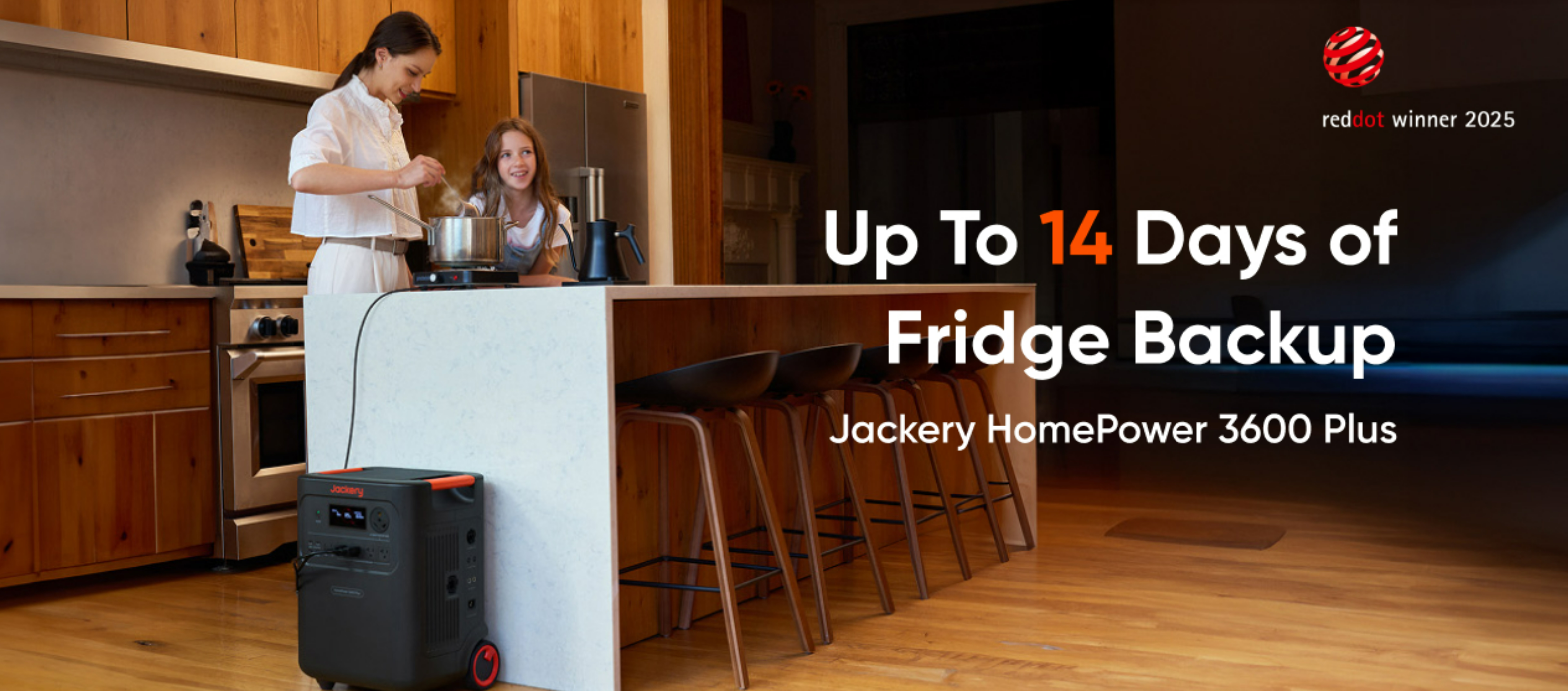
Be careful with “up to” fridge backup claims. They usually depend on specific assumptions and may include expansion batteries or ideal conditions. Test your own fridge before relying on any estimate.
What size for RV power?
RV sizing depends on what you want to run. Lights, phones, fans, a small fridge, and laptops are manageable. Air conditioning, microwave, induction cooking, and heating loads require much more power.
The Jackery HomePower 3600 Plus has a TT-30 RV port shown in its product material, making it a strong RV option. The Anker SOLIX F3800 is also useful for heavier RV needs, especially where higher output and broader voltage support matter.
Navigation and Smart Features
Solar generator sizing is not only about capacity. Smart features can change how useful a unit feels in daily life.
UPS support
UPS support matters if you want backup for computers, routers, modems, network equipment, or certain devices that should not shut off during a short outage. The Anker SOLIX C1000 product material shows UPS transfer under 20ms. The Jackery HomePower 3600 Plus material shows ≤10ms UPS switching.
For medical or critical equipment, do not rely on marketing images alone. Check your device requirements and the power station manual before using any portable power station as backup.
App-controlled charging
Fast charging is useful when a storm is coming or when you forgot to recharge after a trip. The Anker C1000 uses app-activated UltraFast charging according to the product material. The Jackery 1000 v2 also includes app-controlled charging modes, including emergency charging.
App features are not required for every buyer, but they can help manage battery health, charging speed, quiet charging, and auto shutoff behavior.
Expansion
Expansion matters for home backup more than camping. A 1000Wh model that cannot expand is fine for travel. A home backup system benefits from the option to add batteries later.
The Anker F3800 and Jackery HomePower 3600 Plus are stronger choices for expandable backup. The Anker C1000 can double capacity to 2112Wh according to the product material, which is helpful but still not in the same class as the larger systems.
Battery Life and Maintenance
Most modern solar generators in this group use LiFePO4 or LFP battery chemistry. That is useful for buyers who plan to use the unit for years rather than only once or twice.
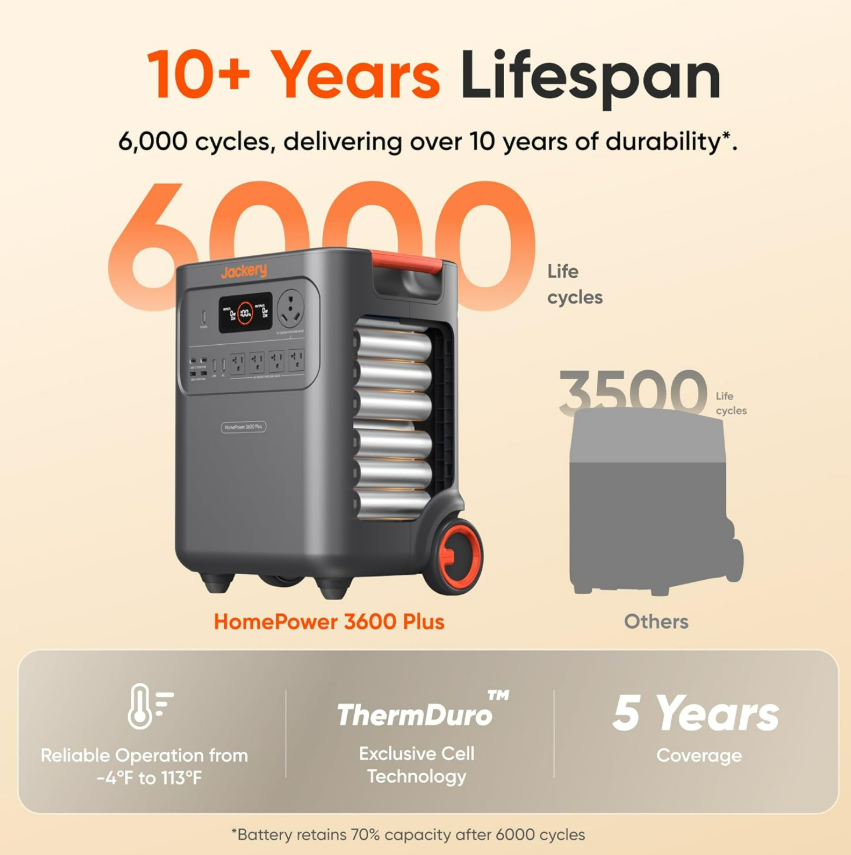
The Jackery HomePower 3600 Plus product material claims 6,000 cycles and 10+ years of durability, with a footnote saying the battery retains 70% capacity after 6,000 cycles. The Jackery 1000 v2 material claims over 70% original capacity after 4,000 cycles. The Anker C1000 and F3800 product materials mention LFP battery chemistry and long cycle-life claims.
These numbers are useful, but real battery life depends on temperature, storage, charging habits, discharge depth, load type, firmware, and maintenance.
Storage tips
Do not store the power station fully drained. Recharge it periodically if it sits unused. Keep it in a dry, temperature-appropriate place. Avoid blocking vents. Inspect cables before use. Store solar panels carefully so the surfaces and connectors are not damaged.
Test before emergencies
Testing matters more than spec sheets. Plug in your fridge, router, laptop, lamp, or RV device and watch the display. Real wattage can surprise you. This is the fastest way to learn whether your chosen solar generator is big enough.
What I Like
I like using size categories rather than one-size-fits-all recommendations. A 1000Wh solar generator is excellent for camping and light backup, but not enough for every home. A 3600Wh solar generator is great for outages and appliances, but too bulky for casual trips. A 3.84kWh expandable unit can be powerful, but only worth it if you need that level of backup.
I also like that the four reviewed models cover different buyer types clearly:
The Jackery Solar Generator 1000 v2 is the lightweight camping pick.
The Anker SOLIX C1000 is the portable all-rounder.
The Jackery HomePower 3600 Plus is the rolling home and RV backup pick.
The Anker SOLIX F3800 is the heavy-duty home backup and expansion pick.
This makes sizing easier. Instead of asking which brand is best, ask which size class fits your actual load list.
What Could Be Better
The biggest problem in solar generator shopping is that product pages often mix capacity, output, surge, solar input, and runtime examples in ways that can confuse buyers.
A high output number does not mean long runtime. A large battery does not mean it can run every appliance. A solar panel rating does not mean you will get that wattage all day. An “up to” runtime claim does not mean your device will get the same result.
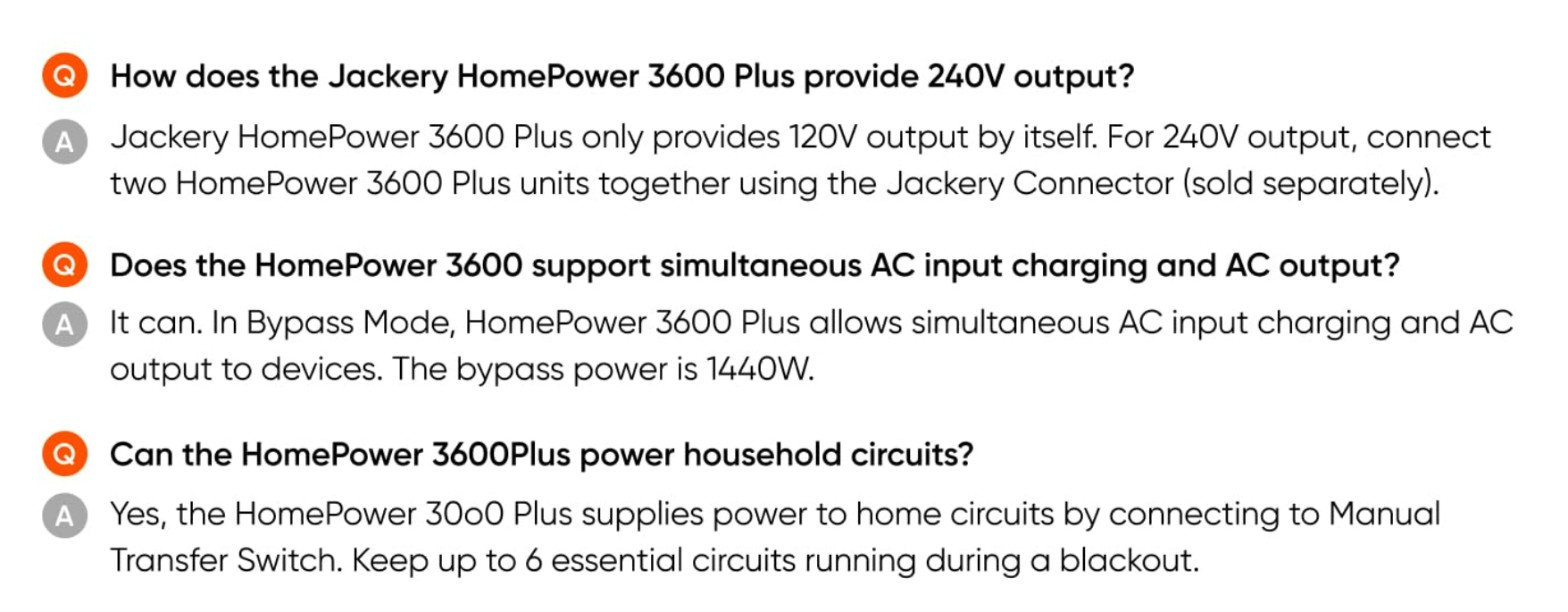
I also wish every listing made voltage and accessory requirements clearer. For example, the Jackery HomePower 3600 Plus provides 120V by itself, while 240V requires two units and the Jackery Connector, sold separately, according to the provided FAQ. That detail matters for buyers planning around higher-voltage use.
Another common issue is underestimating weight. A 77 lb rolling unit may be portable around a house, but it is not the same as a 23.8 lb camping unit. Portability has levels.
Who Should Buy It
Buy a 1000Wh-class solar generator if you mostly need camping power, small electronics, laptops, camera gear, LED lights, phones, drones, fans, and short emergency backup. The Jackery 1000 v2 and Anker C1000 are the best examples from the reviewed group.
Buy a 3000Wh to 4000Wh solar generator if you want refrigerator backup, RV support, kitchen appliance backup, home office continuity, and longer outage runtime. The Jackery HomePower 3600 Plus fits this category well.
Buy a large expandable solar generator if you want serious home backup, multiple appliances, heavier loads, future expansion, and stronger output headroom. The Anker SOLIX F3800 is the best example here.
The right buyer is someone who knows their loads or is willing to measure them. A solar generator is much easier to choose when you have a realistic list.
Who Should Skip It
Skip a large 3000Wh to 4000Wh solar generator if you only need USB charging and a laptop. It will cost more, take more space, and be harder to move than necessary.
Skip a small 1000Wh solar generator if you expect it to support a refrigerator, kitchen appliances, and home backup loads for long periods. It may help, but it will not feel like a serious home backup system.
Skip solar charging as your only plan if your location is usually shaded, cloudy, or short on daylight during outage season. Solar is useful, but AC charging before an emergency is often just as important.
Skip any solar generator if you expect it to replace a full home electrical system without planning, accessories, or professional help. Essential backup and whole-home backup are not the same thing.
Buying Advice
Start by writing a simple power plan. Do not begin with a product name.
List your devices. Write down the wattage. Estimate hours of use. Add a safety margin. Decide whether portability or runtime matters more.
For camping, prioritize weight and simplicity. A 1000Wh-class model is usually the sweet spot.
For home backup, prioritize capacity and output. A 3000Wh to 4000Wh-class model is more realistic for refrigerators and appliances.
For RV power, prioritize ports, output, battery size, and charging options. TT-30 support or RV-compatible output can matter.
For serious outage planning, prioritize expansion, dual-voltage needs, and accessory compatibility.
At the time of writing, pricing may change. Check the current seller page before buying, verify the exact solar panel bundle, confirm warranty terms, and read shipping notes. Some power station and solar panel bundles may ship in separate packages.
Final Verdict
So, how big of a solar generator do you need?
For camping and small electronics, choose around 1000Wh. The Jackery Solar Generator 1000 v2 is the easiest lightweight example, while the Anker SOLIX C1000 is better if you want more output and a larger solar panel bundle.
For refrigerator backup, RV support, and essential home outage use, choose around 3000Wh to 4000Wh. The Jackery HomePower 3600 Plus is a strong example because it combines 3584Wh capacity, 3600W output, wheels, TT-30 RV support, and expansion.
For serious home backup, heavier loads, and long-term expansion, choose a larger expandable system. The Anker SOLIX F3800 is the strongest example from this group with 3.84kWh capacity, listed 6,000W AC output, 120V/240V support, and a broad expansion path.
The best solar generator size is not the biggest one. It is the one that powers your real devices for the time you actually need, while still fitting your budget, storage space, and portability needs.
FAQ
How big of a solar generator do I need for home backup?
For basic home backup, a 1000Wh solar generator can support phones, laptops, lights, routers, and small devices. For refrigerators and appliances, a 3000Wh to 4000Wh unit is more realistic. For serious backup and expansion, consider larger systems like the Anker SOLIX F3800.
What size solar generator do I need to run a refrigerator?
Many refrigerators can run from a 1000Wh power station for a limited period, but a 3000Wh to 4000Wh solar generator is a better starting point for meaningful fridge backup. Runtime depends on fridge wattage, compressor cycling, temperature, and door openings.
Is 1000Wh enough for camping?
Yes, 1000Wh is a practical size for camping. It can support phones, cameras, drones, laptops, LED lights, fans, speakers, and selected small appliances. The Jackery Solar Generator 1000 v2 and Anker SOLIX C1000 are both useful examples.
Is 1000Wh enough for home backup?
It can help with essential electronics, but it is limited for longer outages or appliance backup. For home backup involving refrigerators, kitchen appliances, or RV loads, a larger 3000Wh to 4000Wh unit is usually more practical.
What size solar generator do I need for RV use?
For basic RV electronics, a 1000Wh to 2000Wh unit may be enough. For larger RV loads, kitchen appliances, refrigeration, and longer runtime, look at 3000Wh to 4000Wh or larger. Ports such as TT-30 can also matter.
How much solar panel wattage do I need?
A 200W panel is useful for camping and slow recovery. A 400W panel gives better daily recharge potential. Larger backup systems may need more solar input to recharge quickly. Real solar output depends on sunlight, shade, weather, panel angle, and season.
Can a solar generator run a heater?
Many solar generators can run small heaters if the wattage is within the output rating, but heaters drain batteries quickly. For extended heating, a battery power station is usually not the most efficient solution.
Do I need 240V output?
You only need 240V if your appliances or backup setup require it. Many small appliances and electronics use 120V. Some larger home loads may require 240V. Always verify your appliance and power station configuration before buying.
Is a bigger solar generator always better?
No. A bigger solar generator gives more runtime and output headroom, but it also costs more, weighs more, and takes more space. For camping, smaller can be better. For home backup, larger capacity is usually more useful.
Should I buy Anker or Jackery?
Choose based on size and use case. Jackery Solar Generator 1000 v2 is strong for lightweight camping. Anker SOLIX C1000 is a strong portable all-rounder. Jackery HomePower 3600 Plus is strong for rolling home and RV backup. Anker SOLIX F3800 is strongest for heavy-duty home backup and expansion.