Anker SOLIX F3800 Review: Portable Power Station for Home Backup, RVs, and Solar
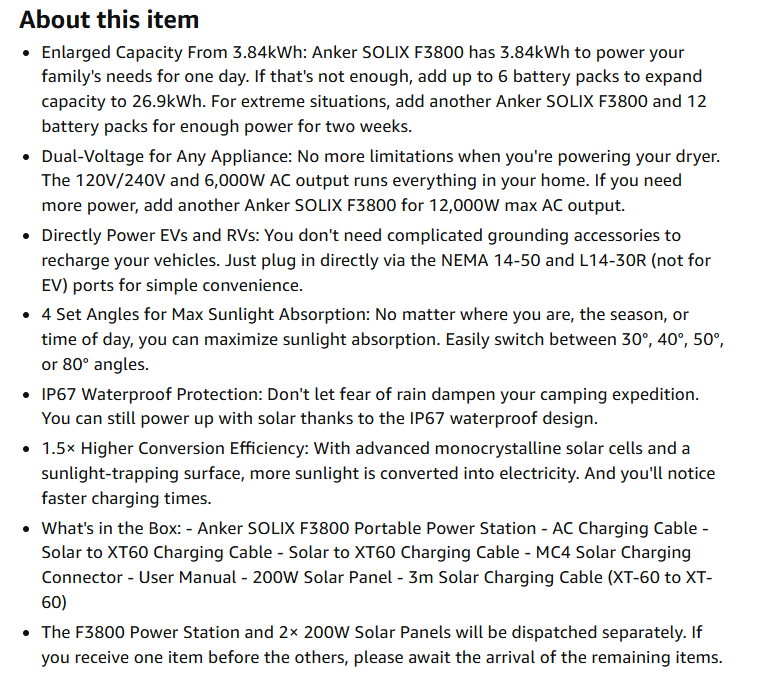
The Anker SOLIX F3800 review question usually comes down to one thing: do you need a portable power station for small electronics, or do you need a serious home backup system that can also support RVs, tools, solar panels, and selected high-load appliances? Based on the provided product information, this F3800 bundle is clearly aimed at the second group. It combines a 3.84kWh LiFePO4 battery, 120V/240V dual-voltage output, a claimed 6,000W AC output, and two 200W solar panels in the listed package.
As an Amazon Associate, we may earn from qualifying purchases.
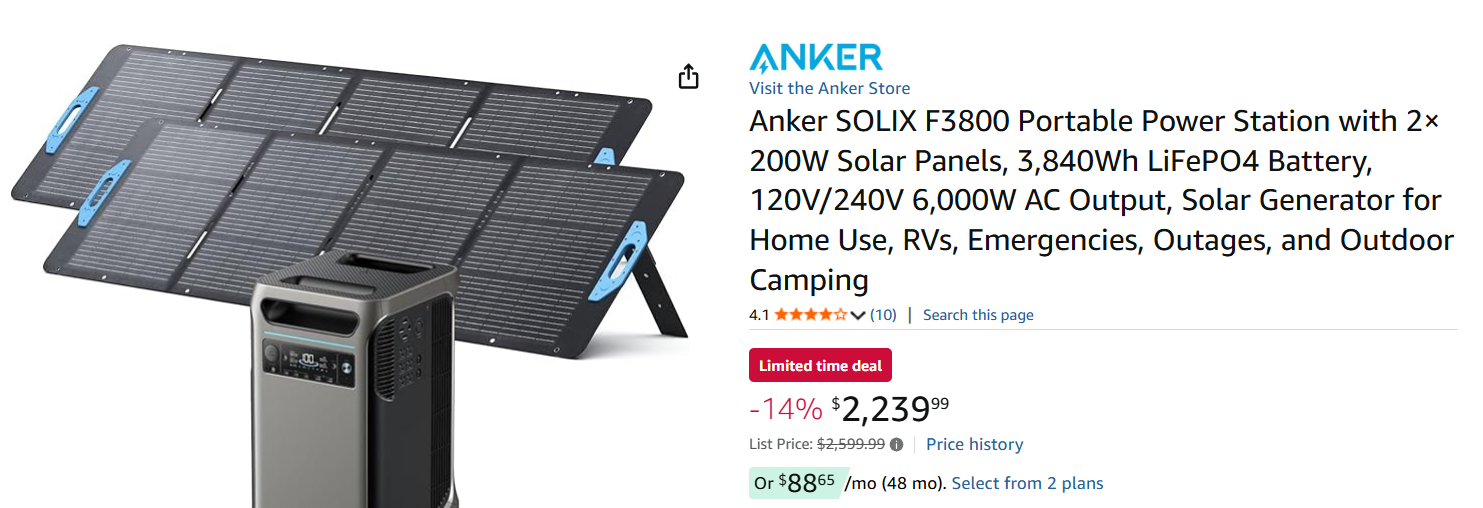
This is not the lightest or simplest backup battery you can buy. It is large, expensive, and better suited to people who already know they need more than a weekend phone-charging box. The appeal is capacity, expansion, dual-voltage flexibility, RV compatibility, solar charging, and the ability to keep important appliances running during outages.
Quick Verdict
The Anker SOLIX F3800 makes the most sense for homeowners, RV users, storm-preparedness buyers, and off-grid campers who want a high-capacity solar generator with room to expand. The listing suggests it can handle both regular 120V appliances and selected 240V loads, which is a major reason to consider it over smaller portable power stations.
My practical take is simple: buy it if you need serious backup power and can handle the size, weight, and cost. Skip it if you only need to charge phones, laptops, cameras, small lights, or a mini fridge for short trips. For those lighter use cases, the F3800 is more machine than you need.
The strongest points are the 3.84kWh base capacity, claimed 6,000W AC output, 120V/240V support, LiFePO4 battery chemistry, expandable storage, and multiple charging options. The main tradeoffs are bulk, price, the need to verify accessory compatibility, and the fact that high-power home backup setups often require careful planning rather than casual plug-and-play use.
Key Specifications
Based on the supplied listing images, the F3800 is positioned as a large-capacity portable power station with home, RV, EV, emergency, and solar use in mind. Some specifications depend on accessories and configuration, so confirm the exact bundle details on the seller page before buying.
| Feature | Listed Detail |
|---|---|
| Product | Anker SOLIX F3800 Portable Power Station bundle |
| Battery capacity | 3.84kWh base capacity |
| Battery type | LiFePO4 / LFP battery chemistry |
| AC output | Listed as 6,000W AC output |
| Dual-voltage support | 120V / 240V |
| Expansion | Up to 26.9kWh with 6 battery packs; up to 53.8kWh with another F3800 and 12 batteries |
| Solar panels in bundle | 2 × 200W solar panels |
| Solar panel efficiency claim | Up to 23% conversion efficiency |
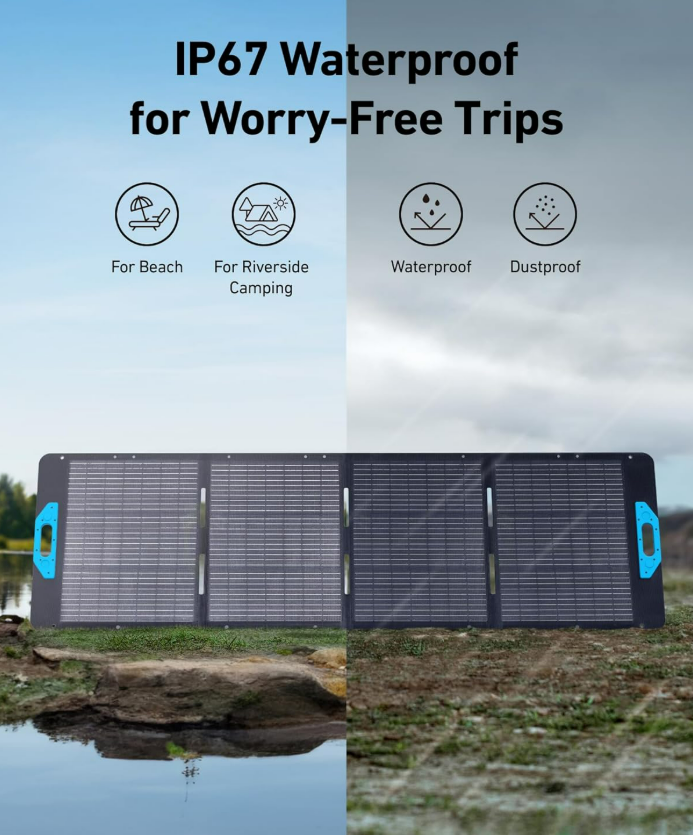
| Solar panel protection | IP67 waterproof and dustproof design listed for the panels |
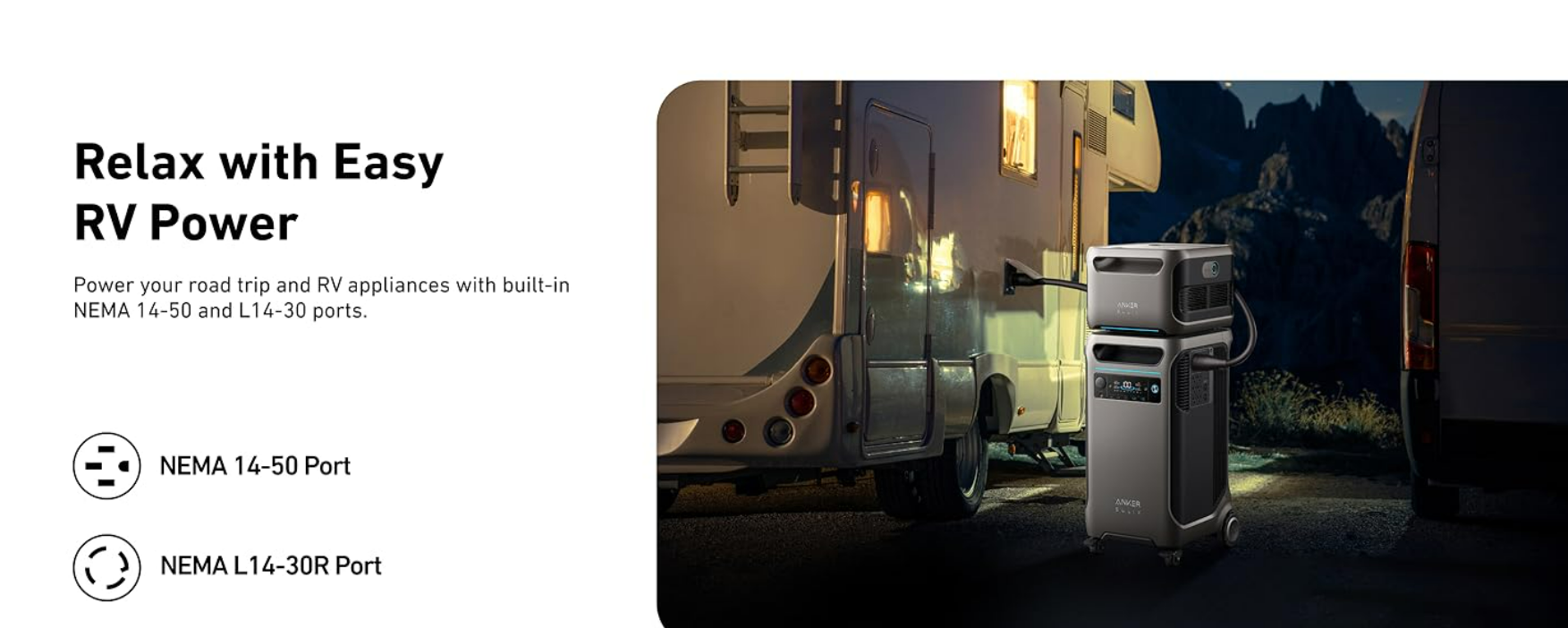
| RV ports | NEMA 14-50 and L14-30R ports shown in product material |
| EV charging use | NEMA 14-50 use shown; verify vehicle and cable compatibility before use |
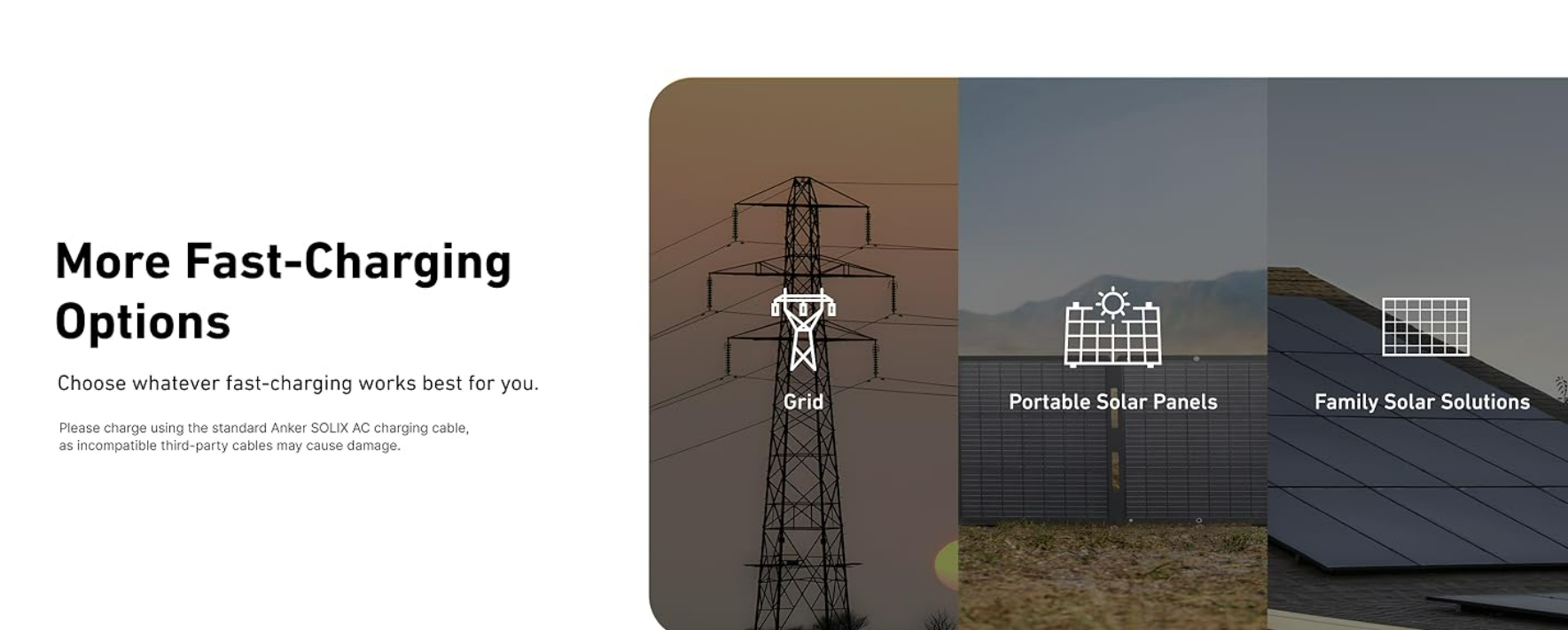
| Charging options | Grid, portable solar panels, family solar solutions, car auxiliary port |
| Warranty / lifespan claims | Listing images mention 5-year warranty and 10-year lifespan; check seller page for exact terms |
| Shipping note | Product information says the F3800 and 2 × 200W panels may dispatch separately |
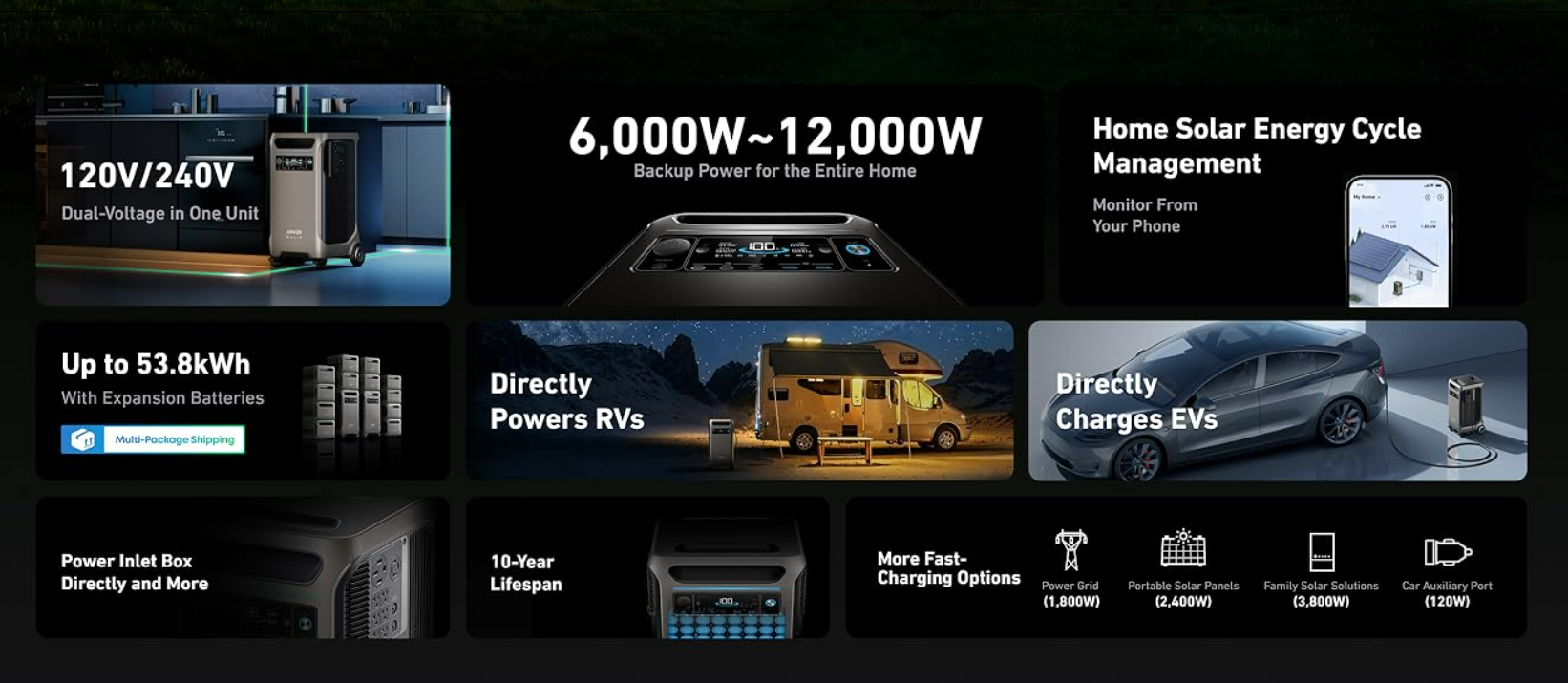
The numbers look strong, but they should be read carefully. A 3.84kWh battery can be substantial for essentials, yet runtime always depends on the load. A fridge, router, lights, and phone charging are very different from central air conditioning, electric heating, or heavy tools. The product material gives examples, but real runtime changes with appliance efficiency, startup surge, ambient temperature, and how much of the battery you are willing to use.
First Impressions
The F3800 looks more like a compact rolling appliance than a grab-and-go power bank. The product images show a tall, rectangular body with a built-in handle area, display panel, front controls, side ventilation, and wheels. That design choice makes sense because a battery in this class is not something most people will want to carry by hand for long distances.
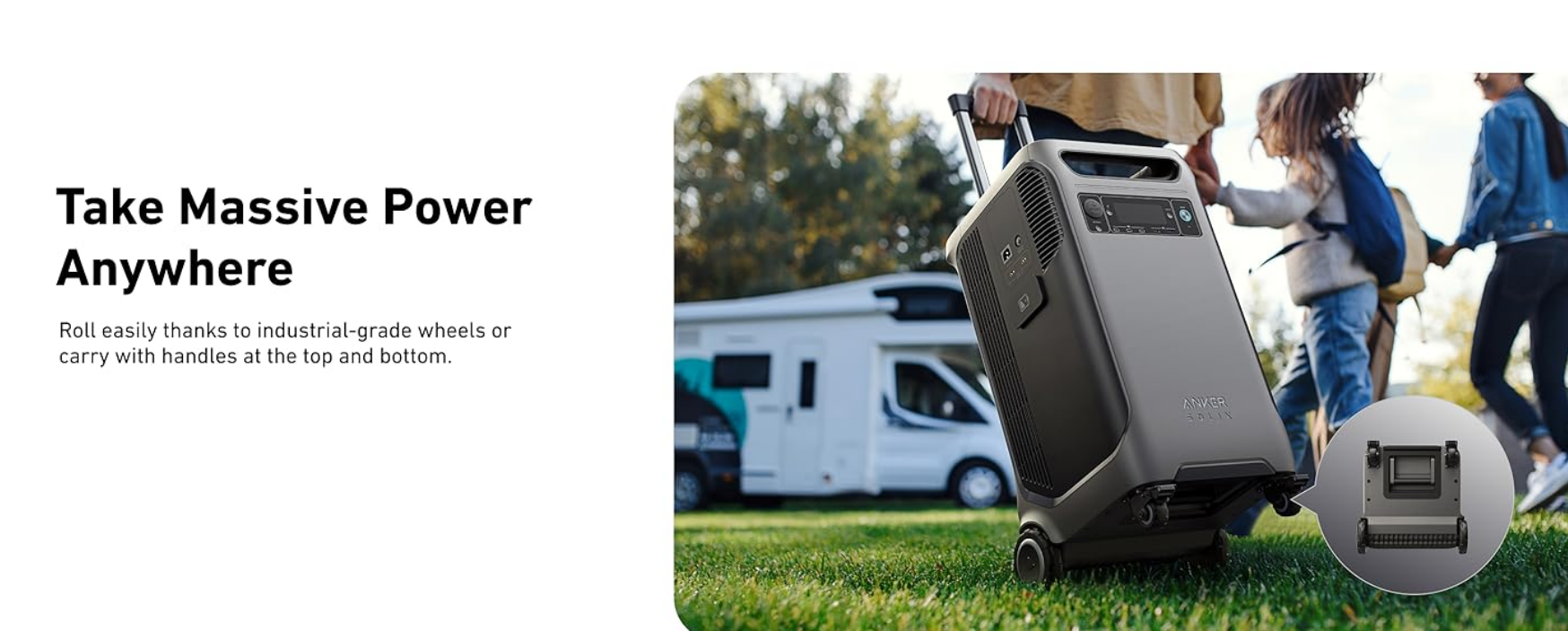
The visual design is practical rather than flashy. The gray-and-black shell, large front display, and wheeled base make it feel closer to jobsite equipment or home backup hardware. I like that the product material emphasizes wheels and handles because portability becomes a real issue once a power station reaches this size.
Build and layout
From the images, the front display appears easy to read, with battery percentage and charging information placed where users can quickly check system status. The output ports are grouped in a way that looks organized, and the larger RV and appliance-focused ports are clearly part of the product’s value proposition.
The bundle also includes two 200W solar panels according to the Amazon listing screenshot. That matters because buyers often underestimate the cost of solar panels when comparing power stations. A battery-only price and a solar-generator bundle price are not the same thing, so compare the exact package before deciding.
Packaging and shipping expectations
The listing notes that the F3800 power station and 2 × 200W solar panels may be dispatched separately. That is worth knowing before delivery day. If one package arrives before the other, it does not automatically mean the order is incomplete. Still, inspect all packages, confirm the accessories, and save the packaging until everything has been tested.
Setup and Daily Use
For basic use, the F3800 appears straightforward: charge the unit, connect your devices, choose the right output, and monitor power from the display or app-related features shown in the listing material. For simple 120V loads, that should feel familiar to anyone who has used a large portable power station before.
Where setup becomes more serious is with 240V appliances, RV power, EV charging, solar input, and whole-home-style backup. Those use cases require more attention. You need to know the wattage of what you plan to run, the startup surge of motors or compressors, the correct cable or adapter, and whether extra accessories are required.
Solar setup
The supplied product information describes four set angles for sunlight absorption, with options shown as 30°, 40°, 50°, and 80°. That is useful because solar panels rarely perform well when placed flat without regard for sun angle. In real outdoor use, the best angle changes by season, time of day, and location.
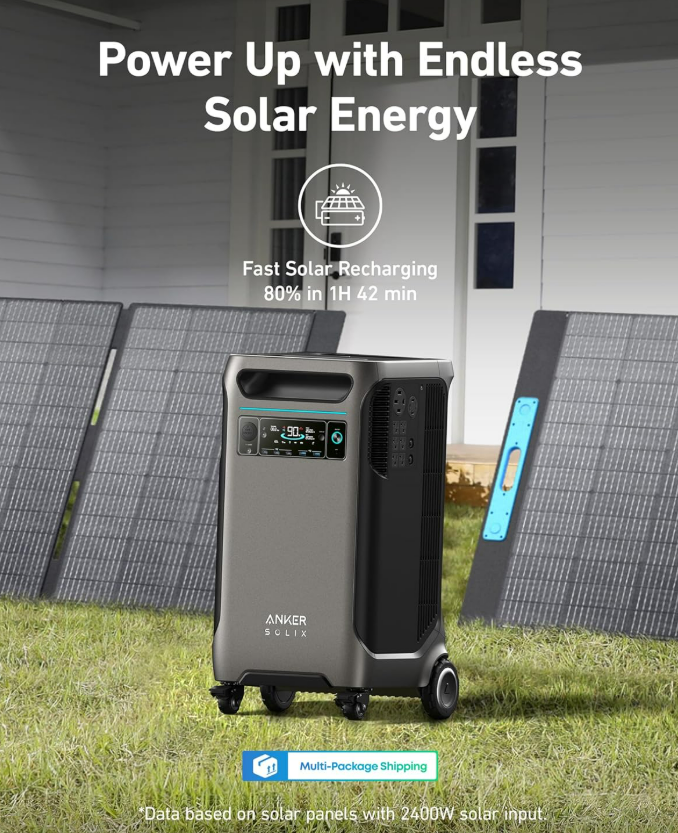
The product material also claims fast solar recharging under a 2,400W solar input scenario. That is not the same as using only two 200W panels. With two 200W panels, the theoretical panel rating is much lower, and actual output can be lower still due to clouds, heat, angle, shading, and cable losses. I would treat the fast recharge claim as a best-case or specific-configuration figure unless your setup matches the listed solar input conditions.
RV and home use
The RV-focused images show built-in NEMA 14-50 and L14-30R ports. That makes the F3800 more interesting for RV owners who want a cleaner power setup than a noisy fuel generator. It may also be useful for people who want backup power at home without permanently depending on a traditional gas generator.
For daily use, I would treat the F3800 as a planned power hub rather than something you randomly move around the house. Keep it where wheels can roll smoothly, where ventilation is not blocked, and where charging cables can be managed safely. If you plan to use it in a garage, RV, cabin, or backup power corner, measure the space first.
Cleaning Performance
For a portable power station, “cleaning performance” is really about clean power delivery, load handling, and how well the system supports the appliances and tools people actually care about during outages, camping trips, or work sessions. The F3800 is clearly not designed just for phones and tablets. The product material shows power tools, kitchen appliances, home systems, RVs, and EV charging scenarios.
Tools and jobsite-style loads
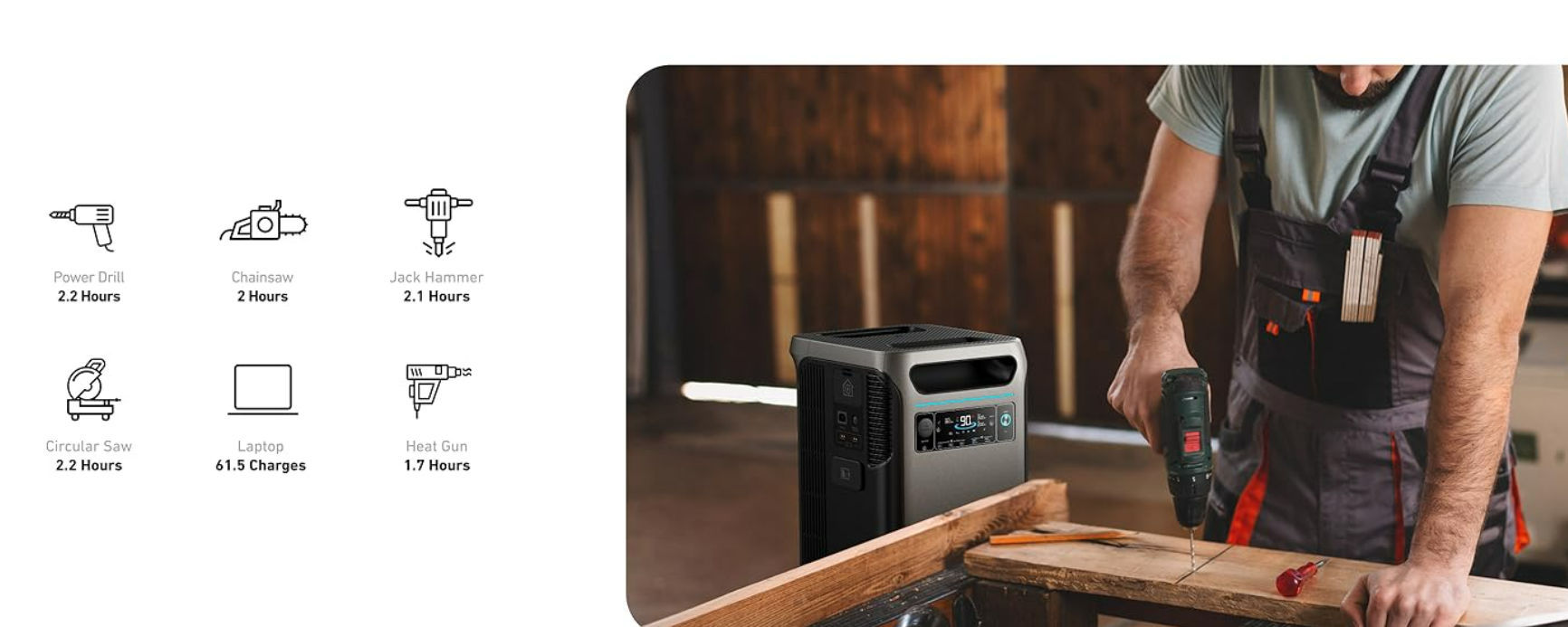
The supplied graphic shows example runtimes for tools such as a power drill, chainsaw, jack hammer, circular saw, laptop, and heat gun. These examples are helpful for understanding the intended market, but I would not treat them as guaranteed results for every tool. Tool wattage varies a lot, and high-draw tools can behave differently under startup load than they do during steady operation.
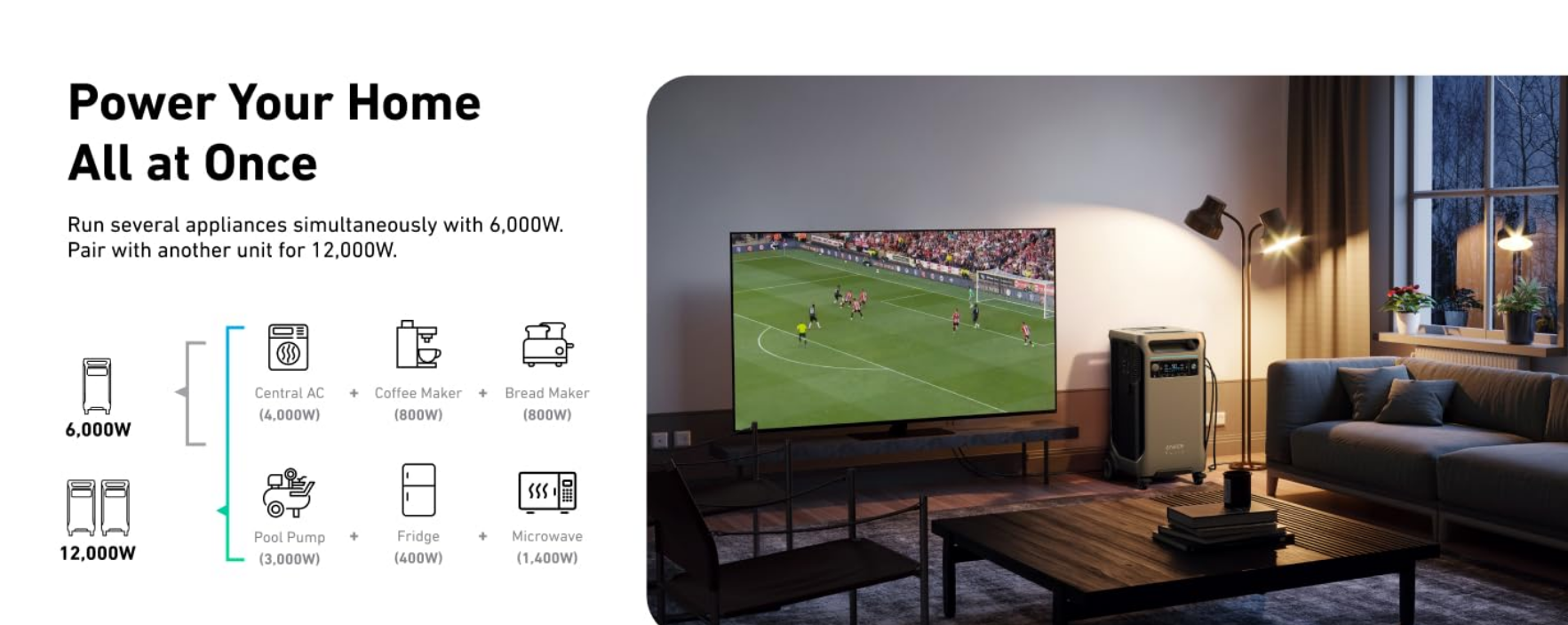
The 6,000W output claim is the main reason the F3800 looks attractive for heavier equipment. A smaller power station may run a laptop, camera battery charger, or LED light without trouble, but it may fail when a compressor, pump, saw, or heater starts. The F3800 is designed for that higher-demand category.
Home appliance loads
The product material shows examples like a central AC, pool pump, fridge, microwave, coffee maker, and bread maker. It also shows 6,000W from one unit and 12,000W with a second unit, with a note that 12,000W requires an Anker SOLIX Double Power Hub accessory.
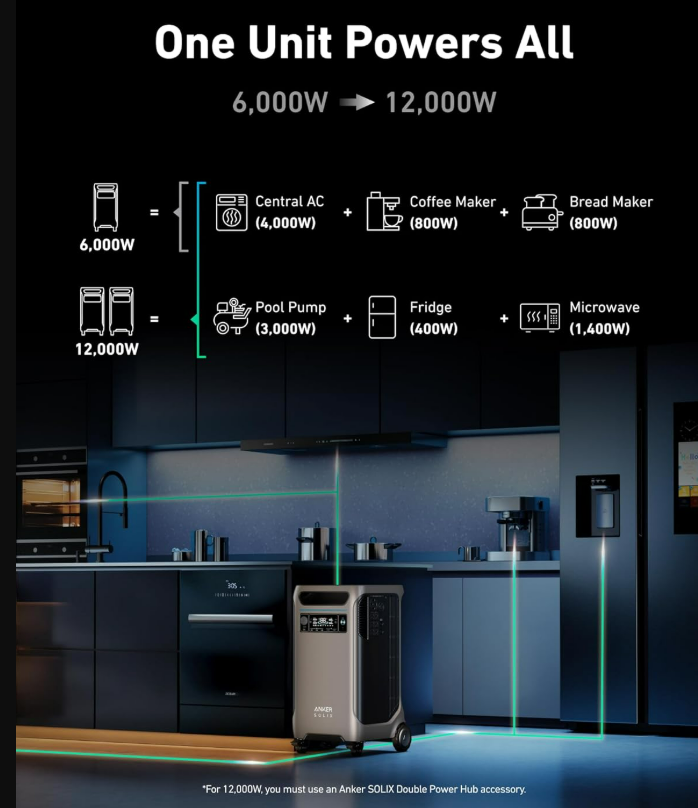
That accessory note matters. Do not assume the 12,000W configuration comes automatically with the base bundle. If your buying reason is whole-home backup or heavy 240V appliance support, check every required component before purchase. This includes transfer setup, cables, hubs, expansion batteries, and local electrical requirements.
A portable power station can be much quieter and cleaner than a fuel generator, but it is still an electrical system. For high-voltage or home-panel integration, use qualified help and follow the product manual. The F3800 is powerful enough that guessing is not a good setup strategy.
Dual-voltage flexibility
One of the most important selling points is 120V/240V output. Many portable power stations are limited to 120V, which can be fine for small appliances but limiting for certain home and RV needs. The F3800’s dual-voltage design gives it a broader role.
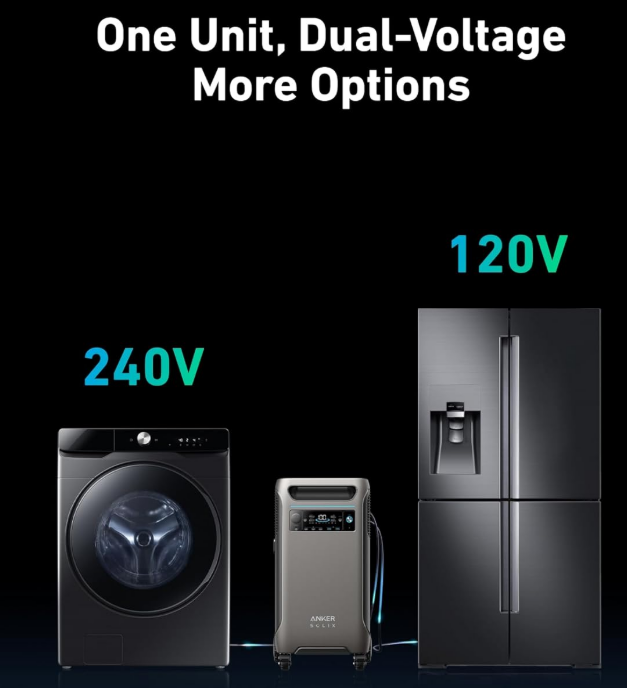
That said, dual-voltage support does not mean every appliance should be plugged in without checking. Always compare the appliance wattage, surge requirements, plug type, and runtime expectations. A large battery can still drain quickly under heavy loads. A high-output inverter solves the power delivery side, but capacity still decides how long your setup lasts.
Navigation and Smart Features
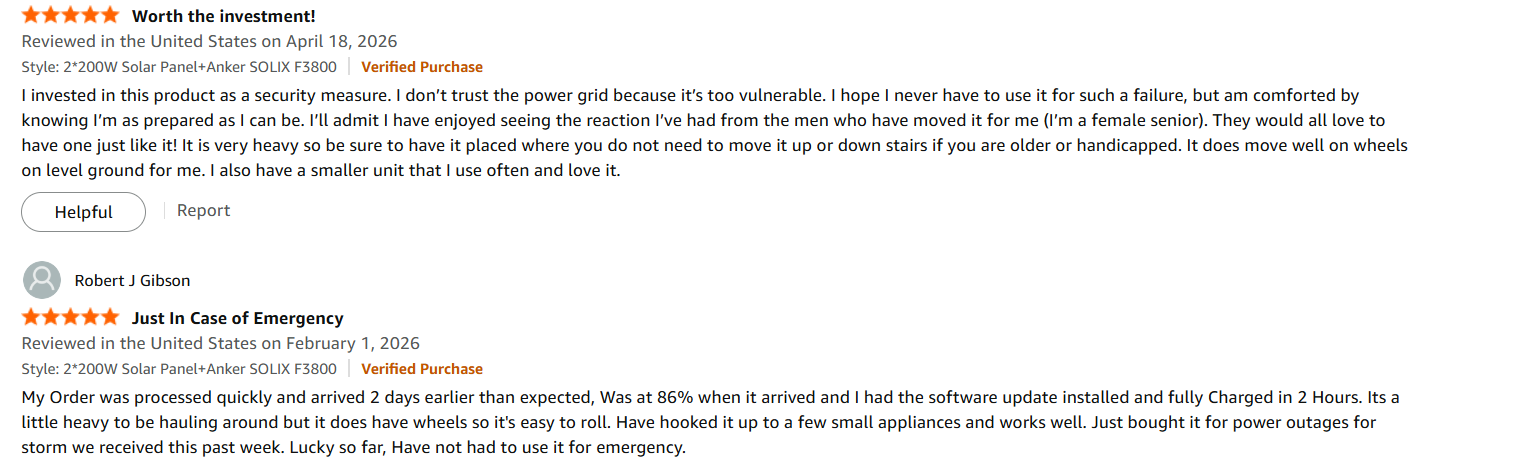
The F3800 does not “navigate” like a robot, but placement and movement are part of daily usability. The product images show wheels, a pull-style handle approach, and large handles that should help users move it across level ground. Owner feedback in the supplied screenshot also notes that it is heavy but can move well on wheels over level surfaces.
App and monitoring
The feature collage mentions home solar energy cycle management and monitoring from a phone. For a system this large, app visibility can be genuinely useful. You may want to check battery percentage, solar input, output draw, and charging status without standing next to the unit.
The main benefit is not novelty. It is planning. During a blackout, knowing whether your fridge, router, lights, and medical or comfort devices are drawing more power than expected can help you decide what to turn off. During solar charging, input data helps you adjust panels and decide whether the current sunlight is worth the setup effort.
EV charging expectations
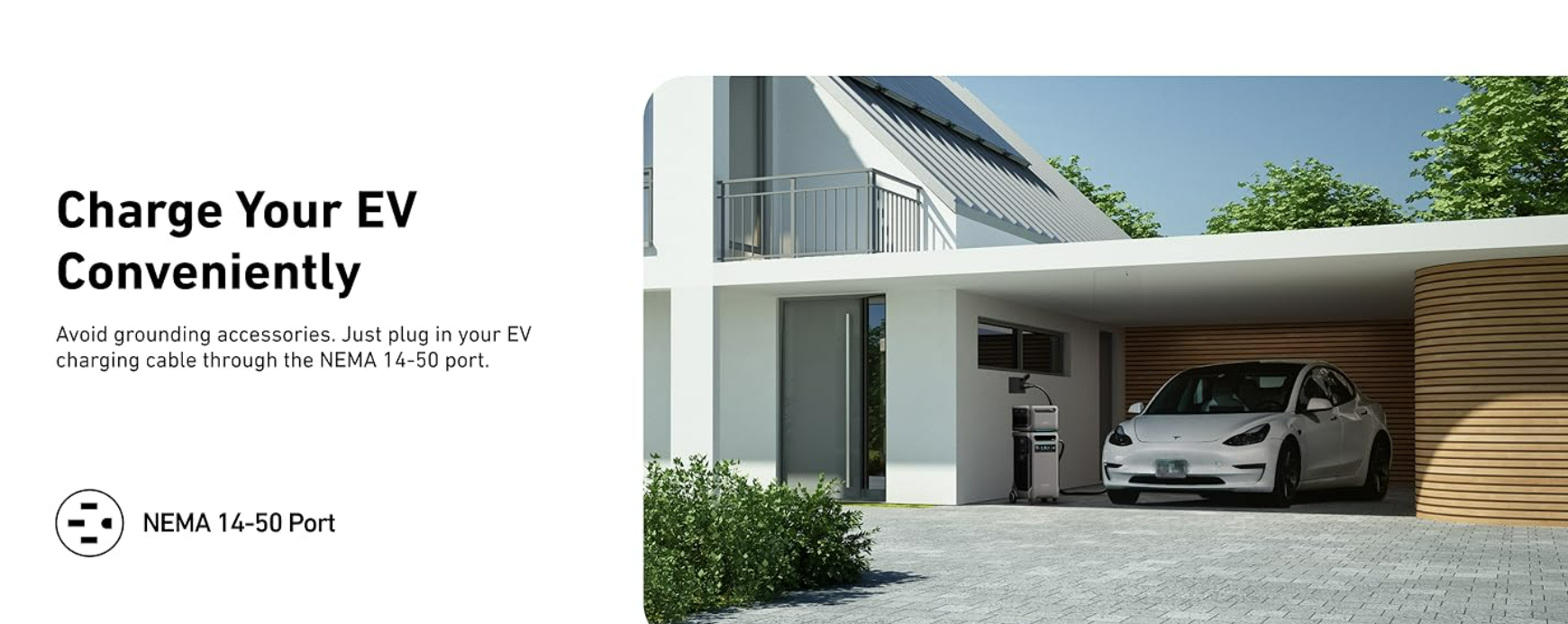
The product images show convenient EV charging through a NEMA 14-50 port. This can be useful in specific situations, but expectations should stay realistic. A 3.84kWh battery is not going to act like a full home EV charger replacement. It can add emergency range or support limited charging scenarios, but EV batteries are much larger than portable power station batteries.
Before using the F3800 for EV charging, verify the vehicle, charging cable, plug type, grounding requirements, and seller instructions. The product material says grounding accessories can be avoided in the shown scenario, but compatibility depends on the actual vehicle and cable setup.
Battery Life and Maintenance
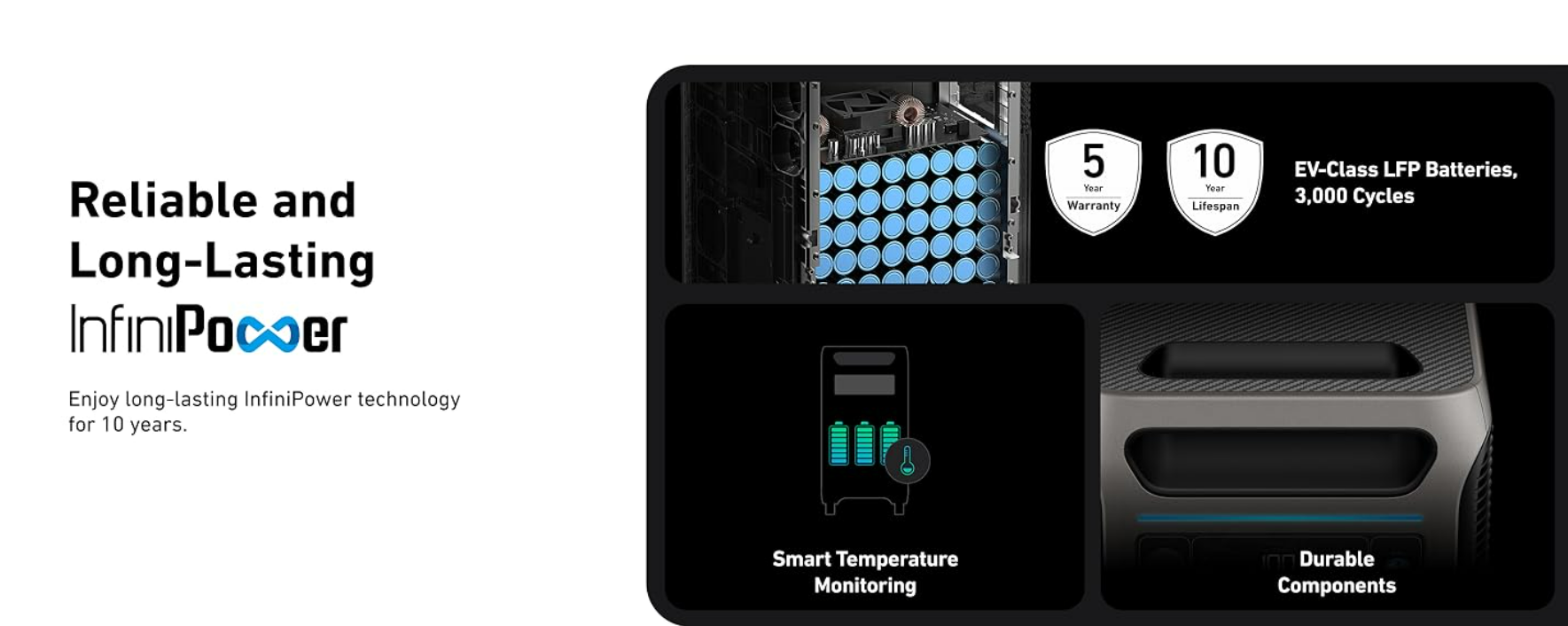
The F3800 uses LiFePO4 battery chemistry according to the listing, and the product material highlights EV-class LFP batteries, 3,000 cycles, a 5-year warranty, and a 10-year lifespan claim. LiFePO4 is generally valued in power stations because it is known for long cycle life compared with older lithium-ion chemistries, but warranty and lifespan details should always be verified directly on the seller page.
Capacity and expansion
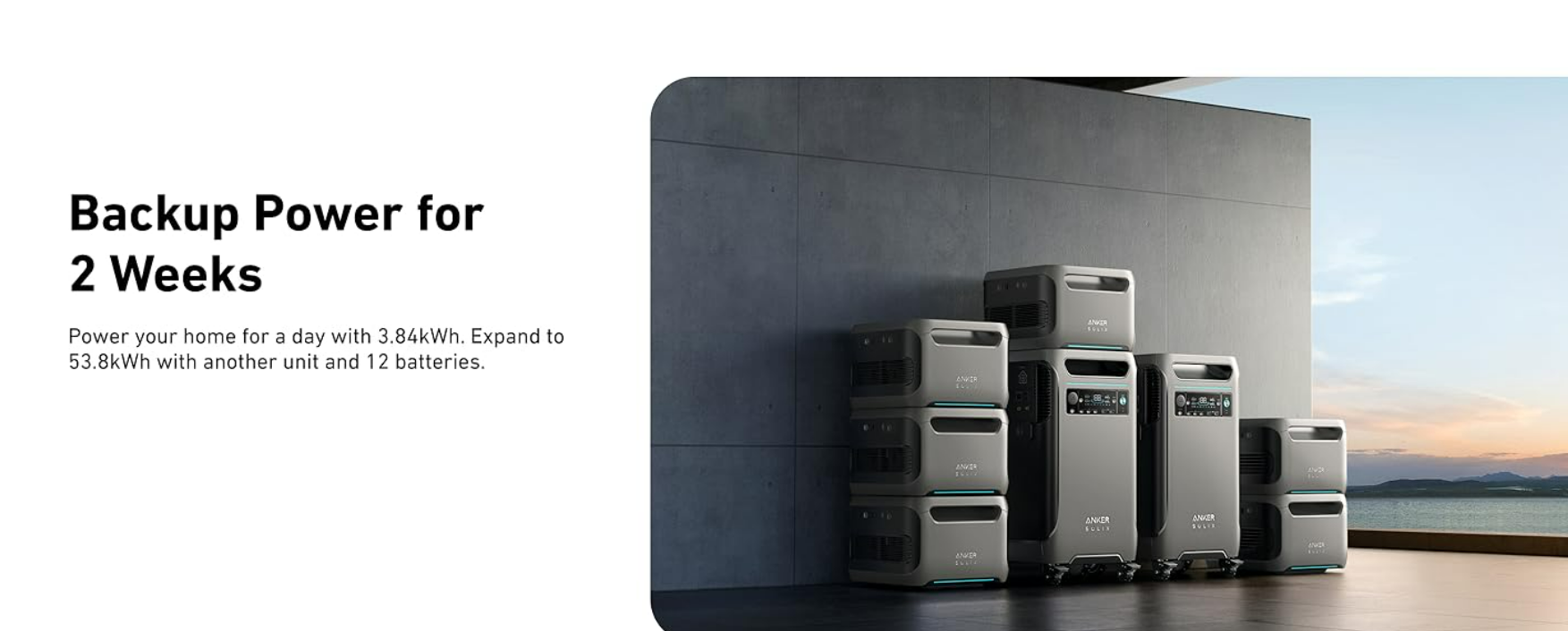
The base 3.84kWh capacity is already large for a portable power station, but the bigger story is expansion. The listing says you can add up to 6 battery packs for 26.9kWh, or add another F3800 and 12 battery packs for up to 53.8kWh.
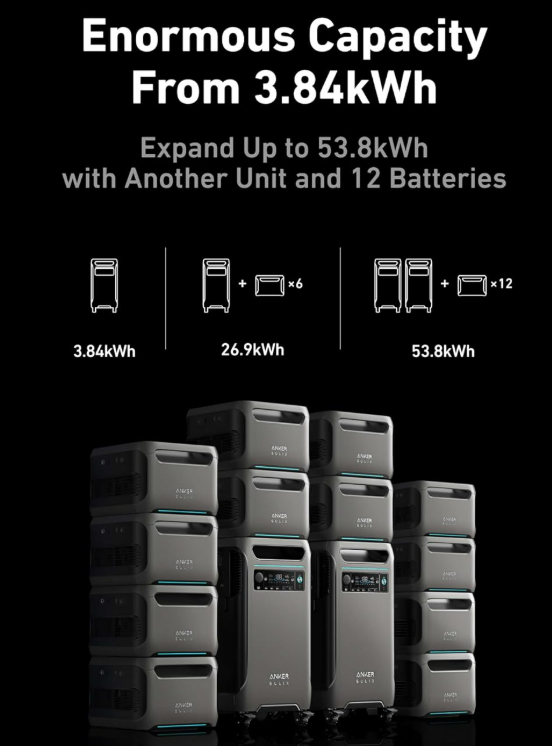
That expansion path is useful for buyers who want to start with one unit and build a larger system later. It also makes the F3800 more flexible than a fixed-capacity power station. Still, expansion batteries and accessories add cost, space, weight, and setup complexity. Plan the full system budget before assuming you will expand later.
Maintenance expectations
Compared with fuel generators, a battery power station has fewer routine maintenance tasks. There is no gasoline to store, no oil change, and no exhaust. That is a real advantage for indoor-safe power storage, emergency readiness, and quiet operation.
Maintenance is still not zero. You should keep the unit dry, avoid blocking vents, store it within recommended temperature ranges, update software when needed, check cables for wear, keep solar connectors clean, and recharge it on a schedule if it sits unused. For long-term readiness, a forgotten battery is not much better than an empty fuel can.
What I Like
The strongest feature is the balance between capacity and output. A 3.84kWh base battery with a listed 6,000W AC output gives the F3800 enough headroom for loads that smaller power stations often cannot handle.
I also like the 120V/240V support. This makes the F3800 more useful for RV owners and selected home backup situations. Many people shopping in this category are specifically trying to power more than USB devices, and dual-voltage support helps separate this model from smaller stations.
The solar bundle is another positive. Two 200W panels will not match the fastest solar-input claims by themselves, but having panels included makes the package more complete for camping, outage preparation, and users who want to begin solar charging without immediately shopping for separate panels.
I also like the wheel-based design. It does not make the F3800 small, but it makes the size more manageable on flat surfaces. For a power station in this class, wheels are not a luxury; they are part of whether people will actually use it.
Finally, the expansion path is useful. A buyer can start with the base unit and later move toward a larger home energy setup if the system proves useful. Not everyone needs that, but serious backup buyers may appreciate the upgrade route.
What Could Be Better
The first drawback is size and weight. The supplied owner feedback mentions that the unit is heavy, even though wheels help. This is not the best choice for people who need to lift a power station into a car trunk frequently or carry it up and down stairs.
The second concern is cost. A large LiFePO4 power station with solar panels and 240V support is not a casual purchase. At the time of writing, pricing may change. Check the current price on Amazon and compare the exact bundle, because battery-only packages, solar bundles, and expanded systems can differ a lot.
The third issue is configuration complexity. If your goal is simple backup for a fridge and Wi-Fi router, the F3800 may be easy enough. If your goal is EV charging, RV shore-style power, 240V appliances, or whole-home backup, you need to confirm cables, accessories, safety requirements, and compatibility.
I would also be cautious about interpreting runtime examples too literally. The product graphics are useful, but your appliance model, settings, environment, and usage pattern can change the result. For exact warranty and compatibility details, check the seller page before buying.
Who Should Buy It
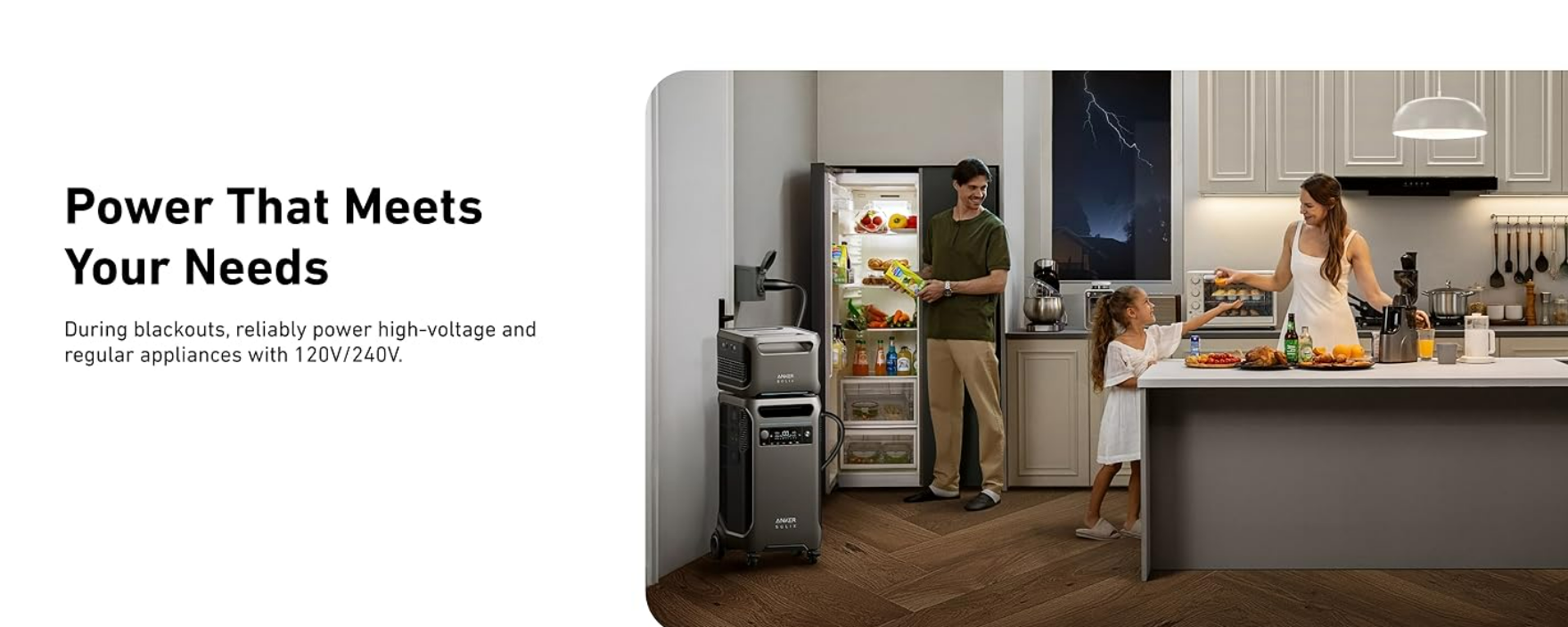
The F3800 is a strong fit for homeowners who want a serious emergency backup system for outages. If you live in an area with storms, grid instability, wildfire shutoffs, or frequent short blackouts, the base capacity can help keep essential loads running.
It also makes sense for RV users who want high-output portable power without running a fuel generator all the time. The NEMA 14-50 and L14-30R focus shown in the product material is clearly aimed at that audience.
Campers and off-grid users may also like it, especially if they have space to transport it and can use solar panels effectively. It is better for basecamp-style use than ultralight travel.
It is also worth considering for people who want an expandable system. The F3800 can start as a large standalone unit and later become part of a bigger backup setup with extra batteries and accessories.
Who Should Skip It
Skip the F3800 if you mainly need a compact power station for phones, laptops, camera gear, and small lights. A smaller model will be cheaper, easier to carry, and less complicated.
It is also not ideal if you live in an apartment with limited storage and no practical way to use solar panels. You may still use it as a backup battery, but the size and cost may be hard to justify.
You should also skip it if you are not comfortable checking wattage, plug types, and accessory requirements. High-output systems reward careful planning. If you want the simplest possible emergency setup, a smaller plug-and-play unit may be less stressful.
Finally, do not buy it only because the product image mentions EV charging. It can support certain EV charging scenarios, but it is not a substitute for a full home EV charging installation or a large stationary battery system.
Buying Advice
Before buying the Anker SOLIX F3800, decide which job you actually need it to do. For basic outage support, list the appliances you want to run: fridge, freezer, router, lights, fan, microwave, coffee maker, sump pump, or medical device. Look up each wattage number and estimate runtime.
For RV use, confirm the plug type and whether the unit supports the loads you expect to run at the same time. Air conditioning, heaters, microwaves, pumps, and cooking appliances can draw a lot of power.
For solar use, remember that two 200W panels are not the same as a 2,400W solar array. The listing’s fast solar recharge claim is based on a higher solar input scenario, so match expectations to your actual panel setup.
For home backup, check whether you need additional accessories such as expansion batteries, a Double Power Hub, transfer equipment, or specific cables. If your plan involves a home electrical panel or 240V circuits, consult a qualified professional.
At the time of writing, pricing may change. Check the current price on Amazon, review the exact bundle contents, and confirm warranty, shipping, and compatibility details on the seller page before buying.
A smart purchase decision here is not about buying the biggest battery possible. It is about matching the F3800’s high-output design to real loads you care about. If you only use 15% of what this system can do, you may be overspending. If you need 120V/240V flexibility, expansion, and RV-ready power, the value case becomes much stronger.
Final Verdict
The Anker SOLIX F3800 is best understood as a serious portable power station for people who need more than basic backup. It is built around high capacity, high AC output, dual-voltage flexibility, solar charging, RV use, and expansion. That combination makes it a compelling option for emergency preparedness, RV power, basecamp solar setups, and selected home backup needs.
It is not the right choice for everyone. The size, weight, price, and configuration details mean casual users should probably look smaller. But for buyers who want a powerful battery system that can grow into a larger backup setup, the F3800 deserves a close look.
My final advice: buy it for planned backup power, not impulse convenience. Know your loads, check the accessories, confirm the bundle, and make sure the solar and expansion features fit the way you will actually use it.
FAQ
Is the Anker SOLIX F3800 good for home backup?
Yes, it can be a strong home backup option for essential appliances and selected high-load use cases. The listing highlights 3.84kWh capacity, 6,000W AC output, and 120V/240V support. Runtime depends on what you plug in, so calculate your appliance loads before buying.
Can the Anker SOLIX F3800 power 240V appliances?
The product material lists 120V/240V dual-voltage support. That is one of its major advantages over smaller portable power stations. However, you still need to verify plug type, wattage, surge demand, and accessory requirements for your specific appliance.
How much capacity does the Anker SOLIX F3800 have?
The base unit is listed at 3.84kWh. The product information also says it can expand to 26.9kWh with 6 battery packs, or up to 53.8kWh with another F3800 and 12 battery packs.
Does the bundle include solar panels?
The supplied Amazon listing screenshot shows a bundle with 2 × 200W solar panels. The product information also notes that the power station and solar panels may ship separately, so check all package tracking details after ordering.
Are the solar panels waterproof?
The product image lists IP67 waterproof and dustproof protection for the solar panels. That is helpful for outdoor trips, beach use, riverside camping, and unexpected weather. Still, follow the manual for safe use, storage, and cable handling.
Can the Anker SOLIX F3800 charge an EV?
The product images show EV charging through a NEMA 14-50 port. It may help with limited or emergency EV charging situations, but it should not be treated as a full replacement for a home EV charger. Confirm vehicle, cable, grounding, and compatibility details first.
Is the Anker SOLIX F3800 easy to move?
It has wheels and handles shown in the product images, which should help on level ground. However, owner feedback indicates it is heavy. It is better for rolling around a garage, driveway, RV site, or home backup area than carrying upstairs.
Is the Anker SOLIX F3800 worth it?
It is worth considering if you need high-output backup power, RV support, dual-voltage operation, solar charging, and expansion. It is probably too much if you only need to charge small electronics or run light camping gear for a short time.