Jackery Solar Generator 1000 v2 Review: Compact Portable Power Station for Camping, RVs, and Backup
This Jackery Solar Generator 1000 v2 review looks at a portable power station bundle built for people who want real backup power without moving into oversized home-battery territory. Based on the provided product information, the bundle includes the Explorer 1000 v2 portable power station and one 200W solar panel. The headline specs are a 1,070Wh LiFePO4 battery, 1,500W AC output, 3,000W surge peak, 100W USB-C output, app-controlled charging modes, and a listed weight of 23.8 lbs.
As an Amazon Associate, we may earn from qualifying purchases.
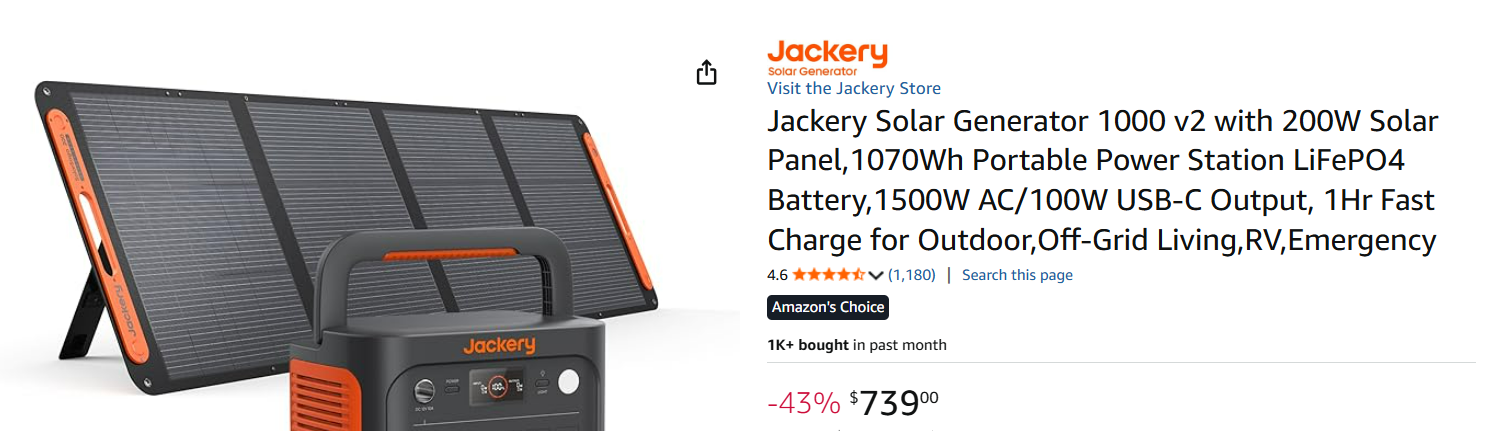
The short version is that this is not a tiny phone charger and not a whole-home backup system. It sits in a practical middle ground: powerful enough for camping appliances, road trips, emergency essentials, power tools, projectors, routers, small kitchen devices, and RV-adjacent use, but still portable enough to carry with one hand for short distances.
Quick Verdict
The Jackery Solar Generator 1000 v2 is a strong fit if you want a compact 1kWh-class solar generator that can run several everyday devices while staying manageable for car camping, overlanding, RV weekends, and outage preparation. The 1,500W output gives it more flexibility than smaller 500Wh or 700Wh units, while the 23.8 lb weight keeps it much easier to move than large 2kWh and 3kWh systems.
The best reasons to consider it are portability, fast AC charging, LiFePO4 battery chemistry, app-based charging control, 100W USB-C output, and the included 200W solar panel. The main limitations are also clear: 1,070Wh is useful but not unlimited, one solar panel will not recharge it instantly in poor sunlight, and buyers with heavy home backup needs may need a larger system.
I would buy it for camping, tailgating, emergency essentials, weekend cabins, light jobsite use, and road trips. I would skip it if the goal is to run central air conditioning, large heaters for long periods, heavy kitchen appliances all day, or a full home through a multi-day blackout.
Key Specifications
The listing material gives a useful spec sheet for the Jackery Explorer 1000 v2. As always with portable power stations, check the seller page before buying because bundles, included cables, coverage terms, and solar panel packages may vary.
| Feature | Listed Detail |
|---|---|
| Product | Jackery Solar Generator 1000 v2 with 200W Solar Panel |
| Power station | Jackery Explorer 1000 v2 |
| Battery capacity | 1,070Wh |
| Battery chemistry | LiFePO4 |
| AC output | 1,500W |
| Surge peak | 3,000W |
| AC outlets | 3 pure sine wave AC ports listed |
| USB-C output | USB-C1 30W max; USB-C2 100W max |
| USB-A output | 18W max |
| Car port | 12V / 10A |
| AC input | 100–120V, 60Hz, 15A max |
| Weight | Around 23.8 lbs / 10.8 kg |
| Dimensions | 12.87” L × 8.82” W × 9.72” H |
| Charge temperature | 0°C to 45°C / 32°F to 113°F |
| Discharge temperature | -10°C to 45°C / 14°F to 113°F |
| Solar panel in bundle | 1 × 200W solar panel |
| App features | Emergency charging, battery settings, energy saving mode, auto time-off |
| Listed cycle life | Over 70% original capacity after 4,000 cycles |
| Coverage note | Product material mentions 5 years of coverage; verify exact terms before buying |
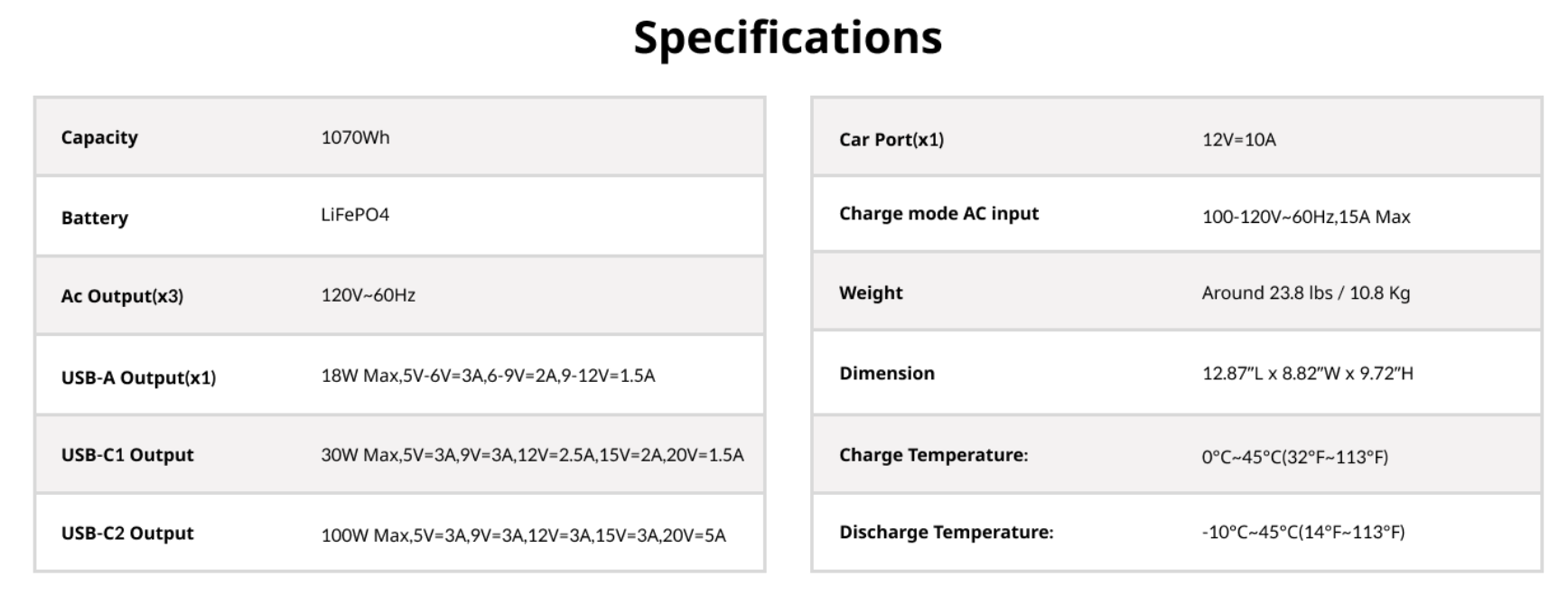
The most important numbers are capacity, output, weight, and charging options. A 1,070Wh battery gives you enough stored energy for meaningful use, but it still requires load planning. A 1,500W AC output means the unit can handle many appliances that smaller power stations cannot, but high-wattage devices will drain the battery faster.
First Impressions
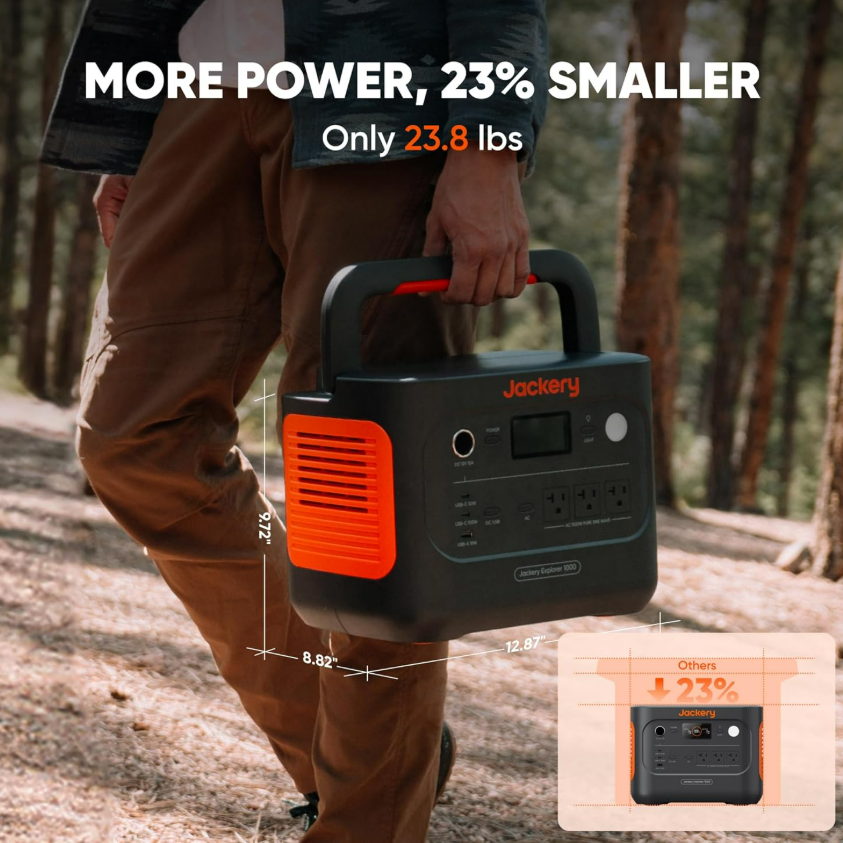
The Jackery Explorer 1000 v2 keeps the familiar Jackery orange-and-dark-gray look, but the design feels more compact than older large power stations in this category. The product material emphasizes “more power, 23% smaller” and a 23.8 lb weight. Based on the dimensions shown, it is small enough to slide into a car trunk, camper storage area, garage shelf, or under a camping table without taking over the whole space.
The large folding handle is one of the practical details I like. On some portable power stations, the handle shape makes the unit awkward to carry, especially when the battery is dense. Here, the handle looks wide and centered, which should make short carries easier.
Design and port layout
The front panel is easy to understand. The images show three AC outlets, USB ports, DC output, a display, and clearly separated control areas. This matters more than it sounds. During a blackout or while camping at night, you do not want to hunt through a confusing port layout just to plug in a lantern, fridge, or USB-C cable.
The orange side vents are visually bold, but they also remind you that airflow matters. Like any inverter-based power station, the Explorer 1000 v2 should not be covered by blankets, packed tightly against soft gear, or used where ventilation is blocked.
Bundle expectations
The supplied product information says the package includes one Explorer 1000 v2, one 200W solar panel, one user manual, one AC charging cable, and 5 years of coverage. It also notes that the E1000 v2 generator and the 200W solar panel are shipped separately. That is important for buyers: if only one box arrives first, check tracking before assuming the order is incomplete.
Setup and Daily Use
For basic use, setup should be simple: charge the power station, plug in your devices, and monitor the display. The Explorer 1000 v2 is designed for people who want portable power without building a custom electrical system. You can charge it from AC power, use the solar panel outdoors, or use other compatible charging methods described in the listing.
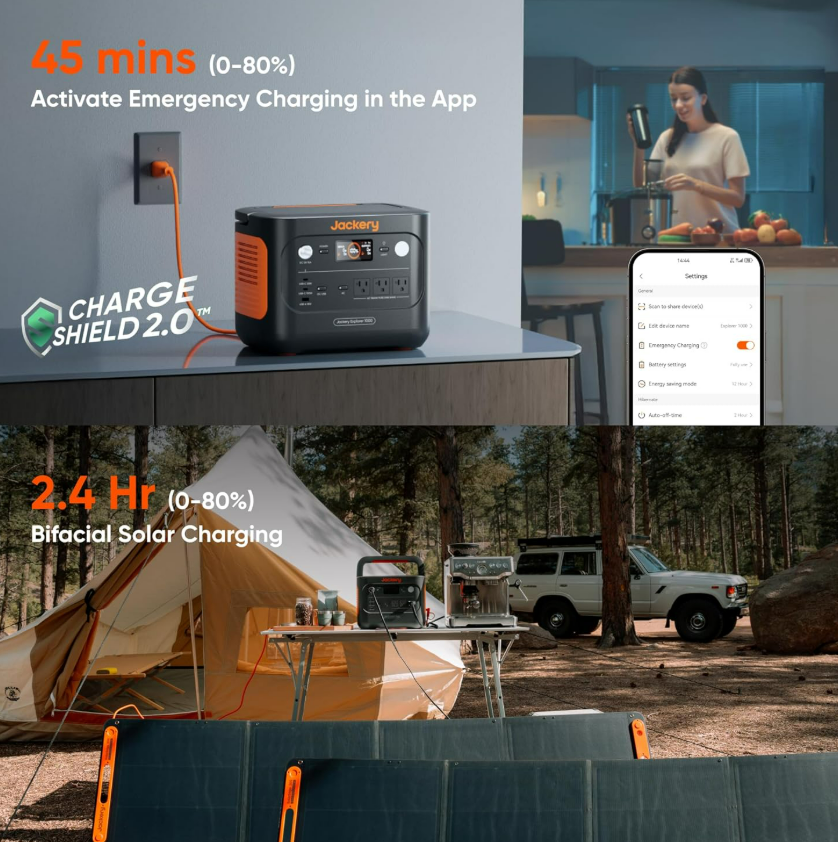
The listing states that emergency charging through the Jackery app can charge from 0% to 100% in one hour. It also says the default full charge time is 1.7 hours to optimize battery health. That distinction matters. The fastest mode is useful when a storm is coming or you need to leave soon, but a battery-health-focused default mode may be the better choice for routine charging.
App-controlled charging modes
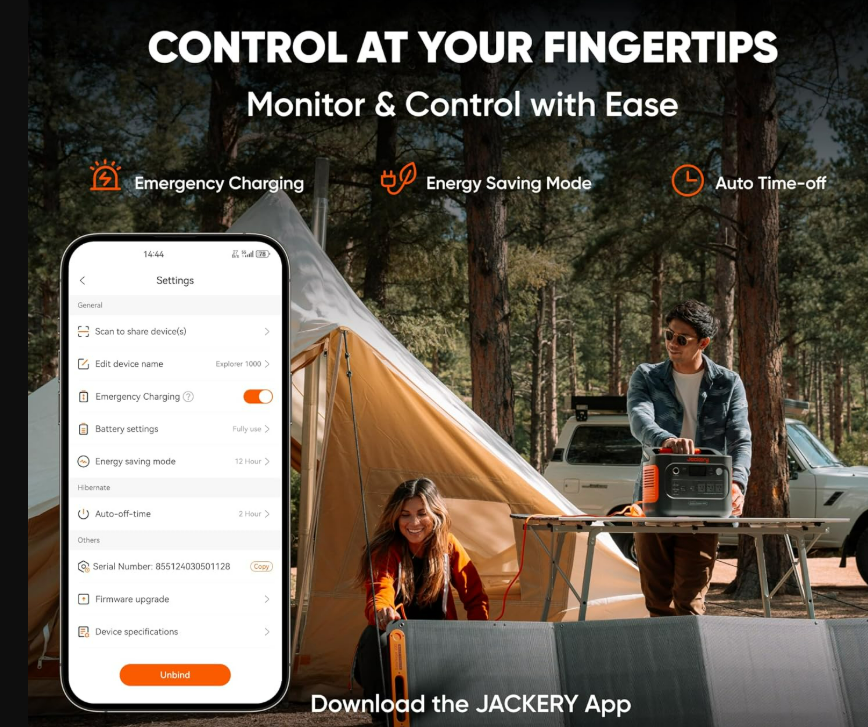
The app appears to be more than a simple status screen. The product images show emergency charging, battery settings, energy saving mode, and auto time-off. These controls are practical because different situations call for different behavior.
For emergency preparation, faster charging can matter. For overnight use in a tent or camper, the quieter charging mode may be more appealing. For long storage, battery settings and auto shutoff can help avoid wasted power. I would not buy a power station only for app control, but on a modern unit, it is a useful convenience.
Solar setup
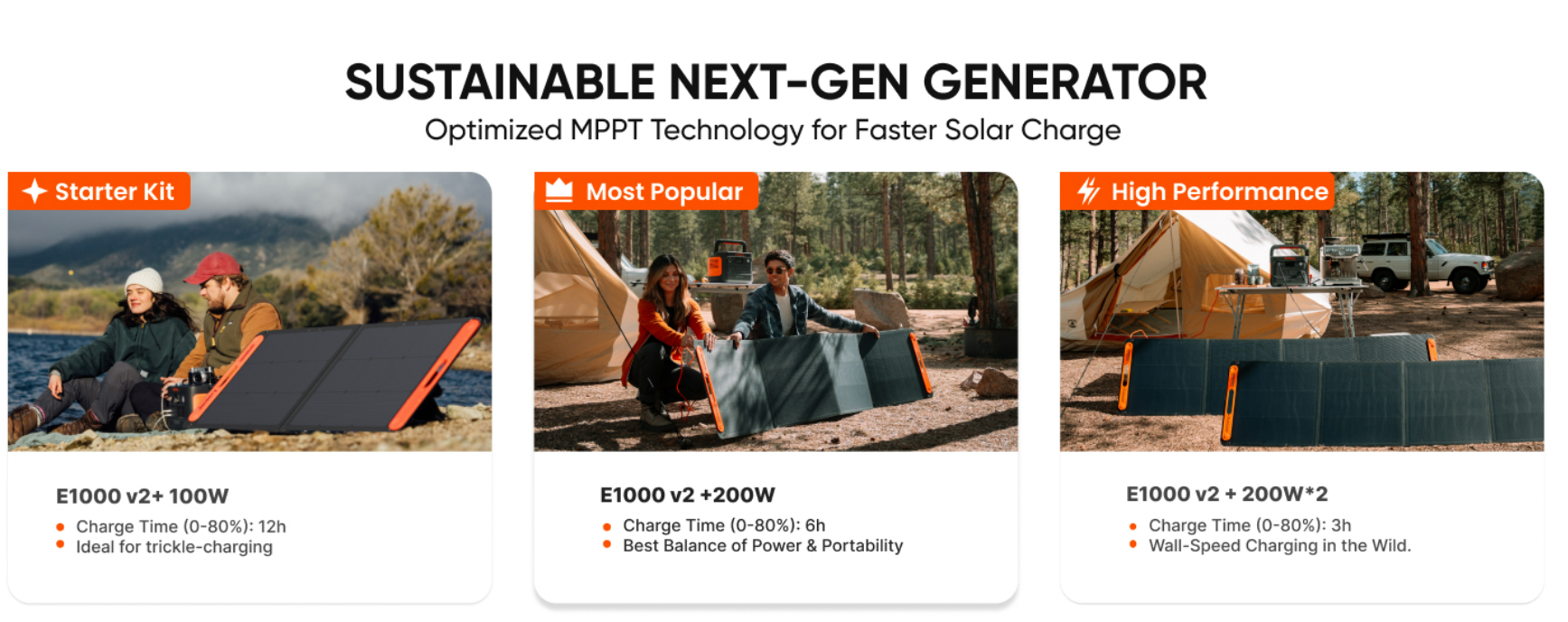
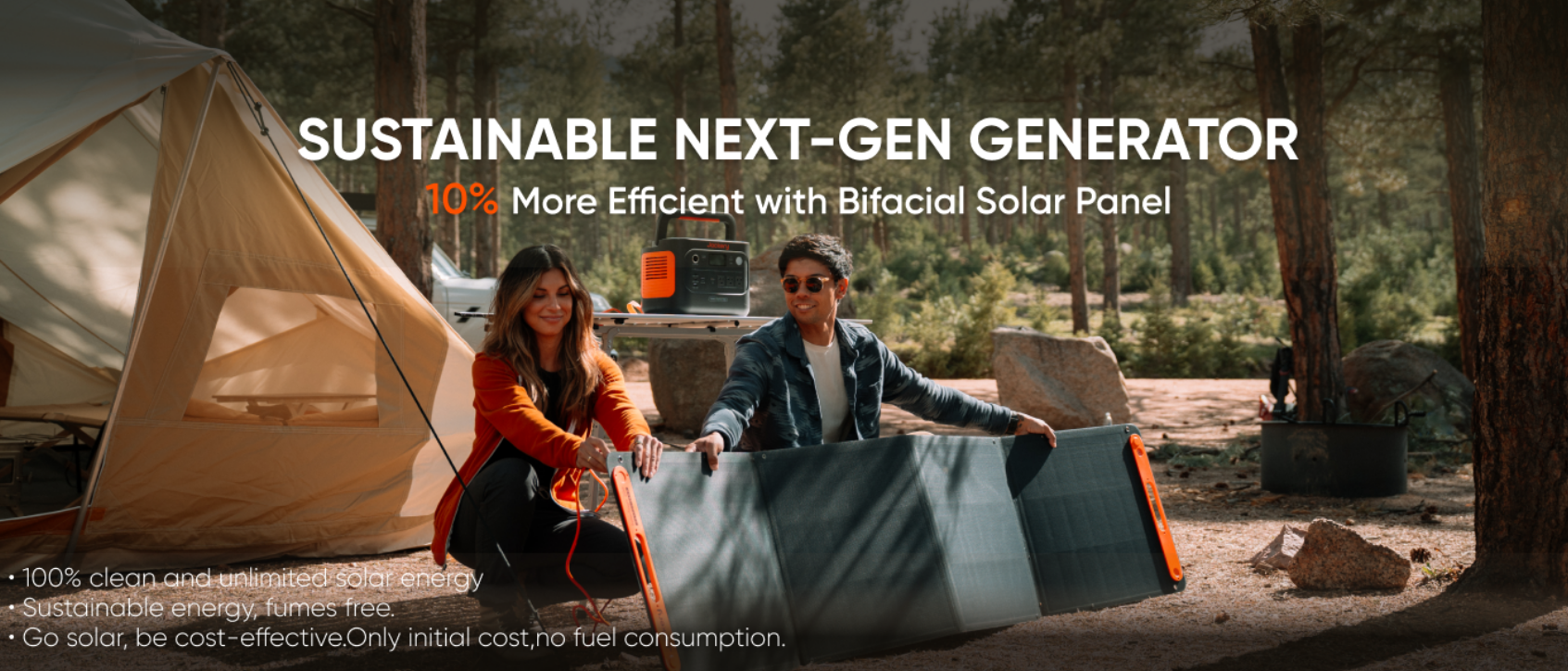
The bundle’s 200W solar panel gives the system a real off-grid charging option. The product material also shows multiple solar configurations: 100W, 200W, and dual 200W setups, with different 0–80% charging times. The 200W configuration is presented as a balance of power and portability.
A 200W panel can be very useful outdoors, but real solar charging is affected by sun angle, clouds, shade, heat, cable placement, and the time of day. Do not expect the same result under trees or cloudy skies that you would get in bright, direct sun. For weekend camping, the panel is best used as a way to extend runtime rather than a guarantee that you will always refill the battery quickly.
Cleaning Performance
For a solar generator, “cleaning performance” means clean power delivery, device compatibility, runtime behavior, and how well it handles real appliances. The Jackery Explorer 1000 v2 is listed with pure sine wave AC output, which is the right type of inverter output for many household electronics and appliances.

Output for appliances and tools
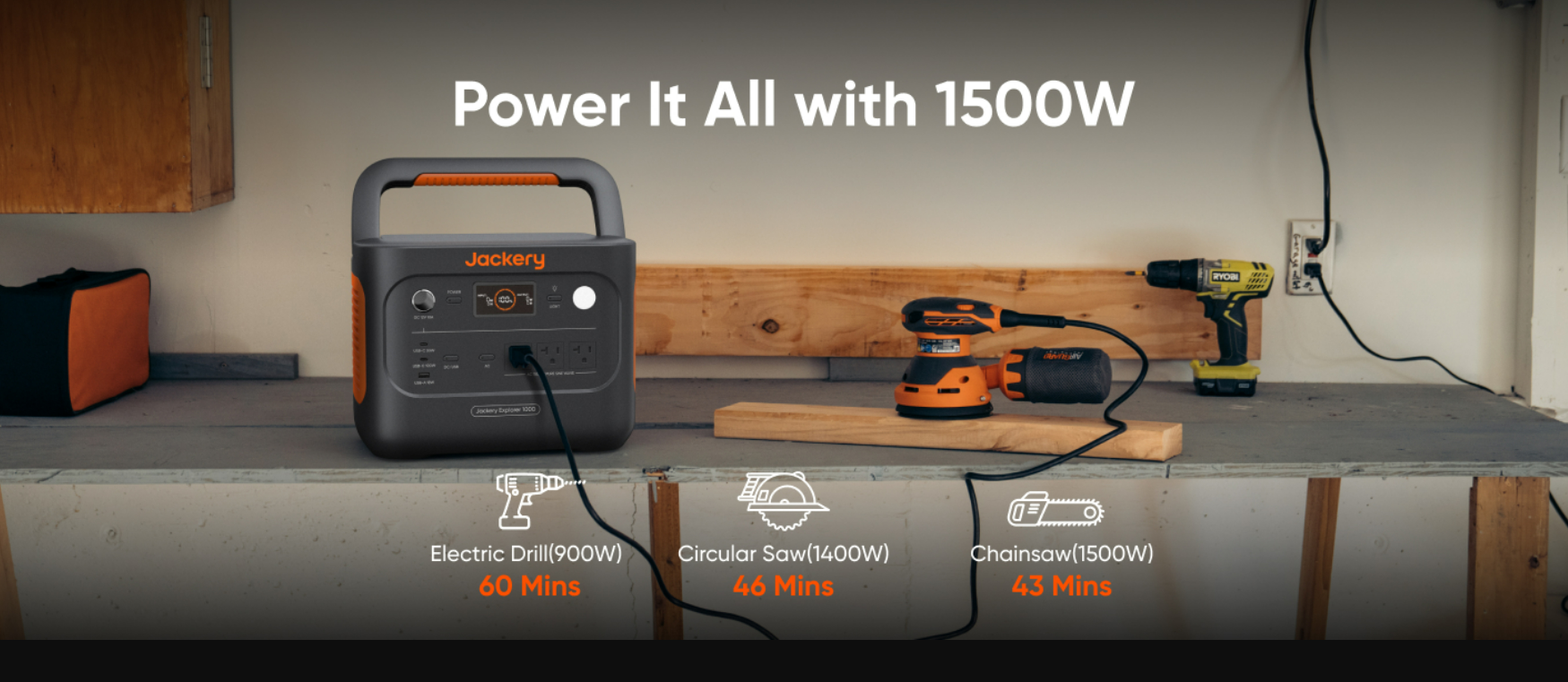
The 1,500W AC output is the key performance number. The listing shows examples such as an electric drill, circular saw, and chainsaw. It also mentions appliances including AC units, fridges, and electric pots. I would read those examples carefully: the Explorer 1000 v2 can support many high-demand devices, but exact compatibility depends on the appliance’s running watts and surge watts.
The 3,000W surge peak gives extra headroom for startup loads, which is helpful for motors and compressors. Still, surge support is not the same as unlimited output. A device that runs near the maximum continuous rating for a long time will drain the battery quickly and may generate more heat.
Camping and outdoor loads
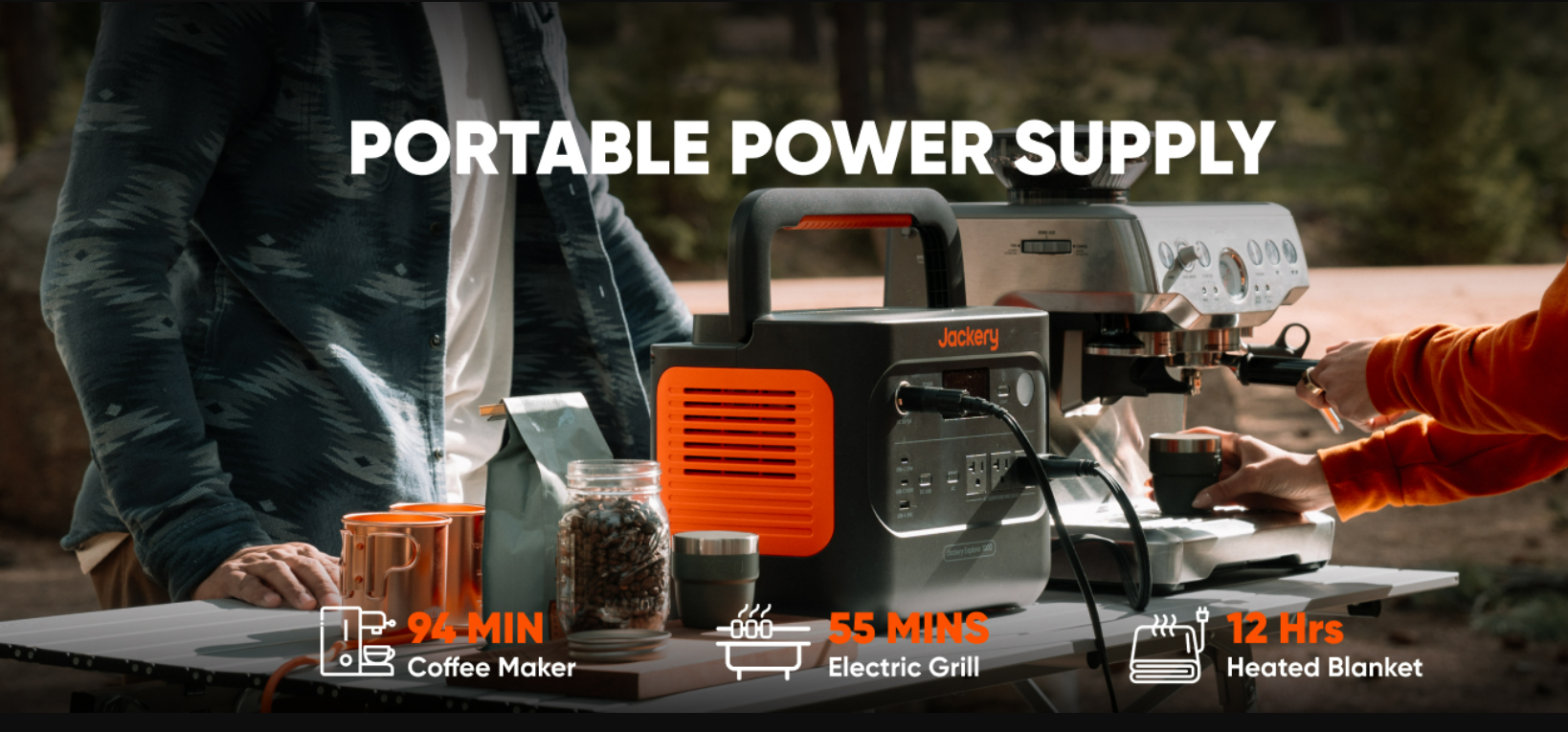
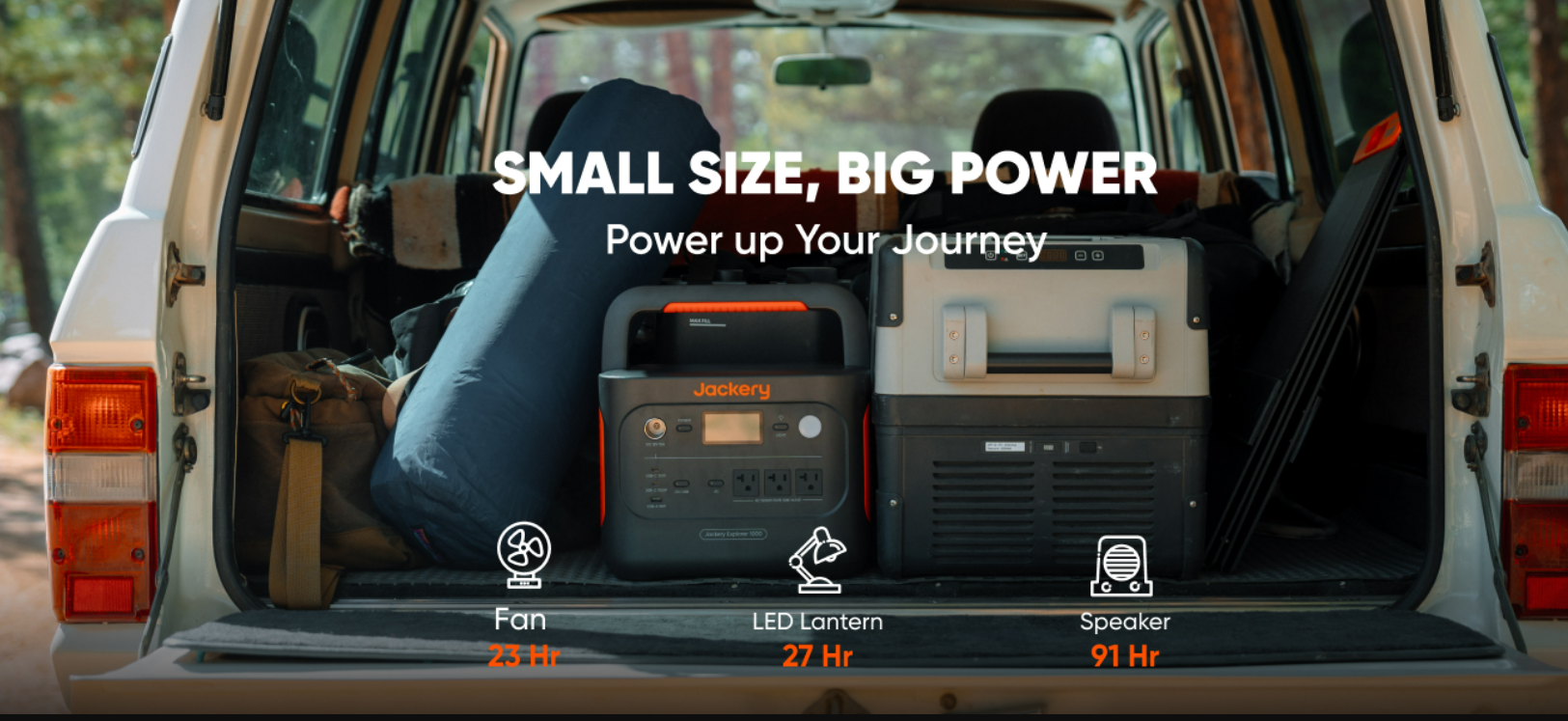
The product images show the unit powering a coffee maker, electric grill, heated blanket, fan, LED lantern, and speaker. These are realistic camping and road-trip examples because they cover both comfort and utility.
A coffee maker or electric grill can use a lot of power in a short window, while a fan, lantern, or speaker uses less power over a longer period. This is where a 1,070Wh power station feels practical. It can handle short bursts from higher-wattage devices and still support low-wattage essentials.
For camping, I would prioritize loads in this order: fridge or cooler, lights, communication devices, fan, medical or safety devices, then comfort appliances. Running heat-producing devices for long periods is usually the fastest way to empty any battery.
Home outage use
For outages, the Explorer 1000 v2 is best viewed as an essentials battery. It can help with a fridge for intervals, Wi-Fi router, phones, laptops, LED lights, small fans, projector, radio, and selected kitchen devices. It is not a whole-house battery and should not be expected to replace a large standby generator.
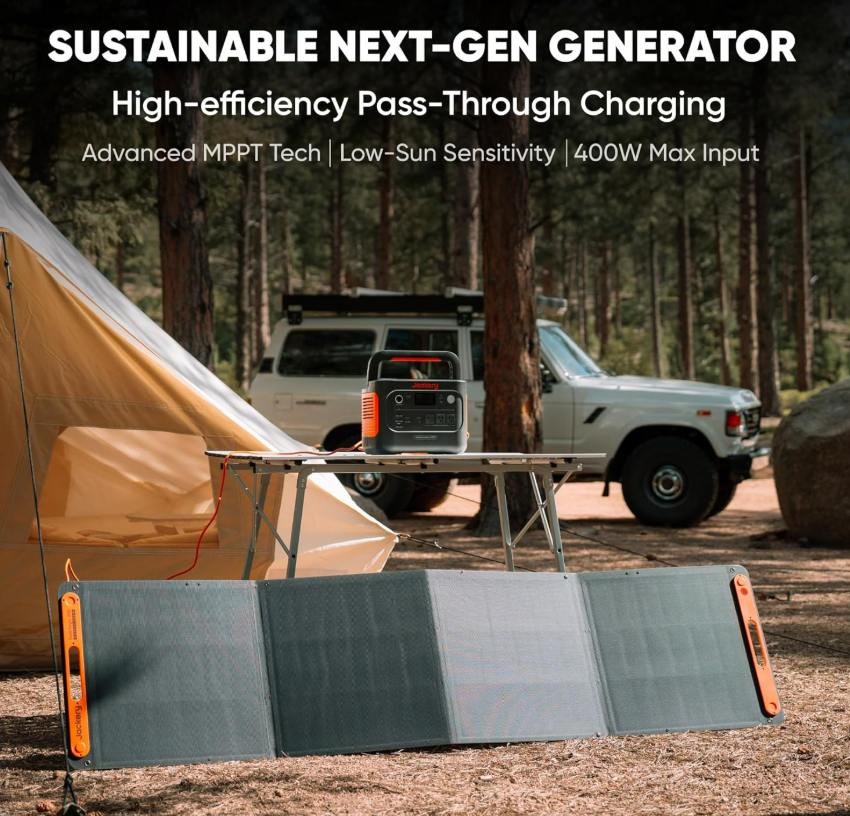
This is also where pass-through charging can be useful. The listing highlights high-efficiency pass-through charging, advanced MPPT tech, low-sun sensitivity, and 400W max input. If you are using the unit during the day with solar connected, you may be able to slow battery drain or recover some energy while still powering smaller devices.
Navigation and Smart Features
The Explorer 1000 v2 does not need navigation in the robotic sense, but the usability story is about how easily you can carry, place, monitor, and control it. At 23.8 lbs, it is heavy enough to feel substantial but still far easier to move than larger power stations that require wheels.
Portability
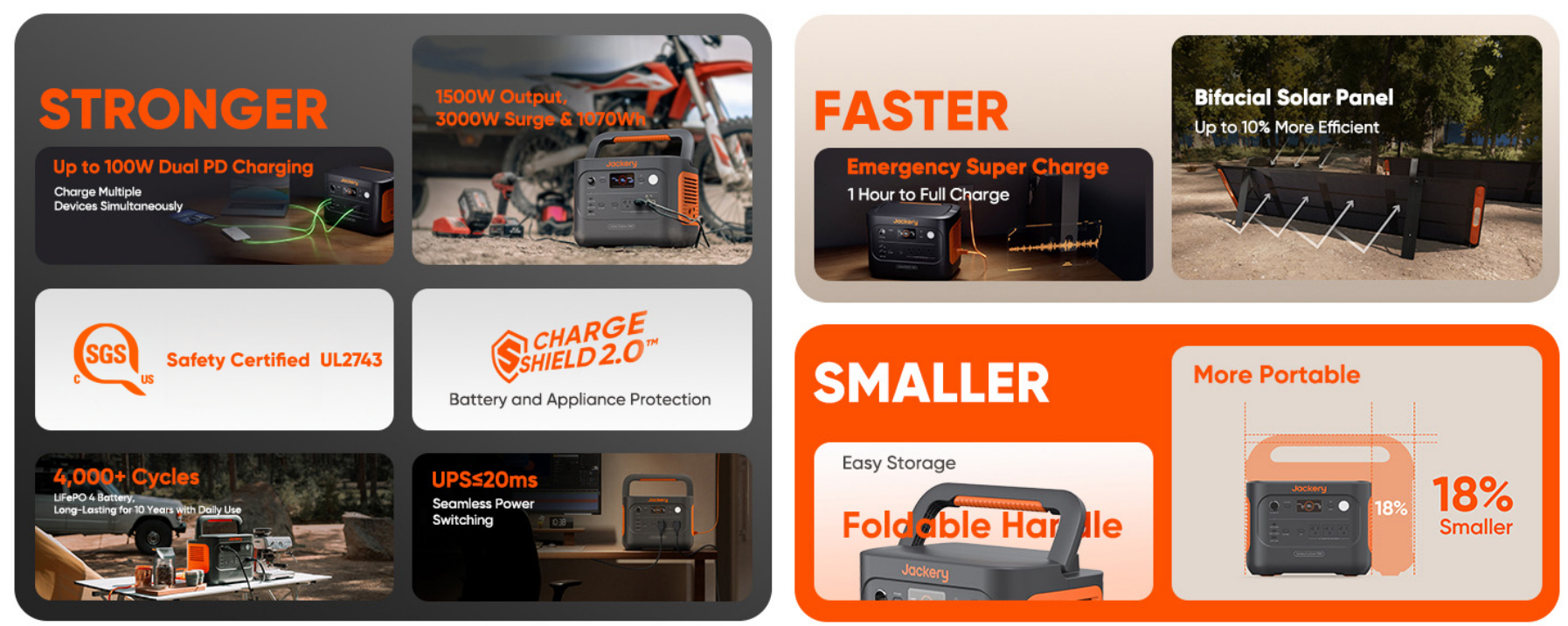
The foldable handle and compact body are the biggest everyday usability features. The product material describes it as 18% smaller in one graphic and emphasizes easy storage. For car camping, this matters. A power station that fits neatly next to a cooler, camp box, or sleeping gear gets used more often than a bulky unit that is always in the way.
The listing also shows the power station placed in the back of a vehicle beside camping gear. That is a realistic use case. It can ride in a trunk, SUV cargo area, van, or RV storage compartment and be pulled out when needed.
Monitoring and control
The Jackery app appears to support emergency charging, energy saving mode, battery settings, and auto time-off. These are not flashy features; they are practical ones. A common frustration with power stations is waking up to find that an output stayed on all night for no reason. Auto shutoff and energy saving modes can reduce that kind of waste.
The display is still important. App control is useful, but the unit should remain usable without constantly reaching for a phone. Based on the front panel shown in the images, the Explorer 1000 v2 keeps key status information visible on the device itself.
Battery Life and Maintenance
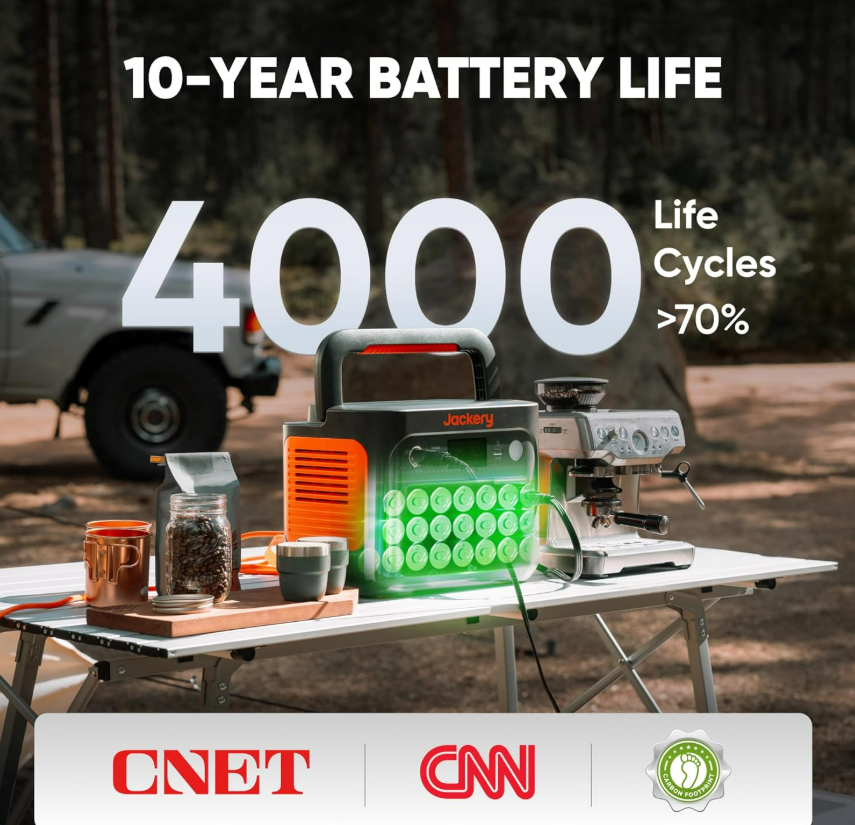
The battery story is one of the strongest parts of this model. The listing says the Explorer 1000 v2 uses a durable LFP battery and maintains over 70% of its original capacity after 4,000 charge cycles. It also references a 10-year lifespan. These are brand/listing claims, so buyers should confirm exact terms and conditions on the seller page.
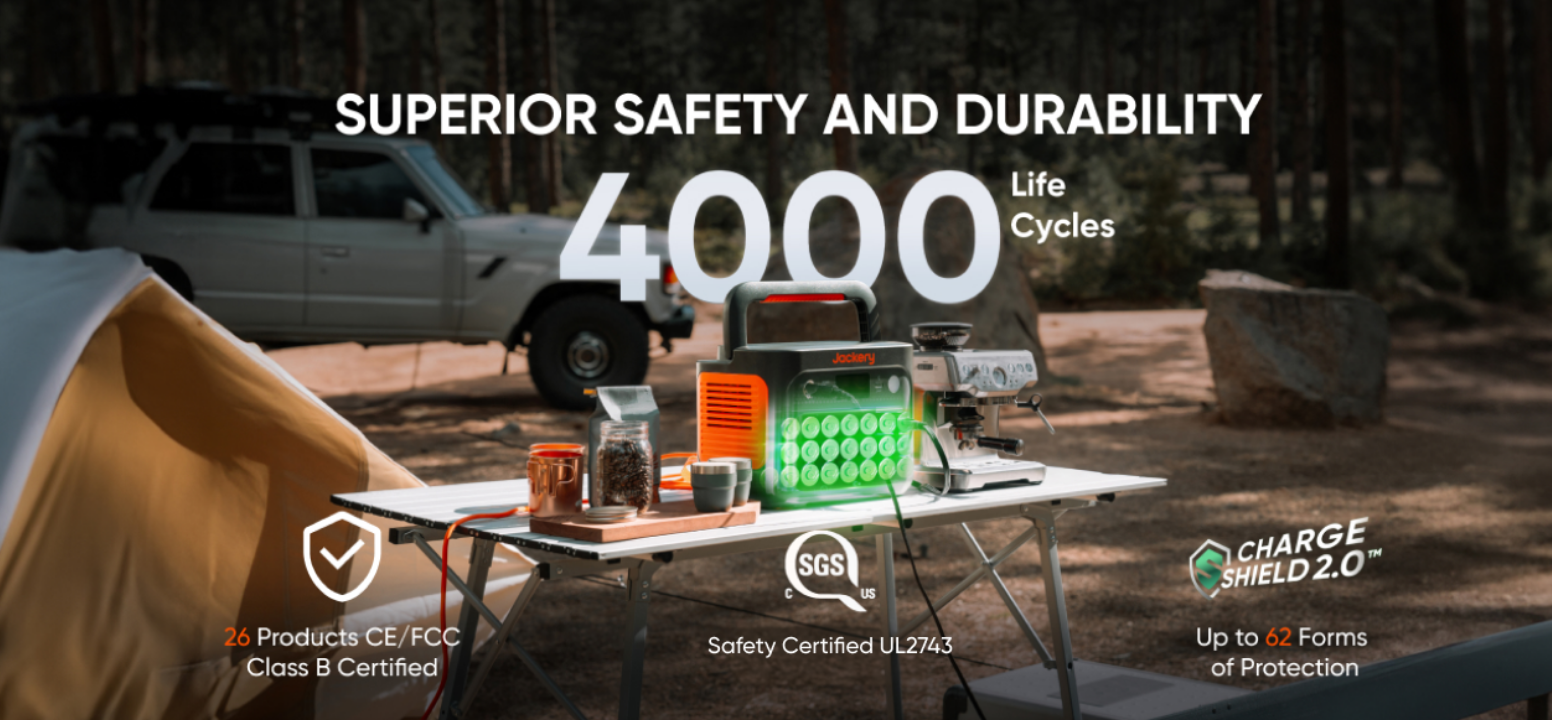
LiFePO4 battery chemistry is a good fit for a portable power station because many buyers keep these units for emergency readiness and repeated outdoor use. A long cycle rating is especially relevant if you plan to use the unit frequently for camping, solar charging, van life, or backup power.
Charging habits
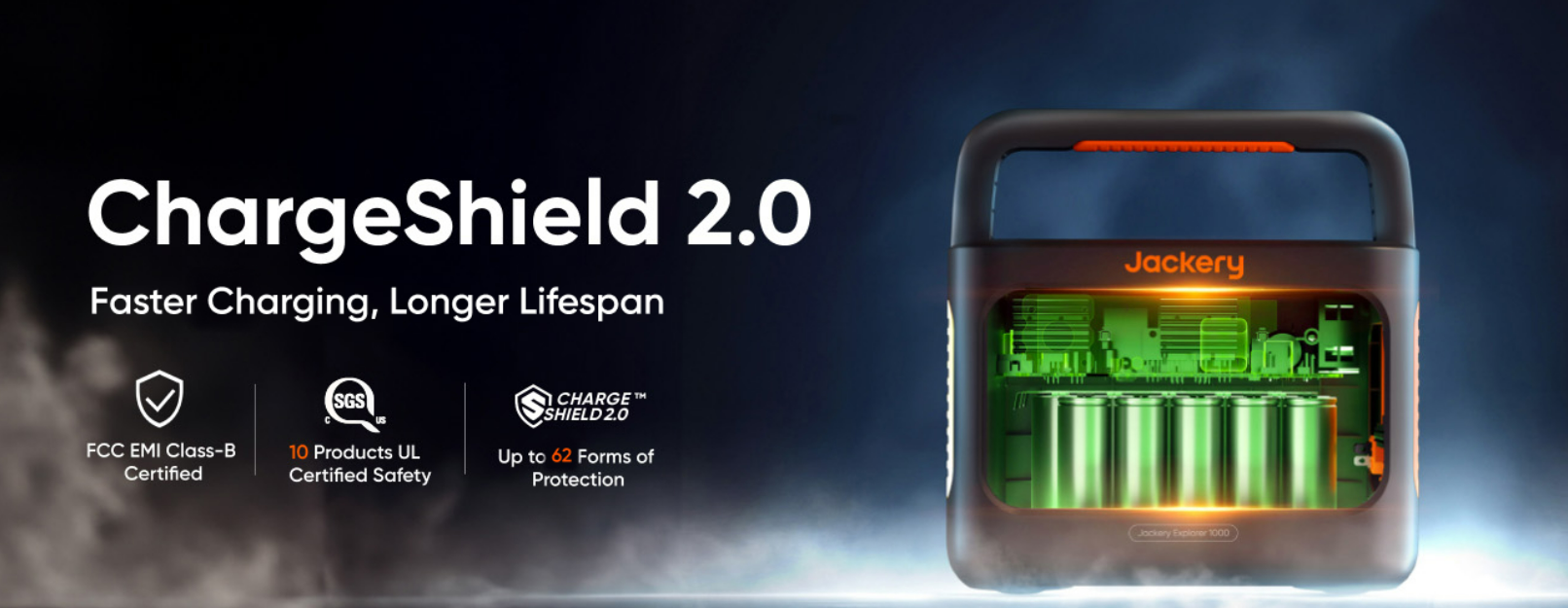
The product material mentions ChargeShield 2.0, faster charging, longer lifespan, and multiple protection systems. It also says the default full charge time is 1.7 hours to optimize battery health, while emergency mode can charge faster. That suggests Jackery is trying to balance speed and battery longevity through software.
For regular use, I would avoid treating the fastest mode as the only mode. Use emergency charging when speed matters. Use the standard or battery-health-friendly mode when you are not in a rush. Also avoid storing the power station fully drained, keep it away from extreme heat, and recharge it periodically if stored for emergency use.
Solar panel maintenance
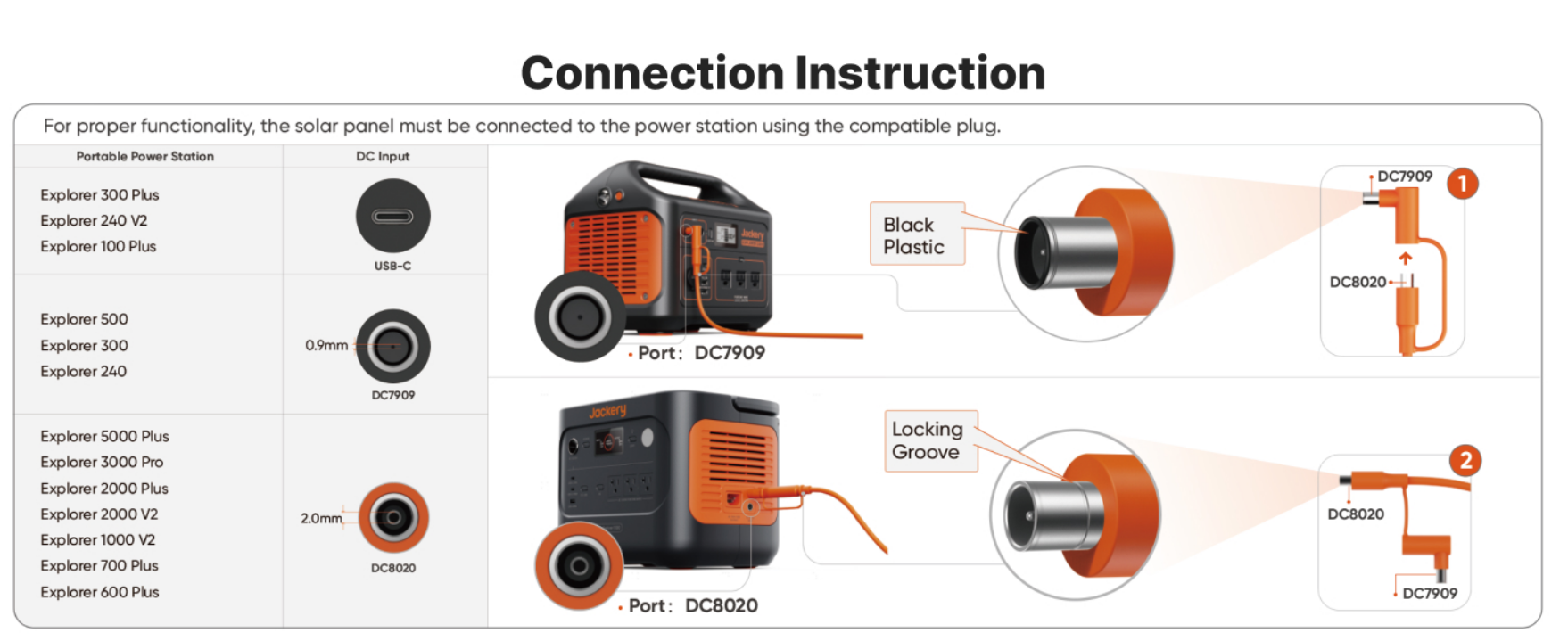
Solar panels need simple but regular care. Keep the surface clean, avoid deep scratches, store it dry, and protect the cable ends. The connection instruction image shows that compatible plugs matter, with DC8020 and DC7909 references across different Jackery models.
Before connecting panels, confirm the connector type for the Explorer 1000 v2 and the included panel. Using the right plug is not just about convenience; it is part of safe and reliable charging.
What I Like
I like the balance of output, capacity, and weight. A 1,070Wh battery with 1,500W AC output gives the Explorer 1000 v2 enough muscle for meaningful appliances while staying portable. That is the core reason this model is interesting.
I also like the charging speed options. A one-hour emergency charge claim is useful for last-minute preparation, while the default 1.7-hour charging mode gives users a less aggressive everyday option.

The 100W USB-C output is another plus. Many laptops, tablets, cameras, drones, and compact devices can charge directly from USB-C without needing bulky AC adapters. That saves energy and reduces cable clutter.
The included 200W solar panel makes the bundle more complete. A power station without solar can still be useful, but the solar panel turns it into a better outdoor and emergency system.
The app controls are practical. Emergency charging, energy saving mode, auto time-off, and battery settings are the kinds of features that can make daily use smoother rather than just adding marketing noise.
What Could Be Better
The biggest limitation is capacity. 1,070Wh is useful, but it is not enough for careless high-wattage use. If you run a space heater, electric grill, or other heat-heavy appliance for long periods, the battery will drain quickly. That is not a flaw unique to Jackery; it is how battery capacity works.
The solar recharge experience also depends heavily on real sunlight. The 200W panel is useful, but shaded campsites, cloudy weather, winter sun, and poor panel angle can reduce output. Buyers should treat solar as a planning tool, not magic.
I also wish every listing made accessory compatibility impossible to misunderstand. The connection chart is helpful, but buyers should still confirm the exact connector, panel version, and included cable before purchase.
Finally, the price can vary. At the time of writing, pricing may change. Check the current Amazon listing, compare the exact bundle, and make sure you are looking at the Explorer 1000 v2 with the intended solar panel package rather than a different Jackery kit.
Who Should Buy It
The Jackery Solar Generator 1000 v2 is a good match for car campers who want to run lights, a cooler, phones, camera gear, a laptop, a fan, and occasional cooking or coffee equipment. It also suits people who want a cleaner, quieter alternative to a small gas generator for light-duty outdoor use.
It is also a practical choice for emergency preparedness. If your outage plan is to keep phones charged, power a router, run LED lights, support a fan, and handle a fridge in intervals, this size class makes sense.
RV owners may also like it as a supplemental power source. It is not a full RV electrical replacement, but it can reduce generator runtime and power smaller loads away from shore power.
Remote workers, photographers, drone users, and weekend cabin owners are also good candidates. The 100W USB-C output and 1,500W AC inverter make it flexible enough for both electronics and occasional appliance use.
Who Should Skip It
Skip it if you need full-home backup. The Explorer 1000 v2 can help during an outage, but it is not designed to run an entire house for days. If you need to power a well pump, central air, large freezers, heating systems, or a complete electrical panel, look at a larger system.
It is also not the best choice if you only need to charge phones and small USB devices. A smaller and cheaper power station would be easier to carry.
You should also skip it if you expect solar charging to be fast in all conditions. Solar panels need sun. If your camping style involves dense forest cover, winter weather, or constant shade, AC charging before departure may be more important than solar performance.
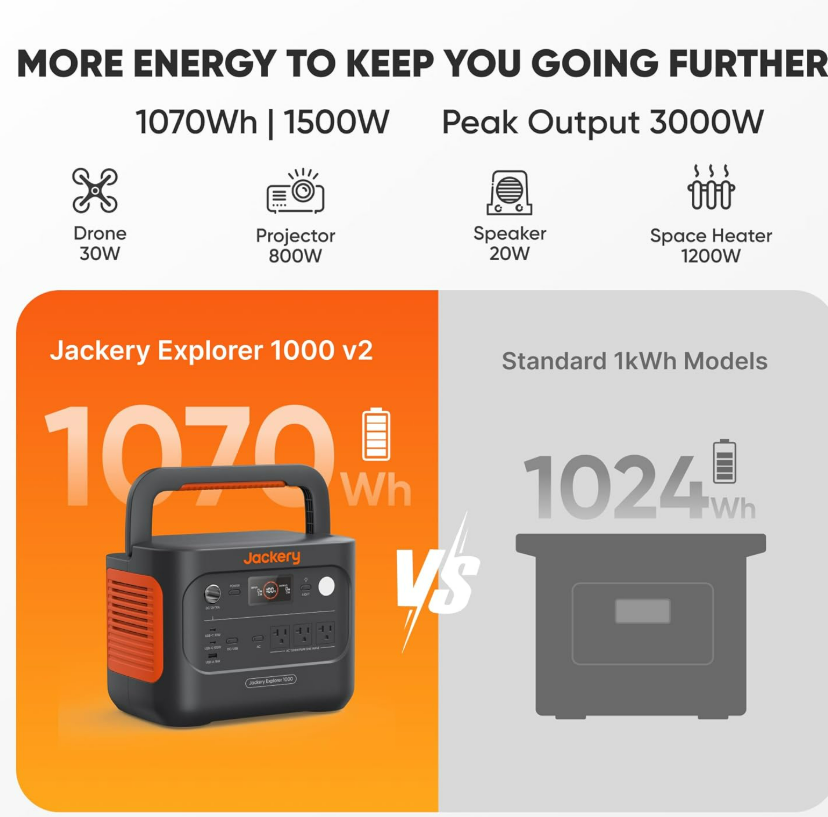
Finally, skip it if you are unwilling to think about wattage. Portable power stations are much easier to use when you understand the difference between a 20W speaker, a 100W laptop, an 800W coffee maker, and a 1,200W heater.
Buying Advice
Before buying, list the devices you want to power. Write down their wattage, then estimate how many hours you need each device to run. This will tell you whether 1,070Wh is enough.
For camping, the Explorer 1000 v2 bundle is attractive because the 200W panel can extend runtime during the day. For emergency home use, the fast AC charging is just as important because you can top up the unit before a storm or scheduled outage.
If your priority is portability, the 23.8 lb weight is a major advantage. If your priority is maximum runtime, compare it with larger Jackery models or multi-battery systems.
At the time of writing, pricing may change. Check the current price on Amazon through the product listing you trust, and confirm that the bundle includes the 200W solar panel, AC charging cable, manual, and the coverage terms shown on the seller page. The provided product information says the generator and solar panel may ship separately, so watch for more than one package.
Final Verdict
The Jackery Solar Generator 1000 v2 is a well-rounded portable power station for people who want meaningful output without moving into bulky, expensive home-backup systems. Its 1,070Wh capacity, 1,500W AC output, 3,000W surge peak, LiFePO4 battery, 100W USB-C port, app controls, and 23.8 lb weight make it especially useful for camping, road trips, emergency essentials, and light RV support.
The best buyer is someone who wants a dependable middleweight solar generator: more capable than small entry-level units, but still portable enough to use often. The main thing to remember is that battery capacity is finite. Use it thoughtfully, avoid long high-heat loads when possible, and treat solar as a way to extend your runtime rather than a guaranteed instant refill.
For the right use case, the Explorer 1000 v2 is easy to recommend. It offers a strong mix of power, portability, battery longevity, and solar-ready flexibility without becoming a rolling home power station.
FAQ
Is the Jackery Solar Generator 1000 v2 good for camping?
Yes. The 1,070Wh capacity, 1,500W AC output, 100W USB-C output, and 23.8 lb weight make it a practical camping power station. It can support lights, phones, laptops, cameras, fans, a cooler, and selected cooking or comfort appliances.
Can the Jackery Explorer 1000 v2 run a refrigerator?
It may run many refrigerators, depending on the fridge’s running wattage, startup surge, temperature, and how often the compressor cycles. Check your specific refrigerator label and compare it with the 1,500W output and 3,000W surge peak.
How fast does the Jackery Explorer 1000 v2 charge?
The provided product information says it can charge from 0% to 100% in one hour with emergency charging activated through the Jackery app. It also says the default full charge time is 1.7 hours to optimize battery health.
How long does solar charging take?
The product material shows the 200W solar setup reaching 0–80% in about 6 hours, while dual 200W panels are shown at about 3 hours under suitable conditions. Real results depend on sunlight, angle, weather, panel temperature, and shading.
What battery type does the Jackery Explorer 1000 v2 use?
The listing says it uses a LiFePO4 battery. The product information also claims over 70% original capacity after 4,000 cycles and a lifespan exceeding 10 years. Verify exact warranty and lifecycle terms on the seller page.
Is the Jackery Solar Generator 1000 v2 enough for home backup?
It is enough for essential backup, not whole-home backup. It can help with phones, routers, lights, fans, laptops, and selected appliances, but it is not intended to run an entire house through a long outage.
Can I use the Jackery Explorer 1000 v2 while it is charging?
The product images mention high-efficiency pass-through charging. That suggests it can support charging while powering devices in supported scenarios. Follow the manual for limits, temperature guidance, and safe operation.
Is the Jackery Explorer 1000 v2 worth it?
It is worth considering if you want a portable 1kWh-class solar generator with strong output, fast charging, app control, and an included 200W solar panel. It may be too much for simple phone charging and too small for full-home backup.