So Anker quietly dropped the SOLIX C2000 Gen 2 back in November 2025, and I’ve had one sitting in my garage / trailer / driveway for about four months now. Long enough to actually have an opinion that isn’t just based on unboxing vibes.
Let me get the bias out of the way upfront. I’m not an Anker fanboy. I’ve used Jackery, EcoFlow, Bluetti, and now Anker SOLIX across the past five years, and I genuinely don’t care which logo is on the box as long as the thing works. I picked up the C2000 Gen 2 because my old Jackery 1500 finally started showing capacity degradation after years of abuse, and the Anker had three things I wanted: a real LiFePO4 chemistry, sub-hour recharge, and an alternator-charging port that nobody else was offering at this size.
The short version: it’s good. It’s not perfect. It’s probably the best 2kWh portable power station you can buy in mid-2026, but there are real catches I want you to know about before you drop two grand.
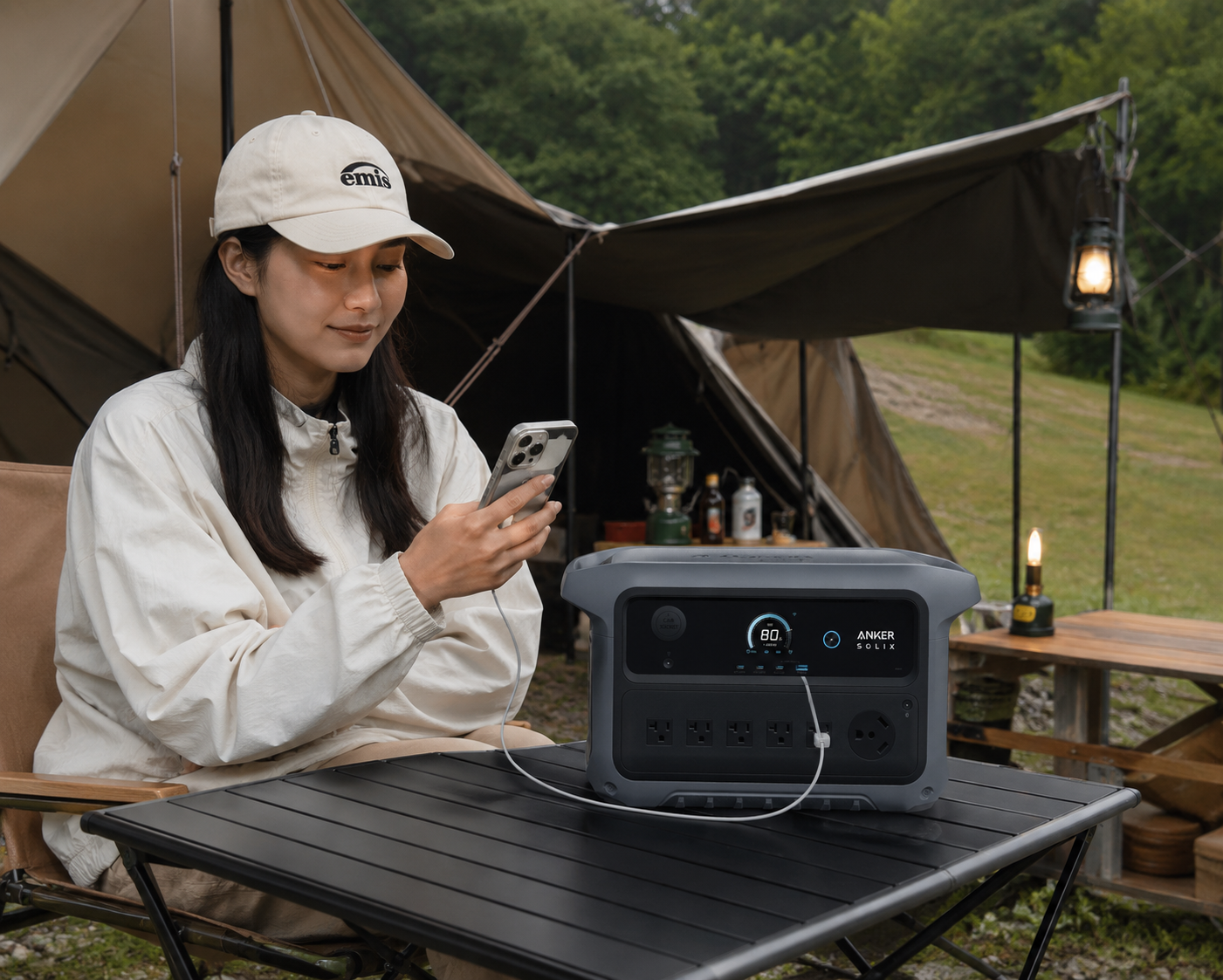
Table of Contents
Open Table of Contents
- Why I Bought the Anker SOLIX C2000 Gen 2 Over the Competition
- The Numbers That Actually Matter
- What’s Actually in the Box
- Real-World Camping Performance
- The Alternator Charging Feature: Game Changer or Marketing?
- Powering an RV Air Conditioner: The Real Answer
- Comparison Against the Main Competitors
- Where the C2000 Gen 2 Falls Short
- Who Should Buy This
- Solar Panel Recommendations for the C2000 Gen 2
- After Four Months
- Related Reviews
- A Few Questions Worth Answering
Why I Bought the Anker SOLIX C2000 Gen 2 Over the Competition
I shopped this purchase hard. Spent about three weeks reading forums, comparing spec sheets, watching YouTube tear-downs, and bugging friends who own competing units. Here’s what tipped me to the Anker:
The 2048Wh capacity in a single unit hits a sweet spot for my use. Big enough to run my chest fridge for two days, my CPAP for a week, or my partner’s hair dryer when boondocking (don’t ask). Small enough that I can move it without a hand truck.
The 2400W AC output with 4000W peak is enough for nearly everything I run. Coffee maker, microwave, induction cooktop, even my mid-size RV air conditioner with a soft start. The previous-gen C2000 was rated 2200W which was just barely not enough for some startup surges. Gen 2 fixes that.
LiFePO4 chemistry is non-negotiable for me in 2026. NMC packs are fine for laptops and phones, but for a 2kWh unit that’s going to sit in 110°F desert heat sometimes, LiFePO4 is the only reasonable choice. 6000+ cycle life vs 1000-1500 for NMC. Plus it’s safer when things go wrong.
58-minute full charge from a regular wall outlet. I’ve watched too many friends miss the morning departure because their power station was still charging on a cigarette lighter. Plug it in overnight, plug it in over lunch, doesn’t matter. It’s done before you need it.
The alternator charging option was the unique sell. More on this later, but if you tow or van-life, this changes the math significantly.
You can check the current Anker SOLIX C2000 Gen 2 price on Amazon here. Solar panel bundle pricing fluctuates a lot.
The Numbers That Actually Matter
I’m going to skip the marketing bullet points and tell you what I actually care about as a daily user:
Capacity: 2048Wh usable LiFePO4. Real-world I’m measuring about 1920Wh of actual deliverable energy after inverter losses — about 94% efficiency. Industry average is around 88-92%.
AC output: 2400W continuous, 4000W peak via SurgePad technology. The peak handling is genuinely better than the Gen 1. I ran a 1500W shop vac with my 1200W microwave on accident and it didn’t trip. Older units would have shut down.
Recharge speed: 58 minutes from 0-100% on AC. I clocked mine at 61 minutes from a 12% start, so the marketing number is approximately legit. There’s also a 1.5-hour quiet mode if you want to charge overnight without the fan noise.
Solar input: Up to 1000W. I run a 400W setup which gets me a full charge in about 5 hours of decent sun. With the full 1000W setup, 2-3 hours to full from the sun alone.
Weight: About 41 pounds. Heavier than the Gen 1 by a couple pounds. Flat top design lets you stack stuff on it. Two reinforced handles. I can lift it solo but I’m not happy about it.
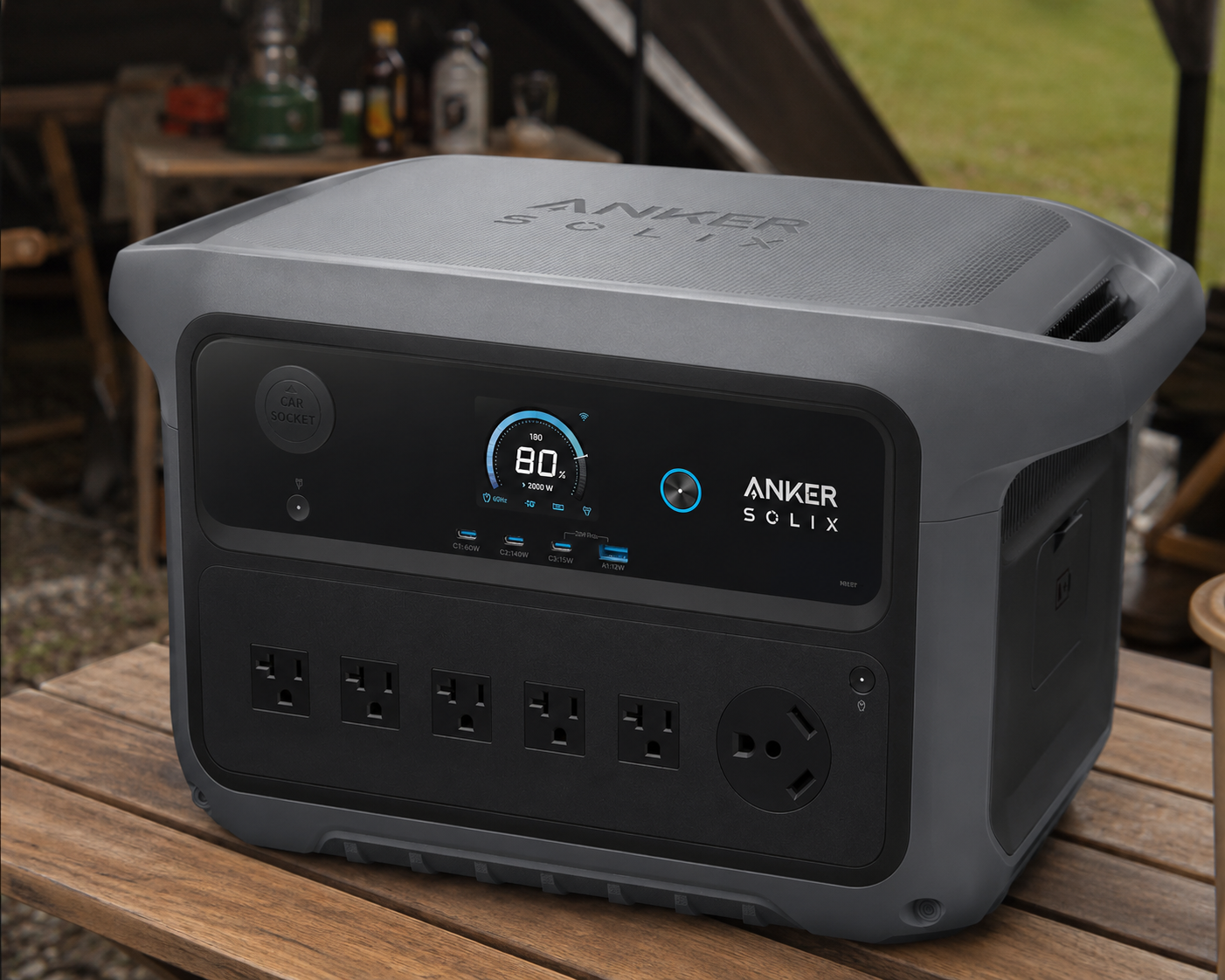
Ports: 10 outputs total — 4 standard 120V AC outlets, 2 USB-C (one 100W, one 30W), 2 USB-A, 1 12V cigarette socket, 1 DC5521 port. Enough for almost any use case.
Cycle life: 3000 cycles to 80% capacity per Anker’s spec. LiFePO4 typically over-delivers on this. Realistically expect 5000+ cycles to 70% in normal use.
App: Bluetooth + Wi-Fi through the Anker app. Lets you monitor real-time usage, set charging schedules, enable UPS mode. The app actually works, which is more than I can say for some competitors.
What’s Actually in the Box
Showed up double-boxed via Amazon. The C2000 unit itself, an AC charging cable, a car charging cable, a solar input cable with XT60 connector, a basic user manual, and a quick-start card. No solar panel unless you ordered the bundle.
Build quality is what I expected from Anker. Plastic shell feels solid, no creaks, no panel gaps. The handles are reinforced and locked into place. The screen is bright enough to read in direct sunlight, which sounds basic but a lot of competitors fail this test.
The buttons are tactile and clicky. The AC outlets have flip covers that stay closed. The DC ports have proper rubber plugs. Anker pays attention to the small stuff.
What I noticed immediately: the fans are quiet at idle. Like, you can’t hear them in a normal room. When it’s actively charging at full speed, the fan does spin up, but it’s a low-pitched hum rather than the high-pitched whine some power stations make.
Real-World Camping Performance
I’ve taken the C2000 Gen 2 on six trips since November. Mix of overlanding weekends, a 9-day Baja excursion, and several driveway camping setups while we waited out work obligations.
Trip 1: Three-Day Weekend in Joshua Tree
Daytime highs 78°F, nights down to 38°F. Powered a 50qt chest fridge set to 36°F, CPAP at night, phone and tablet charging, LED string lights, and a small electric kettle for morning coffee. Started Day 1 at 100%, ended Day 3 at 24%. Solar input from a 200W panel kept us topped up during the day. A long weekend without stress.
Trip 2: 9-Day Baja Run
This was the real test. Mix of beach camping, mountain camping, and a few days off-grid in the desert. Daily power needs included the fridge, CPAP, drone charging, laptop work, kettle, blender for margaritas (priorities). Without solar, I would have been dead by Day 4. With a 400W panel array, I never dropped below 35% state of charge. Maximum sustained pull was 1200W during morning coffee plus blender combo, no complaint.
Trip 3: Winter Storm Power Outage at Home
22-hour outage in February. The C2000 ran our home WiFi router, modem, two phones charging, a small space heater on low for one room, and the chest freezer (switched on briefly every 6 hours to maintain temp). 22 hours consumed about 65% of the battery. If the outage had lasted 36 hours, I would have been fine.
For home backup planning, you really want to pair the C2000 with at least one BP2000 expansion battery if you’re worried about extended outages. Doubles your runtime to 4kWh.
The Alternator Charging Feature: Game Changer or Marketing?
This is the feature nobody else is offering at this price point. Anker sells an optional alternator charging cable that lets you plug the C2000 into your vehicle’s alternator — not the cigarette lighter — and pull up to 1000W of charging current while driving.
Practical translation: a 1-hour drive between campsites tops you back up to 100%. Compare to a regular 12V cigarette socket setup that pulls maybe 100W and takes 20+ hours to fully recharge.
Catches: the alternator cable is a separate purchase, about $79 last I checked. It requires a proper install with a fuse and appropriate gauge wire — not plug-and-play for most vehicles. Your alternator needs to support the load; older or smaller vehicles may struggle. And it does put wear on the alternator, probably negligible for occasional use but worth thinking about for daily driving.
I had mine installed by a mobile RV tech for $140 including the cable. Plug and play after that. Drive 90 minutes, arrive at camp with a fully charged power station. It’s the closest thing to magic I’ve experienced in this space.
For a broader comparison of solar generator options across capacity tiers, my best solar generator for home backup, camping, and portable use 2026 breaks down the full landscape.
Powering an RV Air Conditioner: The Real Answer
Yes, the Anker SOLIX C2000 Gen 2 can run a 13,500 BTU RV air conditioner with a soft start kit. I’ve tested it with my buddy’s setup. But here’s the math:
A 13.5K RV AC running on the C2000 pulls about 1100-1300W continuous. That gives you roughly 1.5 hours of runtime from 100% to 10%. Not great.
With a 400W solar input keeping up, you can extend that to maybe 4-5 hours of usable AC time on a sunny day. Still not enough for overnight cooling.
For meaningful AC runtime, you need the C2000 plus at least one BP2000 expansion battery, 800W+ of solar, a soft start kit on the AC, and realistic expectations.
Comparison Against the Main Competitors
I’ve used or installed all of these for friends, so this is from direct experience:
| Feature | Anker SOLIX C2000 Gen 2 | Jackery 2000 v2 | EcoFlow Delta 2 Max | Bluetti AC200L |
|---|---|---|---|---|
| Capacity | 2048Wh | 2042Wh | 2048Wh | 2048Wh |
| AC Output | 2400W (4000W peak) | 2200W (4400W peak) | 2400W (3100W peak) | 2400W (3600W peak) |
| Recharge Time | 58 min | 60 min | 65 min | 60 min |
| Chemistry | LiFePO4 | LiFePO4 | LiFePO4 | LiFePO4 |
| Solar Input | 1000W | 1400W | 1000W | 1200W |
| Cycle Life | 3000+ | 4000+ | 3000+ | 3500+ |
| Weight | 41 lbs | 43 lbs | 50 lbs | 61 lbs |
| Alternator Charging | Yes (optional) | No | No | No |
| App Quality | Good | Good | Excellent | Fair |
The C2000 Gen 2 wins on weight, alternator charging, and overall package balance. Loses to Jackery on cycle life. Loses to EcoFlow on app quality. The differences are smaller than the marketing makes them seem.
For a head-to-head against the Jackery flagship, my Jackery HomePower 3600 Plus review covers the larger competitor.
Where the C2000 Gen 2 Falls Short
The fan is loud during fast charging. Marketing says quiet, reality is closer to “noticeable.” When it’s pushing 1500W+ into the battery, the fan ramps up to a level you’ll hear from across a room. The quiet charging mode solves it but takes longer.
The price is premium. You’re paying about $400 more than equivalent capacity from less-known brands. Anker’s reputation costs money.
The expansion battery is a separate $1000+ purchase. If you want full home backup capability, the total investment climbs fast.
The 12V output is limited to 30A at the cigarette socket. For serious 12V loads, use the DC5521 port or run an inverter setup.
The display can’t show watt-hours remaining clearly. It shows percentage and estimated time, but for those of us who like to track energy in Wh, you have to do math from the percentage. Minor gripe but irritating.
The Anker app requires an account and sends notifications I didn’t ask for. Privacy-conscious folks may not love this.
Who Should Buy This
Weekend camping and van life, occasional home backup, nomadic use where the alternator charging makes a real difference, already in the Anker ecosystem — this is the right unit. The sub-hour recharge and LiFePO4 chemistry cover the two things that matter most at this capacity tier.
Look elsewhere if you need to run an RV air conditioner for hours at a time (look at the F3800), you’re on a tight budget (Bluetti AC200L is cheaper for similar specs), you need maximum solar input (Jackery 2000 v2 supports 1400W), or you’re committed to permanent home backup where a Tesla Powerwall makes more sense.
For more capacity, my Anker SOLIX F3800 review covers the bigger sibling. For lighter weekend use, my Anker SOLIX C1000 review covers the smaller option.
Solar Panel Recommendations for the C2000 Gen 2
The C2000 doesn’t include a panel. Here’s what actually works:
Budget option — 200W foldable panel from Anker or BougeRV. Charges full in 8-10 hours of decent sun. Good for car camping or backup.
Sweet spot — 400W setup (2x 200W in series or a single 400W rigid panel). Charges full in 5-6 hours. Best balance of cost, weight, and charging speed.
Max performance — 1000W setup with 5x 200W panels in series. Full charge in 2.5-3 hours. Overkill for most users but worthwhile if you’re full-time off-grid.
I run two 200W BougeRV CIGS panels in series for my mobile setup. They handle partial shade better than rigid panels and roll up for storage. About $480 total.
After Four Months
The C2000 Gen 2 has done everything I’ve asked of it without complaint. Build quality has held up to dirty Baja roads and cold mountain mornings. No battery failures, no unexpected shutdowns, no weird behavior from the app.
The alternator charging has changed how I think about power management on the road. The sub-hour recharge means I’ve stopped worrying about whether I remembered to plug in the night before. Both of those things are worth something real.
Would I buy it again? Yeah. With the caveat that if Anker had bundled the alternator cable and a panel for $200 less than buying them separately, I would have jumped on that instead.
The Anker SOLIX C2000 Gen 2 is available on Amazon here. The solar panel bundle often runs at a meaningful discount during seasonal sales, worth checking before you pull the trigger.
Related Reviews
- Best Solar Generator for Home Backup, Camping & Portable 2026
- Anker SOLIX C1000 Portable Power Station Review
- Anker SOLIX F3800 Portable Power Station Review
- Jackery HomePower 3600 Plus Review
- Jackery Solar Generator 1000 v2 Review
A Few Questions Worth Answering
Can it run a residential refrigerator? Yes. A typical 18-20 cu ft fridge pulls about 1.5kWh per day. The C2000 Gen 2 can run one for approximately 30-36 hours of normal cycling on a single charge.
How long does the battery last in years? LiFePO4 typically delivers 8-10 years of regular use before significant capacity degradation. Anker’s spec of 3000 cycles to 80% is conservative. Expect closer to 10 years if you don’t beat it up.
Can I leave it plugged in all the time as a UPS? Yes. UPS mode switches to battery in under 20ms and the unit can stay plugged in indefinitely. The battery management system prevents the damage that would happen leaving a non-LiFePO4 battery topped up constantly.
Is the warranty actually good? 5-year warranty on the unit. I’ve had warranty work done on a smaller Anker product and they replaced it within 8 days. Better than most.
Can I daisy-chain multiple C2000 units? Not directly. For expanded capacity, use the BP2000 expansion batteries, which do daisy-chain properly.
Does it support 240V output? No. Single 120V only. For 240V loads like some well pumps or electric dryers, look at the Anker SOLIX F3800.
How loud is it during normal use? At idle and low loads, essentially silent. Under 1000W, a low hum from the cooling fan. Above 1500W or during fast charging, noticeably louder. Quiet charging mode helps significantly if noise is a concern.
This review reflects four months of personal use of a self-purchased unit. Amazon links are affiliate links — small commission if you buy through them, no extra cost to you. Thanks for reading.