Disclosure: This post contains affiliate links. I may earn a small commission at no extra cost to you if you purchase through these links.
Three years living out of a van, and I’ve burned through more power setups than I’d like to admit. A 100Ah lead-acid battery that gave up after one winter. A mid-range 1000Wh station that worked fine right up until I plugged in the induction cooktop. And then there was the DIY lithium phase — more stress than it was ever worth.
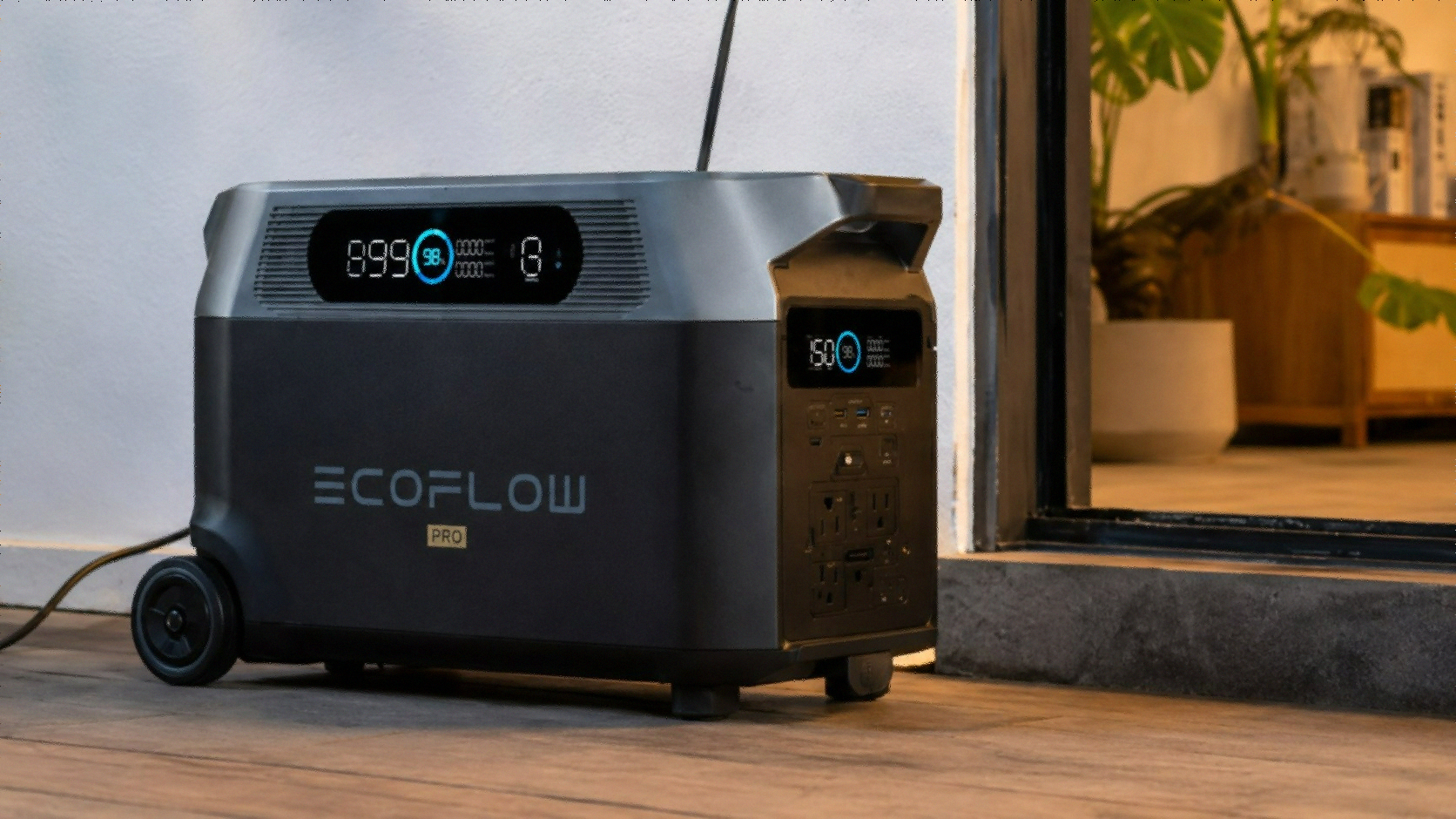
Then I got the EF ECOFLOW DELTA Pro 3600Wh, and my first thought was: what took me so long.
So here’s the real review. Not a spec sheet wearing an opinion as a costume. What it’s actually like living with this thing — in a van, through a heat wave, and at home when the grid dropped out. Because I’ve done both.

Why the EF ECOFLOW DELTA Pro 3600Wh Is Different From Everything Else
People comparing power stations in the 1000–2000Wh tier miss something: you’re always rationing. You wake up doing battery math. You skip cooking breakfast because the laptop needs that charge more. That’s not off-grid freedom — that’s stress with a nicer view.
The DELTA Pro just removes that math. 3600Wh of LiFePO4 capacity and you stop doing the morning calculation. Run the coffee maker, charge the laptop, leave the fan on all night — the battery shrugs. Still 60% left.
And the 3600W AC output, with X-Boost pushing heavy loads up to 4500W effective, means you can actually run equipment that matters. Not just phone chargers.
Who This Is Actually For
This unit makes sense for:
- Van lifers and RV travelers who need real power without hauling a rooftop generator
- Homeowners who want whole-home critical appliance backup during outages
- Remote workers running power-hungry setups — monitors, standing desk, recording gear
- Mobile businesses — food trucks, market vendors, pop-up shops
- Anyone with medical equipment, like oxygen concentrators or CPAP machines, that can’t go dark
It’s not for someone who just wants to charge a phone at the campsite. That’s a $150 unit. This is a different category entirely.
EF ECOFLOW DELTA Pro 3600Wh Full Specs Breakdown
The numbers, out of the way:
| Spec | Value |
|---|---|
| Capacity | 3600Wh / 75Ah |
| AC Output | 5 outlets, 3600W total (Surge 7200W) |
| Max Device Power (X-Boost) | 4500W |
| USB-A Output | 2x 12W, 2x 18W fast charge |
| USB-C Output | 2x 100W |
| Solar Input | 1600W max, 11–150V, 15A |
| AC Charging | 1800W (120V) / 3000W (240V) |
| Full Charge Time (240V) | 1.8 hours |
| Full Charge Time (120V/1800W) | 2.7 hours |
| Full Solar Charge | ~2.8 hours (4x 400W panels) |
| Battery Chemistry | LFP (LiFePO4) |
| Weight | 99 lbs |
| Expandable Capacity | Up to 25kWh with extra batteries |
| App Control | Wi-Fi + Bluetooth (EcoFlow app) |
The LFP chemistry deserves its own paragraph. It’s not just marketing. LiFePO4 cells behave differently from NMC lithium across the charge/discharge curve — more stable at temperature extremes, far longer cycle life (typically 3500+ cycles to 80% capacity), and no thermal runaway risk. For a unit baking in a hot cargo bay or freezing in a mountain parking lot, that’s not a footnote.
Real-World Van Life Performance
Six weeks, this thing as my only power source, looping through the Southwest — Moab, Sedona, Quartzsite, Joshua Tree, back up through Nevada. Mostly boondocking, the occasional campground hookup.
Daily Power Load
My typical daily draw:
- MacBook Pro running 8+ hours: ~120Wh
- Small 12V compressor fridge running 24/7: ~360Wh
- Induction cooktop for 2 meals: ~400Wh
- Fan running most of the night: ~120Wh
- Phone, lights, miscellaneous: ~80Wh
Roughly 1080Wh a day. The DELTA Pro’s 3600Wh gave me about 3 days of buffer at that load. Add two 200W solar panels and most sunny days I was net-positive without touching shore power.
A 1000Wh unit would’ve given me less than a day at that rate — I’d be chasing hookups constantly. With the DELTA Pro I sat in one canyon spot for four or five days and never thought about power.
X-Boost in Practice
The induction cooktop is its own story. Mine’s rated at 1800W. On paper an 1800W station should handle that fine. In practice, the fridge’s compressor surge stacked on top of the induction draw was enough to trip cheaper units.
X-Boost didn’t blink. I cooked real meals — stir fry, pasta, sauteed vegetables — not just boiled water. Sounds minor until you’ve spent two weeks eating cold wraps because your power station couldn’t handle dinner.
Charging on the Road
The solar input is the genuinely impressive part. 1600W max means with enough panels, you charge fast — EcoFlow claims 2.8 hours with 4x 400W panels. I didn’t have that much panel; I ran two 200W panels in series, and even at 400W input I was pulling back around 1000Wh on a good six-hour sun day.
Worth knowing too: EV charger compatibility. Pass a Level 2 charger on a road trip, plug in, and you can pull up to 3000W with the right adapter. Haven’t used it myself, but it’s a solid backup option to have.
💡 Pro Tip: The EcoFlow app lets you set a charge limit (e.g., 80%) to extend battery longevity on days when you know you’ll be plugged in overnight and don’t need 100%.
See Today’s Deal on Amazon
Home Backup Use Case: What Happened During the Grid Outage
Two days running this as emergency home backup when a storm took out the grid. No van involved — just a regular house with regular appliances.
Pass-through mode: critical appliances into the DELTA Pro, DELTA Pro into the wall. Grid dropped, it switched to battery in under 30 milliseconds. The fridge, the chest freezer, a few lights — none of them noticed.
Two days, with an extra battery added:
- Two refrigerators: fine
- Chest freezer: fine
- Induction cooktop for cooking: fine
- Keurig and coffee setup: fine
- Laptop, phone charging: barely a blip
Pass-through is the feature that makes this actually useful for home backup, instead of just being a big battery you have to remember to switch over manually. Set it up once, forget about it until the power’s gone.
⚠️ Watch Out: The DELTA Pro is rated for 99 lbs. It has wheels and a handle, but you’re not carrying it up a flight of stairs solo. Plan your placement ahead of time.
DELTA Pro vs. Other Portable Power Stations
How it stacks up in 2026:
| Model | Capacity | AC Output | Weight | Price Range |
|---|---|---|---|---|
| EF ECOFLOW DELTA Pro | 3600Wh | 3600W (4500W X-Boost) | 99 lbs | ~$1,479 |
| Jackery Homepower 3600 Plus | 3600Wh | 3600W | ~97 lbs | Similar tier |
| Jackery Homepower 3000 | 3024Wh | 3000W | ~62 lbs | Lower tier |
| Anker SOLIX F3800 | 3840Wh | 3800W | ~84 lbs | Similar tier |
The real differentiators: X-Boost stretching effective output to 4500W, five-way charging flexibility, and expandability up to 25kWh. If there’s any chance you’ll want to scale up later, the DELTA Pro ecosystem is hard to beat.
Related Post: Jackery Homepower 3000 Review for Van Life
Related Post: Anker SOLIX F3800 Review — Portable Power Station Deep Dive
The 5 Things I Actually Love About the DELTA Pro
1. LFP battery chemistry. Already touched on this, but it’s worth repeating. LFP is the right choice for a unit that’s cooking in your van in July and sitting at 20°F on a mountain in October. Handles temperature swings, long cycle life, no fire risk to worry about. Not a compromise next to NMC — the better option for this job.
2. Charging speed. 2.7 hours to full from a standard 120V outlet. One afternoon at a campground and I’m leaving at full capacity. Some units this size take 6–8 hours on 120V. The X-Stream charging is genuinely impressive, not just a number on a box.
3. Five AC outlets. Sounds small until you’re at a vendor market or setting up a mobile workspace and need a heat press, laptop, monitor, and charging hub plugged in at once. No power strip needed. Five 120V outlets, right there.
4. The app. The EcoFlow app is actually good — not just “it exists,” but useful. Real-time watt-in/watt-out monitoring, battery health stats, remote control of charge limits and discharge modes, firmware updates. The monitoring alone changes how you think about your power budget.
5. Expandability. You can add batteries and scale to 25kWh, so this isn’t something you’ll outgrow. Buy the base unit, live with it, and if you need more down the road, add a pack. You’re not starting over.
What I Don’t Love (Being Honest)
The weight. 99 lbs is real. Mine lives on the floor behind the passenger seat, and getting it in there the first time took two people and some creative maneuvering. Smaller van build, no help around — think hard about placement. It rolls fine on flat ground, but that only gets you so far.
The price. At roughly $1,479 (Prime pricing), this isn’t an impulse buy. The cost-per-Wh holds up at this capacity, and factoring in expandability and LFP longevity — potentially 10+ years with proper use — the math works. But it’s real money upfront, no way around that.
The reliability reports. Amazon reviews show a small slice — around 7% landing 1–2 stars — citing reliability issues: error codes, shutdowns under heavy load, dead units. The most common trigger seems to be running a 15,000 BTU RV air conditioner, which has a brutal startup surge. If that’s your use case, test it before you depend on it. For typical van life and home backup loads, the 552 reviews average 4.6 stars — strong for this category.
How to Get the Most Out of Your DELTA Pro
A few things I picked up that aren’t in the manual:
Charge to 80% for storage. Not using it for a few weeks? Set the app’s charge limit to 80%. LFP batteries last longer when they’re not held at 100% constantly.
Let it run down to 10–20% occasionally. A full cycle now and then helps calibrate the battery management system. EcoFlow actually recommends this during initial setup — run it down to around 10% so the system learns the battery’s true capacity.
Solar panel compatibility. 11V to 150V, up to 15A — most standard panels on the market work fine. You don’t need EcoFlow-branded panels, though their 400W flat panels are genuinely good. Related Post: Best Solar Generator for Home Backup and Camping 2026
Use EV station charging when you find it. Pass a Level 2 charger on a long trip, and you can add thousands of watt-hours in under two hours. Keep the adapter in your kit.
💡 Pro Tip: The DELTA Pro qualifies for the 30% Residential Clean Energy Tax Credit when used with solar panels as part of a qualifying solar electric property system. Worth talking to a tax professional if you’re setting up a home solar + storage system.
Frequently Asked Questions
Can the EF ECOFLOW DELTA Pro run a home air conditioner? A standard window AC in the 5,000–8,000 BTU range (500–900W running, 1500–2000W startup surge) — yes, X-Boost handles this without issue. A 15,000 BTU RV unit is trickier, and some users have run into problems. Test it first if that’s your plan.
How long does the battery last (cycle life)? EcoFlow rates the LFP cells for 3500 cycles to 80% capacity. Once a day, that’s roughly 9–10 years before any real degradation. Cheaper NMC units are typically rated 500–800 cycles.
Does it work with solar panels I already own? Yes, as long as they sit within the 11–150V input range at 15A max. Series-connected panels to reach higher voltage work well. Parallel works too, just stay under the 15A ceiling.
Can I use it while it’s charging (pass-through)? Yes — and it’s one of the most useful features for home backup. Appliances draw from incoming power while the battery stays topped up. Grid fails, it switches to battery instantly.
How loud are the cooling fans? At low to medium load, barely audible — about a laptop fan. Under heavy sustained load, like a 3000W AC circuit running continuously, they ramp up but stay quieter than any gas generator by a wide margin. A few reviewers mention being light sleepers and not finding the fans disruptive.
Is the 30% tax credit real? The Residential Clean Energy Credit exists for qualified solar electric property costs. Whether your specific setup qualifies depends on installation and use. Check with a tax professional — don’t assume.
Who Should Buy the EF ECOFLOW DELTA Pro 3600Wh
Buy it if:
- You need 1000–3000Wh a day and want a real buffer
- You want home backup that handles appliances automatically
- You’re doing van life or RV travel and want to stop tracking battery levels
- You run a mobile business that needs quiet, reliable power
- You have medical equipment that can’t lose power unexpectedly
Skip it if:
- You just need to charge devices at the campsite — a 1000Wh unit is plenty and far cheaper
- Budget is tight and less capacity would do
- You specifically need 240V output (look at the DELTA Pro 3 instead)
- Weight is a hard constraint — 99 lbs limits where you can put it
Final Verdict
Three years into van life, and this is the first power setup where I genuinely stopped worrying about energy. Sounds simple, but that’s the whole point. You’re not buying a battery — you’re buying the freedom to stop thinking about one.
3600Wh of LFP capacity, 3600W output with X-Boost headroom, a 2.7-hour fast charge, five AC outlets, a app that actually tells you something useful, and an ecosystem that scales to 25kWh — at a price that’s dropped well below launch. That’s a hard combination to beat in this class.
It’s heavy. It’s real money. For the right use case, it’s worth every pound of it.
Current pricing: Check the latest price on Amazon — frequently discounted during Prime events, and the current Prime Day price of $1,479 (down from $2,799 list) is a genuinely good deal if you’ve been on the fence.
Amazon Associates disclosure: As an Amazon Associate I earn from qualifying purchases. This does not affect the price you pay or my editorial opinions.