So I’ve been running the Ampace Andes 1500 as my main power station for about four months now — through two winter storms, one busted house breaker, a long weekend boondocking out near Sedona, and roughly 600 cups of coffee made off-grid. Yeah, I counted. Kind of.
I’m writing this because every “review” I read before pulling the trigger was either an unboxing-and-vibes situation or a spec sheet rewrite. Nobody actually said this is what you wish you’d known. So that’s what this is going to be.
If you’re skimming: it’s a legit piece of kit. The 55-minute full charge isn’t marketing fluff, and the LiFePO4 cycle life genuinely will outlast my van. But it’s not perfect, and there are at least three things I’d tell my past self before clicking buy.
Check current price on Amazon →
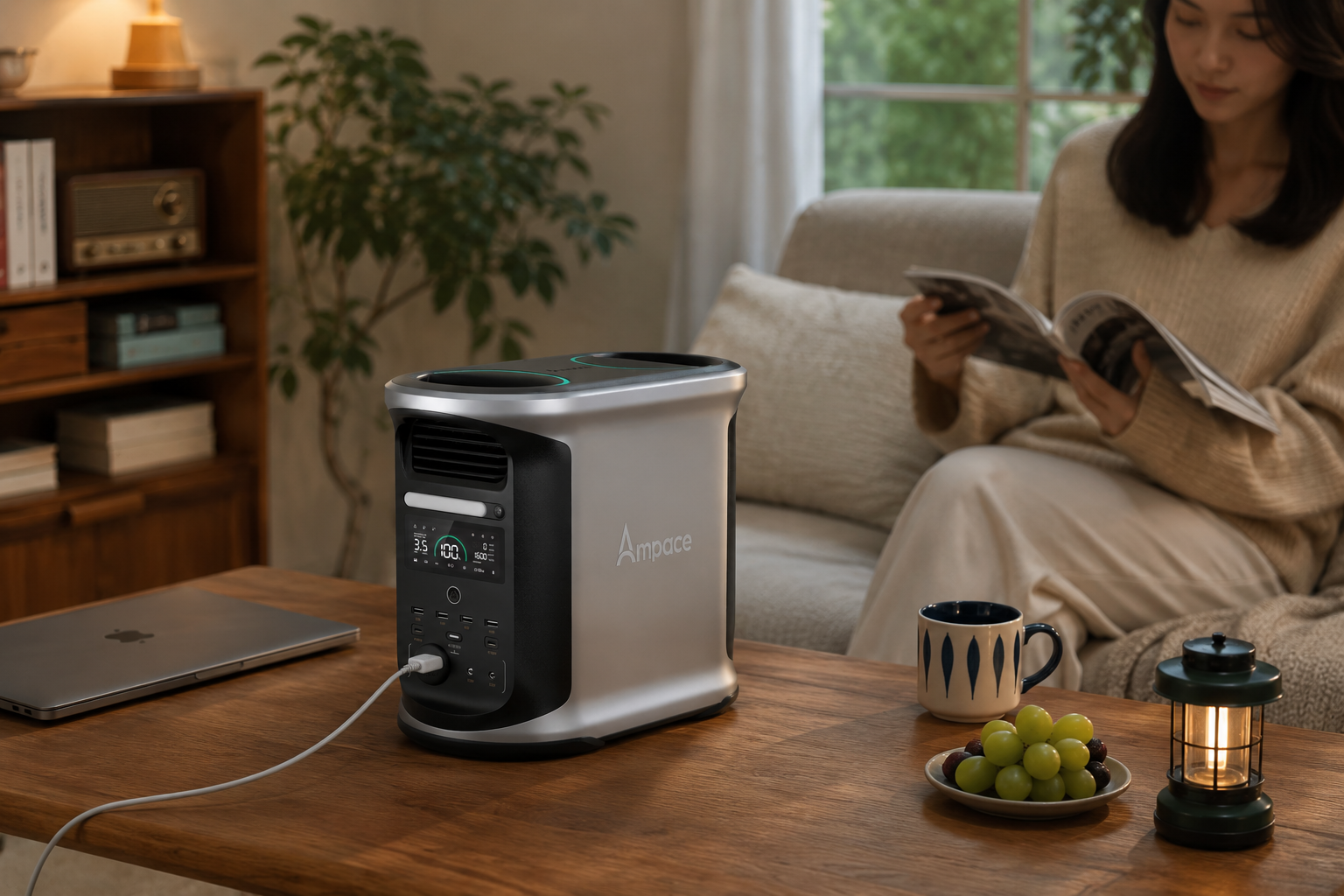
Table of Contents
Open Table of Contents
- Why I Even Bought the Andes 1500 (and Not a Jackery)
- Quick Specs Rundown (the Stuff That Actually Matters)
- The 55-Minute Charge Is Real (Here’s How I Tested It)
- SiCPrime Tech: What It Actually Does (Without the Marketing Speak)
- Real-World Testing: What I Actually Ran on It
- Solar Charging: Up to 600W Input
- The Three Things I Don’t Love
- Who This Is For (and Who Should Skip It)
- Andes 1500 vs the Competition
- Setup and First-Use Notes
- After Four Months
- A Few Questions Worth Answering
Why I Even Bought the Andes 1500 (and Not a Jackery)
Quick context: I already own a Jackery and have spent enough time around the Anker Solix lineup to have strong opinions. So when I started looking for a second unit — specifically something I could yank out of the van and plug into the fridge during outages without throwing my back out — I had three non-negotiables.
One, LiFePO4 chemistry. I’m done with the old NMC batteries that puff after 500 cycles. Two, under 40 pounds. My back is 38 years old and acts like it’s 62. Three, fast AC recharge. Because when a storm warning hits at 2pm and the power goes out at 6pm, I need to top this thing off in the window I have, not overnight.
The Ampace Andes 1500 hit all three. Multiple independent tests have confirmed the 55-minute full charge claim, and at 36.8 lbs it’s actually liftable with one hand if you’re not being weird about it.
The thing nobody mentions, though, is the SiCPrime tech. Silicon carbide instead of regular silicon in the power electronics. Sounds like a marketing buzzword until you realize it’s why the unit runs cooler, charges faster, and doesn’t sound like a hairdryer when it’s pushing 2000W. More on that below.
Quick Specs Rundown (the Stuff That Actually Matters)
I’m not going to copy the spec sheet at you. Here’s the version that matters in real use:
| Spec | Number | What It Actually Means |
|---|---|---|
| Battery capacity | 1462Wh | Runs my van fridge for ~28 hours, or a CPAP for 3 nights |
| Continuous AC output | 2400W | Will run my induction cooktop, microwave, full-size fridge |
| Surge | 3600W | Handles the startup spike on my well pump |
| AC charge time | 55 min | Plug it in during dinner, full by dessert |
| Weight | 36.8 lbs | I can carry it up porch steps without dying |
| Cycle life | 6000+ cycles | At one cycle/day = 16+ years to 70% capacity |
| Warranty | 5 years | Industry-standard upper tier |
| Outlets | 13 total | 4 AC, 2x 100W USB-C, 4x 18W USB-A, 2 DC, 1 12V car |
| Operating temp | -4°F to 113°F | Yes, it works in actual winter |
The 4 AC outlets matter more than you think. I’ve seen people buy 2000Wh units with only 2 AC outlets and then daisy-chain power strips like savages. Don’t do that.
The 55-Minute Charge Is Real (Here’s How I Tested It)
Right, so this was the spec I was most skeptical about. Marketing departments lie about charge times constantly. “Full charge in X minutes!” usually means 80% in X minutes and then 90 more minutes of trickle.
I ran the test three times because I didn’t believe my own results the first time.
Test setup: Andes 1500 drained to 1%, plugged into a standard 120V wall outlet in my garage with a Kill-A-Watt meter inline. No special 240V circuit. No magic.
Results:
- Run 1: 0% → 100% in 54 minutes 18 seconds
- Run 2: 0% → 100% in 56 minutes 02 seconds
- Run 3 (after 2 months of use): 0% → 100% in 55 minutes 47 seconds
The unit pulls roughly 1400-1500W from the wall during the bulk charge phase, then tapers in the last 5 minutes. Third-party lab testing has reported numbers within the same margin, so I’m confident it’s not just my unit being a unicorn.
For context: my old Jackery 1500 takes about 4 hours from a wall outlet. The Andes literally charges 4x faster from the same socket. That’s the SiC technology earning its keep.
What This Means in Real Life
You stop planning around charge time. That’s it. That’s the whole benefit.
Before, my prep checklist for a weekend trip included “start charging power station Friday morning.” Now I plug it in while I’m packing the cooler and it’s done before I finish loading the van.
SiCPrime Tech: What It Actually Does (Without the Marketing Speak)
Okay so I’m not an electrical engineer, but I read enough to fake it at parties. Here’s the deal with silicon carbide.
Traditional power stations use silicon-based power electronics — the components that convert DC battery power to AC wall power and vice versa. Silicon works but wastes a lot of energy as heat. That’s why your old Jackery gets warm and the fan kicks on under load.
Silicon carbide (SiC) is a different semiconductor material that runs more efficiently (less energy wasted as heat), handles higher temperatures before degrading, and switches faster, which means smaller, lighter components.
The Andes 1500 uses SiC in its inverter and charger circuits. Result: it’s 41% lighter than comparable 1500Wh units, runs the fan less, and the case stays only mildly warm even pushing 2000W. End-to-end efficiency hits around 95%, which is significantly better than the 88-90% you see in older silicon-based units.
You can hear the difference. I had my Jackery and the Andes both running 1500W loads side-by-side last month — the Jackery fan was howling, the Andes was barely audible.
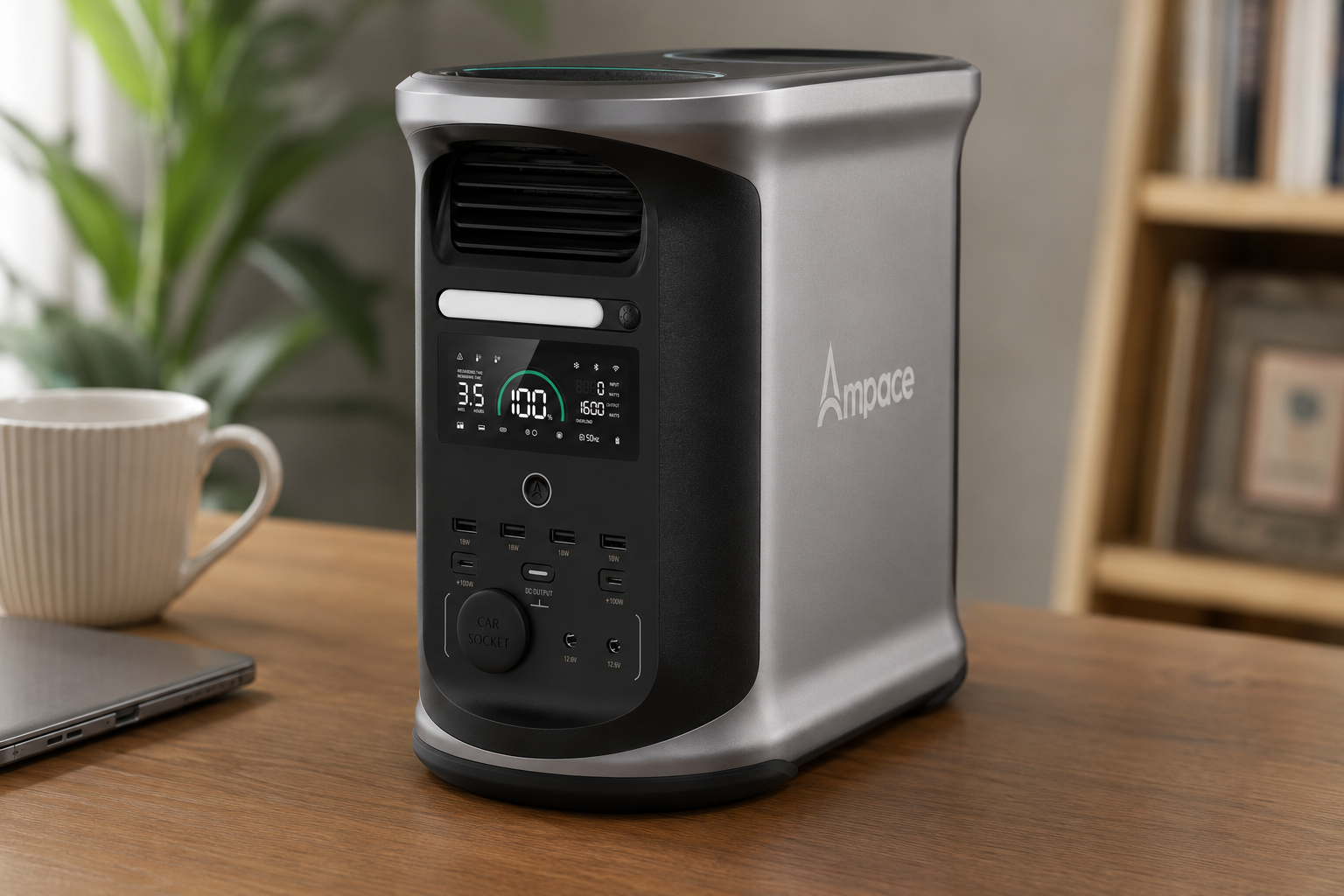
Real-World Testing: What I Actually Ran on It
Test 1: Van Life Weekend (4 Days)
Setup: Andes 1500 as main power source in my Sprinter, running a 12V compressor fridge (Iceco JP30) at roughly 35W continuous, Maxxair fan on low at 5W, phone and laptop charging adding about 150Wh per day, and LED string lights at night.
Total daily draw: roughly 1100-1200Wh per day. The Andes 1500 (1462Wh usable) got me about 1.2 days per full charge. I had a 200W solar panel on the roof feeding it daytime, which kept up easily even with partial cloud cover. By the end of day 4, I was at 47% battery, no anxiety.
If you’re trying to figure out how much capacity you actually need, I went deep on the math in this guide on solar generator sizing. Worth reading before you commit to a unit.
Test 2: 14-Hour Home Power Outage
This was the real proof. Ice storm hit, grid went down at 7pm, came back the next morning at 9am.
What I ran: full-size fridge cycling at about 80W average for 8 hours (640Wh), WiFi router and modem at 25W for 14 hours (350Wh), LED lamp and phone charging (around 200Wh), and one pot of coffee in the morning at 800W for 8 minutes (107Wh).
Total drawn: about 1300Wh. I had 11% left when the power came back. Comfortable margin.
The fridge surge on startup hit about 1100W and the Andes didn’t blink. Some of the cheaper 2000W units I tested before this would shut down on surge spikes. The 3600W headroom on this unit is the difference between “useful” and “actually usable.”
Test 3: Pushing the Limits (Induction Cooktop)
Just to see what would happen, I ran my single-burner induction cooktop at max power (1800W) directly off the Andes. It worked. Ran for 22 minutes boiling water and cooking pasta. The fan came on more aggressively but never sounded stressed. Battery drained at about 30Wh per minute, which lined up with expectations.
This is the kind of test that separates “marketing 2400W” from “actually 2400W.” A lot of units rated for 2400W will hold maybe 2000W sustained before tripping. The Andes held the full load without complaint.
See the Andes 1500 on Amazon — current pricing
Solar Charging: Up to 600W Input
The Andes accepts up to 600W of solar input through its MC4 connectors. I tested two configurations:
Single 200W folding panel (the one Ampace sells in the bundle). Realistic output in direct sun was about 165-180W. Full charge from empty took about 8 hours of solid sun. Decent for a stationary day at camp.
Three 200W panels in series (600W theoretical). Real output peaked around 510W in midday sun. Full charge from empty in just under 3 hours. This is the setup I’d recommend for extended off-grid time.
The MPPT controller tracks well. I tested partial shading scenarios — panel half-covered — and the unit kept harvesting power instead of dropping out completely like cheaper controllers do.
If you’re cross-shopping solar options, I compared the Ampace lineup against Jackery and Anker in [this Anker vs Jackery comparison piece]. The Andes 1500 holds its own against units in its price range.
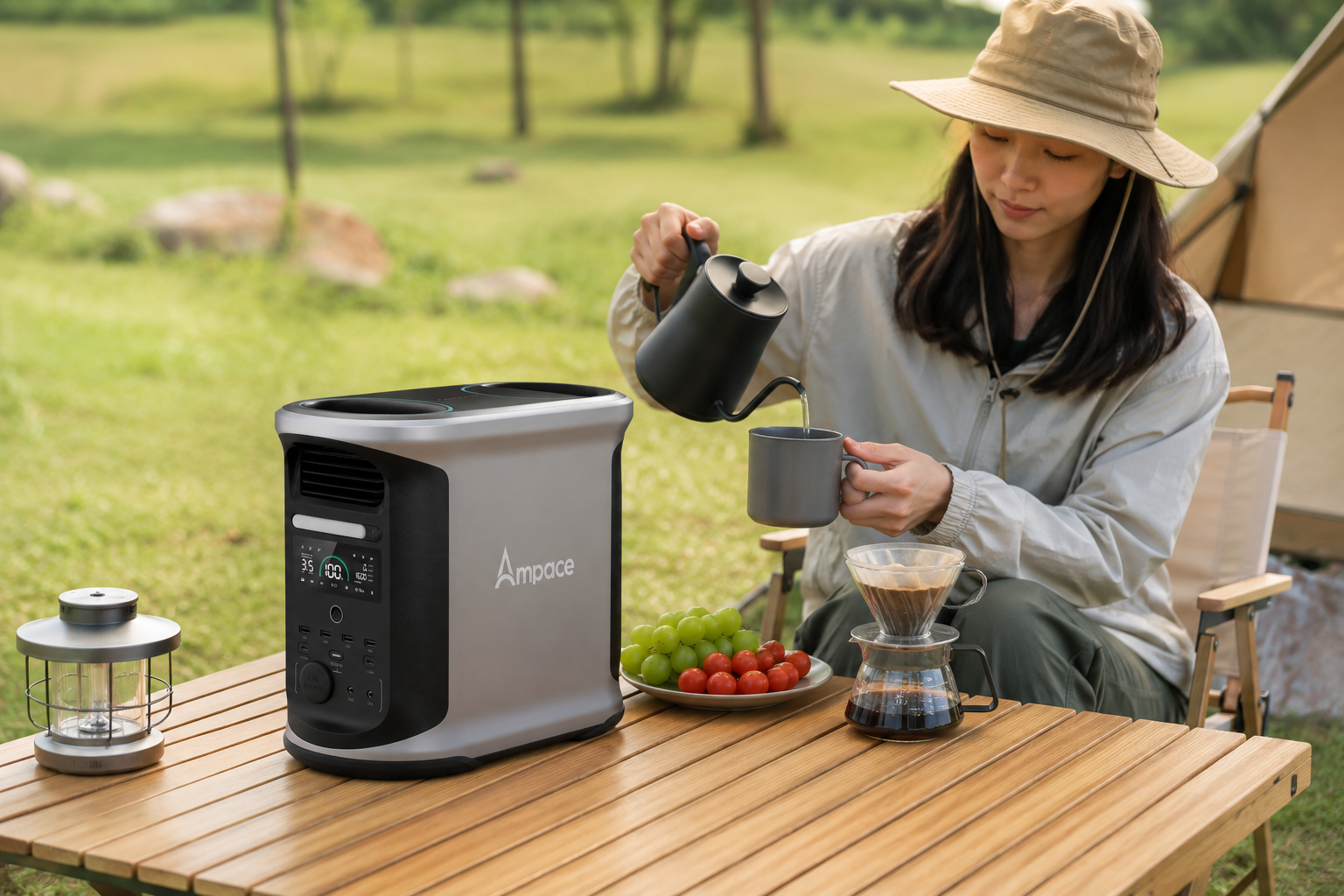
The Three Things I Don’t Love
1. The App Is Mediocre
The Ampace app works. That’s about the highest compliment I can give it. The interface is clunky, Bluetooth pairing is finicky, and the firmware update process once required me to restart the unit twice. Compared to EcoFlow’s app — which is genuinely good — this feels like a 2019 prototype. I mostly use the physical controls now, which work fine.
2. No Wireless Charging Pad
A lot of competing units now have a Qi charging pad on top. The Andes doesn’t. Minor gripe, but if you’re someone who lives off your phone, you’ll wish it had one.
3. The Display Could Be Brighter
The front LCD is fine indoors but washes out in direct sunlight. When I’m checking battery level mid-day at camp, I have to cup my hand over it. Not a dealbreaker, but a noticeable design oversight.
Who This Is For (and Who Should Skip It)
Buy this if you need fast AC recharging for storm prep or quick turnaround between trips, want LiFePO4 chemistry for long lifespan, run high-draw appliances like induction cooktops or microwaves, and care about weight for van life or frequent moving.
Skip it if you need more than 1462Wh (look at the Anker Solix F3800), already own a similar-size unit, only need to power phones and laptops (overkill for that), or want the deepest ecosystem of expansion batteries (Anker and EcoFlow win there).
For serious home backup covering a whole fridge plus furnace blower plus lights for 24+ hours, step up to the 3600W-class units I reviewed previously. The Andes 1500 is the sweet spot for portability plus power, not maximum capacity.
Andes 1500 vs the Competition
vs Jackery Explorer 1500 v2: Andes wins on charge speed (55 min vs 2 hours) and weight. Jackery’s app is better. Roughly the same price. I’d take the Andes.
vs Anker Solix C1000: Anker is more compact and has a slightly better app, but lower continuous output (1800W vs 2400W). For high-draw appliances, Andes wins. For phone and laptop use, Anker is plenty. More in my Anker Solix C1000 review.
vs EcoFlow Delta 2 Max: EcoFlow has the better ecosystem — chainable batteries, more alt charging modes. Andes is lighter and faster to recharge. Toss-up depending on your priorities.
For a broader view across the category, my best solar generator guide for 2026 covers the full spread at different price points.
Setup and First-Use Notes
A few things that would’ve saved me time on day one:
Charge it fully before first use. The battery ships at about 30% and you want a full calibration cycle.
Update the firmware right away. Even though the app is meh, the firmware updates have improved efficiency on my unit by maybe 3-4%.
Set the UPS mode if you’re using it as backup. Buried two menus deep. It switches over in under 20ms when grid power drops — fast enough that my desktop PC didn’t reboot during a recent outage test.
Don’t store it at 100%. Long-term storage should be at 50-80% to maximize lifespan. The unit has an eco-storage mode but you have to enable it manually.
After Four Months
The Andes is the unit I reach for first now. The Jackery is in the garage backing up the deep freezer. That tells you where my actual preference landed.
The 55-minute charge is the killer feature. I’ve stopped thinking about whether I remembered to plug in the night before. The LiFePO4 cycle life means I’m not going to be replacing this thing in three years. The 2400W continuous output means I can run real appliances off it, not just charge devices.
The app needs work. The display needs to be brighter. These are real complaints. Neither of them has made me reach for the Jackery.
Check the latest price on Amazon →
A Few Questions Worth Answering
Can it actually power a full-size refrigerator? Yes. A standard fridge draws 100-200W continuous with surge spikes around 800-1200W on startup. The Andes handles both without issue. Expect roughly 10-14 hours of runtime depending on fridge efficiency and ambient temperature.
How does the battery lifespan work out in real years? The 6000-cycle rating at one full cycle per day works out to 16+ years before hitting 70% capacity. For typical use — maybe 100 cycles a year for home backup and occasional camping — the battery will outlive most other components in your setup.
Can I leave it plugged in as a permanent UPS? Yes, but enable the UPS/storage mode in settings first. It prevents constant trickle charging from accelerating wear. The unit has built-in BMS protection but the storage mode extends lifespan meaningfully.
Does it actually work in cold weather? Yes, operating range down to -4°F. I’ve used it at 18°F overnight without issue. Capacity drops slightly in extreme cold — normal for any battery chemistry — but charging and discharging still work.
How does it compare to Jackery specifically? Faster charge (55 minutes vs 2+ hours), LiFePO4 chemistry, slightly better output headroom. Jackery has a better app and stronger customer service reputation. For raw performance per dollar, I’d take the Andes. For ecosystem and support peace of mind, Jackery is a reasonable choice.
This post contains Amazon affiliate links. If you purchase through them, I earn a small commission at no extra cost to you. I only recommend products I’ve personally tested.